Chapter 6 · Old Testament · 1 hr. 12 min.
The Patriarchs
The Patriarchs of Israel: Abraham, Isaac, Jacob, and Joseph
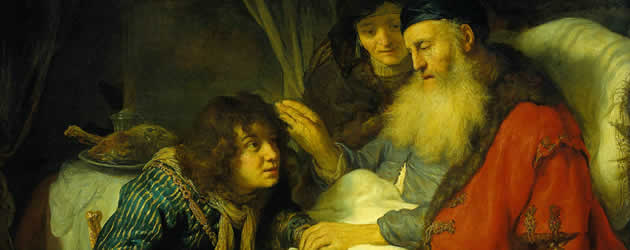
The Patriarchs of Israel: Abraham, Isaac, Jacob, and Joseph
We study the Biblical account from the end of Abraham's life through the end of the Book of Genesis when all is well for the 12 tribes of Israel in Goshen, Egypt. This lesson covers the important events in the life of Isaac, then his son Jacob (who is renamed Israel by God), and finally Jacob's twelve sons, including Joseph who becomes the pharoah's chief steward or vizier. Joseph prefigures Jesus as an unjustly accused righteous man who is sold for silver, saves his kinsmen, and rises to the throne. Joseph also serves as a type of the chief steward whom Jesus appoints over his kingdom: St. Peter (Cf. Matthew 16). God reveals important things to both Joseph and Peter. Pharaoh and King Jesus ask Joseph Peter, respectively, a question regarding this revelation. Both give the revelation. This is followed by an acknowledgment that the revelation comes from God. Subsequently, Pharoah elevates Joseph to the level of vizier. Jesus elevates Peter to the level of vizier or prime minister. Pharoah gives Joseph his signet ring. Jesus gives Peter the keys to the kingdom. Yes indeed.. Genesis speaks of the papacy through the use of typology.
This transcript was produced by speech-recognition software and has not been proofread. Names, Hebrew and Greek terms, and Scripture references may be misspelled. Tap a timestamp to play the audio from that point.
Okay, so tonight we're going to cover the patriarchs. Let's turn to Acts chapter 7, verses 8 to 9. You guys are so holy, so holy, have to begin with prayer every time. What is this, a religious event? All right, let's place ourselves with our attention directed towards God who is present. And let us begin with the sign of our faith. In the name of the Father, and of the Son, and of the Holy Spirit, Amen.
Heavenly Father, thank you for these people. Thank you for this parish, the ability to meet here in this parish activity center, and to freely speak about your word, and to learn your word. Lord, I ask for this special charism, so that I may not teach what I want to do today, and I just want to thank you for teaching me all that you have had to teach me, through my professors, and through the books that I have read, and for giving me the ability to give this information to these people. I ask for the gift of teaching this evening, Lord. I ask for this special charism, so that I may not teach what I think, or what I want to say, but Lord, what you want me to say, the way that you want me to convey it.
Let's pray this prayer. Lord Jesus Christ, be present now, and let your Holy Spirit bow, all hearts and love and truth today, to hear your word and keep your way. Give us the grace to grasp your word, that we may do what we have heard. Instruct us through the scriptures, Lord, as we draw near, O God adored. To God the Father, and the Son, and the Holy Spirit, three in one. To you, O blessed Trinity, be praised throughout eternity. Amen. In the name of the Father, the Son, and the Holy Spirit. Amen. Tonight, let's turn to Acts, chapter 7, verses 8 to 9.
Acts 7, 8 to 9. And Acts is the sixth book of the New Testament, as most Bibles are put together. And what this is, is Stephen, the first Christian martyr, is giving a rendition of salvation history. He's taking all of the Old Testament, and he's condensing it into one kind of monologue that he's giving to the Jews. And one of these Jews is Paul. And at the end of his discourse, when he's stoned to death, it says that Paul was right there, consenting to his execution. So, we want to turn to Acts 7, verses 8 to 9. And, you know, he's been talking about the life of Abraham. And he says, Then God gave Abraham the covenant of circumcision, and so he became the father of Isaac, and circumcised him on the eighth day.
Okay, when was the covenant of circumcision given? What chapter in Genesis? Chapter 17. Remember, I want for you to remember three numbers. I want for you to remember Genesis 15, Genesis 17, and Genesis 22. These are the three covenants made with Abraham. Okay, the first covenant was one of land and nationhood, and this will be fulfilled in Moses. The second covenant involved circumcision, and it talked about kingship coming from Sarah through Isaac. This will be fulfilled in David.
And then the covenant given, and then Isaac is born in chapter 21. And then in chapter 22, we have the event with Isaac, Abraham's almost sacrificing of his only son, his beloved son, his only beloved son, Isaac. And this final covenant will be fulfilled in Jesus, which involves worldwide blessing, Catholic blessing. Blessing not just to Israel, or just to the kingdom of Israel, but to all nations. It's going to be international. It's going to be kataholos, according to the whole, not just nationalistic. And so, remember these three numbers, and this will kind of give you a blueprint for the Abrahamic covenant. This is when the covenant of circumcision was given in Genesis 17.
And so, he became the father of Isaac, and circumcised him on the eighth day. And this happened in Genesis 21, when Isaac was born and circumcised. And so, he became the father of Isaac, and circumcised him on the eighth day, as Isaac did to Jacob. And Jacob, the twelve patriarchs. And the word used here, in Greek, is patriarches. Patriarches. Okay, let's see here. I'm going to go ahead and write it out here on the board. Patriarches. And this is a compound word between patria and arches. Patria means like a family lineage.
A family lineage. And it comes from the word for father, which is pater. Okay, so pater means father. And patria comes from that word, which means family lineage. And then, arches means to rule, or to be chief, or to govern. And so, a patriarch is one who rules over the family lineage. And there are also, in the Bible, there are matriarchs. And we'll see that Sarah is a matriarch. Rebecca is a matriarch.
And they're the ones from where the family will descend. Okay, so patriarch. This is where we get this term from. And I'm just giving you this because the title of the chapter is chapter 6, the patriarchs. Okay, so Isaac is born in chapter 21. And then, in chapter 24, we have the story of Abraham wishing to procure a wife for his son Isaac. Because, remember, God said, the promise that I'm giving to you is going to come through your son Isaac, not through Ishmael. Through your only son Isaac, not through Ishmael. Abraham says, oh, but can Ishmael live in your sight?
God says, no, through Isaac, not through Ishmael. And so, Abraham finally gets it through his thick skull that the promise is going to come through Isaac. And so, now here's Isaac. Isaac needs descendants now, right? Because, okay, we took all the... Sarah bears Isaac at 90 years of age. Abraham is 100 years old when Isaac is born. And then, Isaac's getting, you know, older. And Abraham's like, okay, we need to find him a wife. So, let's turn to Genesis chapter 24. Genesis chapter 24, verses 1 and following. Abraham had now reached a ripe old age, and the Lord had blessed him in every way.
Abraham said to the senior servant of his household. And so, the senior servant is kind of like the chief steward. He's the one who's kind of over the other servants. And we'll see this again later on in the Genesis narrative. Who had charge of all his possessions. Abraham said to him, put your hand under my thigh, and I will make you swear by the Lord, the God of heaven, and the God of earth. What are we talking about here? Thigh is a euphemism for the male organ. Yes.
I wonder why they're always talking about thigh. Yes. And the term, guess where the term testify, or testimony, comes from. And now, remember in Genesis chapter 15, when, you guys are getting a kick out of this, aren't you? Woo! The Bible is nasty. So, back in Genesis 15, we had Abraham cutting animals and splitting them. Abraham has a dream, and God, in the form of a smoking brassiere and fire, a flaming torch, passes between the cut animals. And this is a covenant oath swearing action, where God is saying, if I transgress the covenant, let what happened to these animals happen to me.
Well, now this is safe for God to say, because God can't lie. He can't go, I mean, he can't do, he can't sin. He can't transgress the covenant, so it's easy for him to do. Well, he does this, and this is God, you know, showing his love, showing his faithfulness, saying, you know, let me be cut in half like these animals, even though I'm eternal, uncreated spirit. That was a joke. And so, this is, you know, it's like saying, let this curse befall me if I do not keep my oath. Well, in the same way, the curse here is, if I don't, you know, fulfill this oath, if I don't fulfill the terms of this covenant, if I transgress what I'm about to say, let me not have any children. Let me be infertile.
And in the Old Testament, and in the New Testament, children are a great blessing. They're not, oh man, that's going to be another hospital bill, you know, more little tykes you have to get child care for. No, your wealth was in your children, your descendants. This was a big deal. And so, it's very important when you swear, you say, well, you know, if I don't do what I'm about to say, let me be sterile. Okay, verse 3. And I will make you swear by the Lord, the God of heaven and the God of earth, that you will not procure a wife for my son from the daughters of the Canaanites, among whom I live. But that you will go to my own land and to my kindred to get a wife for my son, Isaac.
Now, we've noticed in the study so far, what was the cause of the flood? What happened right before you had the big flood and God wiped out the human race except for Noah, Shem, Ham, Japheth, and their wives? The sons of God had intercourse with the daughters of men. You had the Canaanites and the, you had the, the Sapphite men went into the Canaanite, I'm sorry, yeah, went into the Canaanite women. And there was, uh, mixed marriages. There was this interbreeding between the idolatrous people and the righteous people. And so we see this theme again. Abram says, no, don't procure a wife from the Canaanites. And where does, where does I, I, and, you know, Cain, um, well, the Canaanites actually, you know, I descend from, actually from Noah, not from Cain, because all the Cain's descendants were destroyed.
But the Canaanites were a perverse people, like the daughters of men, uh, the son, the, the daughters eventually who descended from Cain. And so he's saying, let's not have these mixed marriages. And later on, we'll see when Israel enters the promised land, they'll be prohibited from mixed marriages, from marrying Canaanites and marrying all these people in the land. Because what'll happen is these Israelites will take upon themselves the idolatries of the women of these, of these people from this other country. And God wants to keep his family, his firstborn son, Israel, uh, free from idolatry, wants to keep him close to his heart. So he's giving commandments that are going to be for Israel's benefit. And so we have this chief steward, this, this, uh, leading servant goes to where? To the city of Nahor in Aram Naharim.
Near evening, at the time when women go out to draw water, he made the camels kneel by the well outside the city. Then he prayed, Lord God of my master Abraham, let it turn out favorably for me today, and thus deal graciously with my master Abraham. While I stand here at the spring, and the daughters of the townsmen are coming out to draw water, if I say to a girl, please lower your drug, that I may drink. And she answers, take a drink, and let me give water to your camels too. Let her be the one whom you have decided upon for your servant Isaac. In this way, I shall know that you have dealt graciously with my master. Where does the event take place? Where does the servant meet Rebecca? At a well. Okay. Let's, I want for you to remember this, not just tonight, but for the future in this Bible study. It's very important that Rebecca, the husband of Isaac, is found, is first encountered at a well.
And so, Rebecca does this, she comes and, you know, gives him some water and feeds his camels, and then he asks her, who are you? Verse 15, he had scarcely finished these words when Rebecca, who was born to Bethuel, son of Milcah, wife of Abraham's brother Nahor. Okay, there's a little bit of a genealogy, and that's very important. Because we'll see that she's the daughter of Bethuel, who is the daughter of Milcah and Nahor, who is Abraham's brother. So, here we have Rebecca, who is Isaac's first cousin once removed. This is the family of Abraham. The girl was very beautiful, a virgin, untouched by a man. She went down to the spring and filled her jug. As she came up, the servant ran toward her and said, please give me a sip of water from your jug.
Take a drink, sir, she replied. When she had let him drink his fill, she said, I will draw water for your camels, too, until they have drunk their fill. Verse 21, the man watched her the whole time, silently, waiting to learn whether or not the Lord had made his errand successful. When the camels had finished drinking, the man took out a gold ring, weighing half a shekel, which he fastened on her nose. And two gold bracelets, weighing ten shekels, which he put on her wrist. Then he asked her, whose daughter are you? Tell me, please. And is there room in your father's house for us to spend the night? She answered, I am the daughter of Bethuel, the son of Milcah, whom she bore to Nahor. Now, whenever people ask me, so where are you from? Who are you? I go, well, I'm, you know, my dad's Raleigh Weber, and he grew up in Victoria. But I don't go, yeah, my dad is Raleigh Weber, and his dad is Victor Weber, and his dad is, you know, from the Wellsprings down in Victoria.
No, you know, I don't go back that far. Well, again, this, you know, the author is really putting an emphasis on genealogy here, because we have to find someone from Abraham's kin. This is the command. And so, he reveals himself, he says in verse 27, Blessed be the Lord, the God of my master Abraham, who has not let his constant kindness toward my master fail. As for myself also, the Lord has led me straight to the house of my master's brother. Okay, that word in my New American Bible translation in the middle of verse 27 is constant kindness. Blessed be the Lord, the God of my master Abraham, who has not let his constant kindness. Are there any other translations here? Faithful love. Any other ones? Okay, steadfast love.
Loving kindness. Okay, so, the Hebrew word here is hesed. And this is a very key word in the Old Testament. It's a Hebrew word that means God's covenant love. So, when you're in covenant with God, God has hesed for you. And in the New Testament, this is what we'll mean when we say grace. Okay, when you're in covenant with God, you are in his grace. He has his, this is his love towards you. And so, the covenant love, the hesed, very important. You'll see this constantly in the Old Testament, especially in the Psalms. It'll say, you know, God within his loving kindness. His kindness abounds. You know, he's full of mercy. And if you look back in the Hebrew, it'll be hesed.
Okay, so Isaac is brought back to Isaac. And let's turn to, let's turn in the same chapter, chapter 24, to the end of that chapter, to verse 62. Meanwhile, Isaac had gone from Birla, Hiroi, and was living in the region of the Negan. One day, toward evening, he went out. In the field, as he looked around, he noticed that camels were approaching. Rebecca, too, was looking about. And when she saw him, she alighted from her camel and asked the servant, Who is the man out there, walking through the fields toward us? That is my master, replied the servant. Then she covered herself with her veil. The servant recounted to Isaac all the things he had done. Then Isaac took Rebecca into his tent.
He married her, and thus she became his wife. In his love for her, Isaac found solace after the death of his mother, Sarah. Isn't that beautiful? It's quite poetic. It's like a love story. This is also one of the readings that the church allows for couples to read from as their first reading for their nuptial mass, for their wedding. And this is the reading that Rebecca and I chose. I'm not Isaac, but she's Rebecca. And it fit really well. And by the way, my mother has not died. That's not why we chose it. Yes? Two questions. First, did I not read that Milca was the daughter of Sarah? Milca.
Did he marry his niece when we were doing all the death of the daughter? Right. You know, I don't know. I wonder if it's the same. My question is, is it the same Sarah? Probably not. Yeah, the people are named the same name over and over again, and probably not, because Milca was definitely the wife of Nahor. Okay. And then, why, I mean, there's a lot of intermarriage. When did that become a sin in the eyes of the church? So, at one point, it was a sin to marry anybody in your, and against the law, to marry any but one that was remotely related. Well, we know that the human race descends from one couple, Adam and Eve. And so, the only way, if all of humanity comes from a couple, the only way how their children could have children would be if they were to have relations with one another.
Because God didn't just send, like, little aliens down to have relations with them. Well, what was the land of God? Who were those of them? They were descendants from Adam and Eve as well. Remember, the author of Genesis did not write in the way that we write. He didn't write exactly who lived, exactly how many years, exactly here, exactly there, exactly, exactly. He didn't write history like we do. He's writing it poetically, mythopoeically. And so, we're not to look to this narrative and try and figure out exactly how things were. And so, we'll find discrepancies with, you know, one person goes here and there's somebody. Well, where did they come from? Well, the author didn't care.
He wasn't interested in that. He's just interested in showing a truth by writing history in a different way. But we do know that all of human history came from one couple. And so, in the beginning, what we call incest was not a sin. And I described this, I took quite a while to describe this to my RCA class the other night. The DNA at the very beginning of human history was not messed up. There was not suffering. There was not physical disorders or mental disorders. Our DNA was perfect. So, like, for instance, if DNA was like an alphabet, it would go A, B, C, D, E, F, G. But what happened is that with the effects of sin, suffering and disease and other things began to crep in over time. And then, at one point, remember, God said, I'm going to limit man's days at, what, what was it, 120?
You know, it's just kind of showing how the effects of sin have been, you know, getting worse and worse. And today, we see cancers, you know, cropping up, and then we zap those. And next thing we know, AIDS will be up in Africa, and we'll zap that. And before we know it, something else is going to happen. Well, what would happen is that, over time, people's DNA got messed up, you know, by the effects of sin. And so, if two people with very similar DNA who had disorders married, they wouldn't have any DNA to cancel out those bad parts. So, those bad parts would remain in their children, okay? So, like, for instance, let's say that my sister and I, instead of being A, B, C, we're A, C, B. Well, if we were to marry, our children would only get A, C, B. They couldn't get that B or that C corrected again, because that's all we have to give them.
What happens whenever you marry somebody who's not really related, you know, who's a far relation from you, because we're all related somehow, is that the good parts of DNA will cancel out the bad parts of DNA, and you'll end up turning out okay. Now, sometimes you won't, and you'll have Down syndrome or something else, or you'll be, you know. But this is why, and so over time, because of the effects of sin, incest was outlawed, especially in the Mosaic Law, and it was outlawed not because it's intrinsically bad, because this is how God designed the human race to proliferate, to be fruitful and multiply, but it's bad because it's damaging to humanity because of the effects of sin. And because it harms us, you know, it ends up being sinful. And it also hurts the being fruitful and multiply, because no longer can we be fruitful and multiply with our close descendants.
And so we'll see that Abraham married his half-sister, Sarah. We'll see that Isaac married his first cousin once removed, Rebecca. And there's some of this close relations going on. Later on through the Mosaic Law, it'll be more further tightened through the Mosaic Law as to who you can marry. And we'll see this in Leviticus 18, which we've already covered in the study. Does that answer the question? Was I clear enough? Okay, good. Okay, so Rebecca's name comes from either two sources. Either one, it means to tie fast, kind of like a fisherman tying a knot, you know, to tie fast. And this could resemble how she was tied fast to Isaac in marriage, or maybe in another way.
It also could be a wordplay on the Hebrew word for cattle. The word for cattle sounds very similar to Rebecca. They kind of rhyme with each other. And we'll see that Leah's name, who we'll talk about in a moment, means cow. Remember, Leah wasn't the beautiful daughter. She had good-looking eyes. Okay, that's a euphemism for saying she's not that great-looking. Rachel, on the other hand, her name means you, a young lamb. You know, cute, cute, beautiful, you know. And so, if you want to name your daughter Cal, use Leah. And if any of you are named Leah, this is not, this is, I'm not taking a pot shot at you. It's just Bible study.
That's all. Okay. And fathers, if you'd like for your daughter to remain fast, remain tied to you, and you don't want to let her go, you can name her Rebecca. Okay. So, Rebecca and Isaac marry. And Rebecca is infertile for 20 years. You know, Abraham needs an heir, he gets Isaac, and then God gives him and Rebecca no children for two full decades. It's like, are we going to pull another Sarah here? You know, is Rebecca going to have to be 89, and then, you know, and then Isaac's going to go into her Egyptian maidservant, you know. Like, Abraham went into Sarah's Egyptian maidservant, Hagar. Well, now, eventually, it's really beautiful in the Bible. Let's turn to Genesis chapter 25, the next chapter.
And we have the death of Abraham and his burial. And let's turn to verse 19. This is the Toledoth of Isaac, the family history, the genealogy, the Toledoth of Isaac. Remember, whenever we see a Toledoth, it's very important, reading the scriptures as a Hebrew. Son of Abraham. Abraham had begotten Isaac. Isaac was 40 years old when he married Rebecca, the daughter of Bethuel, the Aramean of Paddan Aram, and the sister of Laban, the Aramean. Isaac entreated the Lord on behalf of his wife, since she was sterile. The Lord heard his entreaty, and Rebecca became pregnant.
Isn't that beautiful? It's a biblical rendition of a husband praying for his wife, and God answers his prayer. But the children in her womb jostled each other so much that she exclaimed, If this be so, what good will it do me? She went to consult the Lord, and he answered her, Two nations are in your womb, two peoples are quarreling while still within you. But one shall surpass the other, and the other shall serve the younger. And these two sons are Esau and Jacob. Esau's name means Harry. So if you want to name your son Harry, just name him Esau. Or you can name him Harry if you want to. And then Jacob's name means what? Jacob means to supplant.
To supplant. Which means to take the place of another by trickery. Which he does to Esau. He gets Esau's birthright first by having Esau sell his birthright to him. By giving him a stew of lentils and some bread. And then later he really takes his birthright when he supplants Esau through his mother's trickery, Rebecca. It's an interesting way how God uses sin to his own purposes. We see providence at work here. In the same way as we'll see with Joseph. And so Esau means Harry. And what I'm going to do over here is I'm going to erase what I've written over here. And I'm going to draw you a little map of the Holy Land.
Now in the Holy Land, the way you kind of divide it up is you have the Sea of Galilee up here. You have the Jordan River going downwards into the Dead Sea. And then we'll see later on that up here we'll have Galilee. This kind of land in between will be Samaria. And then this land here will be Judea. And this will be, this will happen, this is like way later in the Bible. This is the way that this is going to look like. But for right now in Israel's history, kind of in the older years, this area up here was Ammon, where the Ammonites were. This area down here was Edom, where the Edomites were.
And in the New Testament, the word used here is Edumea. And then this area right here next to the Dead Sea is Moab. And this will be famous for the plains of Moab, which is where Moses will give Deuteronomy, the second law, Deuteros Nomos. Okay, Moses will give that here. But the Edomites are the descendants from Esau. And Scripture also says that Esau was also called Edom. Edom means red. And it speaks of that this area, this landscape, was a reddish sandstone. Okay, a reddish sandstone. So it's called Edom. And it kind of is a wordplay here.
Edom, Esau, red, hairy, had red hair. It all just kind of plays together. I find interesting facts on how names fit together. But we see how in verse 32 of chapter 25, we're in the same chapter, verse 32. Esau comes in and, no, actually, let's go to verse 29. Once, when Jacob was cooking a stew, Esau came in from the open, famished. He said to Jacob, and I kind of like my translation. It says, let me gulp down. Let me gulp down some of that red stuff. Some of that red stuff. Okay, I'm starving. That is why he was called Edom, the red stuff. You know, again, here we have the descendants of where the Edomites come from.
But Jacob replied, first give me your birthright in exchange for it. Look, said Esau, I'm on the point of dying. What good will any birthright do to me? But Jacob insisted, swear to me first. Remember, swearing. Swearing is when you make an oath where you enter into a covenant. We'll see this all over the pages of the Old Testament. So he sold Jacob his birthright under oath. Jacob then gave him some bread and the lentil stew, and Esau ate, drank, got up, and went his way. Esau cared little for his birthright. Okay, and then let's turn to verse 28. Verse 28 of chapter 26.
The next chapter. We see Abimelech and Isaac. Isaac asked Abimelech's people, Why have you come to me, seeing that you hate me and have driven me away from you? They answered, We are convinced that the Lord is with you. So we propose that there be a sworn covenant between our two sides, between you and us. Let us make a covenant with you. Again, there's covenant making in the Old Testament. And then in chapter 27, we're just going on along here, so we don't take forever. In chapter 27, we have Jacob's deception, which I just described. Isaac's getting old. He's about to give the firstborn son, Esau, the birthright.
Remember, the birthright goes to the firstborn son, unless the firstborn son somehow doesn't get it for whatever reason. And the firstborn son had already sworn that he would give it to Jacob under oath. But, you know, this is later, and he's probably forgotten this oath, that he gave. And so he basically said, Isaac told Esau, he said, Go out and make some venison stew. You know, when you come back, I'm going to bless you. Well, Rebekah has Jacob dress up in, like, animal skins. You know, so he's going to be hairy like his brother. And has Jacob go into the room where Isaac was, and Isaac was blind, so he couldn't see very well. And so Jacob comes in, and he's like, I'm your son, Esau. And Isaac goes, you sound like Jacob. And he goes, oh, I'm Esau.
Here, feel. And so he feels the arm, and he goes, oh, you're very hairy. You don't sound like my son, but you feel like him. So he says, you know, he gives this wonderful blessing. And this is in verse 27. And Jacob went up and kissed him, Isaac, smelling the fragrance of his clothes. With that, he blessed him, saying, ah, the fragrance of my son is like the fragrance of a field that the Lord has blessed. May God give to you of the dew of the heavens and of the fertility of the earth, abundance of grain and wine. Let people serve you and nations pay you homage. Be master of your brothers, and may your mother's sons bow down to you. Cursed be those who curse you, and blessed be those who bless you. And we saw this cursing and blessing happening all the way back with Noah. Remember, Noah blessed Shem and cursed Canaan.
We saw it with Abraham. God curses those who curse Abraham and blesses those who bless Abraham. And now we see this cursing and blessing happening with Isaac, according to Jacob. So we see the birthright continuing through history. And then Esau comes back. He finds out that the blessing has been given. Isaac finds out what happened. They're both all upset, but the blessing of birthright has been given. And once it's given, it cannot be taken back. So once again, the firstborn does not get the birthright. Remember, all throughout the book of Genesis, only two firstborn sons get the birthright. Shem and Abraham. All the other firstborn sons, all throughout Genesis, forfeit their birthright somehow. And remember, Cain was the firstborn.
Abel was the secondborn. Seth was the thirdborn. And Seth got the birthright. And we'll see in Romans 9, Paul is going to use this as an argument against the Jews in favor of the Gentiles. We'll see that later in the New Testament. Okay, let's continue here. We're running short on time. So, Rebecca finds out that Esau wants to commit fratricide. He wants to kill his brother because he's really upset. Even though he sold his birthright under oath, you know, it's like, come on. I mean, you sold your birthright. What's up? But he wants to kill his brother. So, Rebecca, you know, grabs Jacob and takes him over to Isaac. And this is the excuse she gives to send him away. Verse 46 of chapter 27.
Rebecca said to Isaac, I am disgusted with life because of the Hittite women. If Jacob also should marry a Hittite woman, a native of the land like these women, what good would life be to me? Chapter 28. Isaac therefore called Jacob, greeted him with the blessing, and charged him, You shall not marry a Canaanite woman. Go now to Paddan Aram, to the home of your mother's father, Bethuel, who we've seen before, and there choose a wife for yourself from among the daughters of your uncle Laban. May God Almighty bless you and make you fertile, multiply you, that you may become an assembly of peoples. And again, we see the being fertile and multiplying. This happened with Adam. It happened with Noah. It happens with Abraham. And we're going to see this continuing through Jacob. May he extend to you and your descendants the blessing he gave to Abraham, so that you may gain possession of the land where you are staying, which he assigned to Abraham.
Then Isaac sent Jacob on his way. And he basically went there, and he found Laban. And he meets Rachel, and he goes, Ooh, I want your daughter, Rachel. And Laban says, Uh-uh-uh, seven years of servitude. And so, you know, seven years doesn't seem like a lot when you've got such a prize. So he goes, Okay, seven years. So he works for seven years. Laban gives his daughter, Jacob's first cousin, once removed, to him in marriage. But Laban, Jacob's Jacob. He kind of does what Jacob did to Esau. He sticks Leah instead of Rachel into the wedding gown. And they had these huge veils that, like, covered their face, so you couldn't see who it was. And so they get up there, you know, they're getting married.
And, you know, I'm sure she was like, you know, do you take this woman to be your bride? I sure do. And she goes, I do too. You know? And then he sleeps with Leah in the tent, which is dark. He wakes up the next morning and goes, Oh, my gosh, it's a cow, not a ewe. Holy cow. And so he's just mad at Laban. And Laban goes, Oh, hold on, hold on, Jacob. It's our custom to marry off the older daughter first. It's our custom. Work for me seven more years, and you can get Rachel. He says, Done deal. So he gets Rachel, and then he works another seven years. And then Jacob wants to leave Laban, but Laban kind of wants him to stick around. So Laban, you know, jumps through hoops to get Jacob and his two wives and all of his children to stick around.
But finally, Jacob, by night, takes Rachel and Leah and their children and skedaddles out. And Laban chases after Jacob. And so let's turn to chapter 28. Chapter 28. And, oh, this is, by the way, the reason I'm taking you to 28, this is before Jacob even gets to Laban. When Jacob was on his way towards Laban, I want to point this out. So Jacob hasn't married Leah or Rachel yet. He's still on his way to this land where Bethuel is going to be. And we have Jacob's ladder. Basically, Jacob has this dream, and he dreams of, like a ziggurat. Remember the ziggurats?
We saw that earlier. He dreams of, like, a ziggurat going up to heaven. And the better translation is Jacob's stairway, not a ladder. A ladder is more kind of like you're going straight up. But the imagery given is more of, like, a stairway where you're going forward as you climb. And so we have Jacob's ladder, or Jacob's, and I'm going to call it, stairway. He has this dream about the angels ascending and descending at this place. And it's so important that he names the place Beth-El, which means house of God. El is the first part of Elohim, which means God. So El is short for God, and Beth means house. So Bethlehem will mean house of bread.
Beth-El means house of God. Or Bethany will mean house of figs. Beth, and then we'll see that Beth-Sheba doesn't mean house, but it means daughter, daughter of the oath. So the word for daughter and house are kind of similar. Let's turn to John 1, verse 52. John's gospel is the fourth gospel in the New Testament. And if you've bought those Bible tabs I have back there, you're able to flip right to it. Another plug for the Bible tabs. John chapter 1, verse 51. Did I say 52? There is no 52. Verse 51. And in John 1, 51, Jesus refers to himself as Jacob's stairway. Jesus says, Amen, amen, I say to you.
You will see the sky open and the angels of God ascending and descending on the Son of Man. So we're seeing Jesus foreshadowed in the person of Abraham. We see him foreshadowed in different instances in the Old Testament, especially in Isaac. Remember, Isaac carries the wood up the mount in the land of Moriah. Isaac is involved in the sacrifice because he allows himself to be bound. We see Jesus being foreshadowed by Jacob's stairway because Jesus is the stairway between heaven and earth. He's 100% divine, 100% human. And so he's going to be our mediator.
He's going to be our stairway to get to heaven. The only way to heaven is through Jesus, our stairway. And this place is called the house of God because God was present. And so by referring, by having Jesus refer to himself as Jacob's stairway, also he's alluding to the fact that this was Bethel, the house of God. So in a certain sense, Jesus is the house of God. Jesus is God present in the house of his humanity. He's the divinity present among his people, the house of God. And then we'll see the house of God becoming the temple later on, and Jesus becoming the temple. And we'll see in John 2, Jesus refers to himself as the temple. He uses temple imagery. He says, destroy this temple, and in three days I will raise it up, in John chapter 2, after the wedding at Cana.
And so, okay, so we're going on here. And we're going to be, that was Genesis chapter 28. And let's go ahead and skip past all the Laban scene. And let's go ahead and turn to Genesis 31. When Laban is pursuing Jacob. Genesis 31. I'm in Exodus. What am I doing there? Genesis 31. Okay, so Jacob is, Laban is chasing Jacob, mostly because guess what happened right before Jacob left? Rachel steals Laban's household idols, these carved images that Laban worships.
And Rachel takes a household idol. She's like, yeah, I got the household idols. And they're taken off. Laban wakes up. He sees his household idols are gone. He's like, oh my gosh. So he chases them down and he goes, let me search the car. And Jacob goes, what are you talking about? You have my household idols. Well, Jacob goes, no, I don't. Come on, seriously. And so Laban's searching everywhere. And Rachel is sitting on a saddle on her camel, which has the household idols in them. And Laban's searching everything. And then he comes up to Rachel. And Rachel goes, oh, I'm having my womanly periods. I can't get up. And so he can't find the household idols. It's just kind of one of those neat Old Testament stories. It's probably put there just to make you laugh. What are they doing with idols?
Everything wasn't perfect with regard to worship with God. We're going to find out that Israel is going to become idolatrous. So their forefathers and their foremothers are also going to succumb to idolatry here and there. Okay. What about the two wives? I thought this was just a one-life group. No, Jacob is kind of forced into bigamy in a certain sense because he wanted to marry Rachel, but he got Leah. So Laban kind of forced his hand to get into bigamy. And Jacob went along with it. I mean, Jacob is sinning in a certain sense. I mean, Jacob, even though this is Israel, this is the man, he's sinning. I mean, he sinned in a certain sense by lying, by deception where he gets his name. So, again, things are hairy in the Old Testament.
Okay. So we have the flight from Laban. And let's turn to Genesis 31, verse 44. Genesis 31, verse 44. And Laban and Jacob say this. Laban said to Jacob, Come then, we will make a covenant. You and I. The Lord shall be a witness between us. Okay. Then Jacob takes a stone. He anoints it. They do some other stuff with stones. And then it says in verse 50, If you mistreat my daughters or take other wives beside my daughters, remember that even though no one else is about, God will be a witness between you and me. God will be a witness between you and me.
This is a covenant. Again, this is why we have judges, military persons, police officers, firemen. This is the reason we have them swear oaths, because we have to trust in them, but we can't. And so we have these people swear oaths to be honest, to not take bribes, to be fair. And then if they aren't, if no one else is around, God is the witness. God will give the covenant curses. He will judge. You'll be punished ultimately by God. Okay, verse 51. Laban said further to Jacob, Here is this mound, and here is the memorial stone that I have set up between you and me. This mound shall be witness, and this memorial stone shall be witness, that with hostile intent, neither may I pass beyond this mound into your territory, nor may you pass beyond it into mine. So it's like they took a piece of chalk and drew a line between their two territories.
Don't come over to my side. May the God of Abraham and the God of Nahor maintain justice between us. Jacob took the oath by the awesome one of Isaac. He then offered a sacrifice on the mountain and invited his kinsmen to share in the meal. When they had eaten, they passed the night on the mountain. Now the reason that I'm bringing this up and I'm reading this narrative is because we have some significant things. We have the swearing of an oath. We have invoking God as witness. They're entering into a covenant. And there's a sacrifice and a sacrificial meal. And so covenant-making in the Old Testament, and not just in the Old Testament but among other peoples, a large part of making covenants is that you have a sacrifice. Remember the sacrifice in Genesis 15?
The animals being cut in half? Well, then you have a sacrificial meal. You eat what's sacrificed. And so we'll see this in the Passover lamb. The Passover lamb is sacrificed. Then the Jews eat the Passover. We'll see this with the sin offerings, for instance, that the Levitical priests offer. They offer the sacrifice, and then they cook it, and then they partake of it. They eat it. This will happen at Mount Sinai. Moses will go up the mountain, and we'll eat a sacrifice at the Sinai covenant. We'll also see this with Jesus, where Jesus is both the priest and the sacrifice. He sacrifices himself. He becomes the Passover lamb. And then he offers himself to be eaten in the Eucharist. We have the sacrifice and the sacrificial meal.
This is why Jesus says, this is my body. Okay, so let's keep going on here. We have chapter 32. We have Jacob has escaped Laban, and he's going back home. But yet we have Esau, right? And Esau, this is many years later. Esau, I mean, at least 14 years later, because he had to work seven years for Rachel, and then seven years again for Rachel. So he's coming back, and he thinks Esau's going to get revenge. He's really, you know, uptight, you know? And right before he meets Esau, he has this dream where he struggles with God, or with an angel. It's, I mean, which one is it? A God or the angel? Well, Scripture kind of intertwines God and angel, because the Old Testament people believed that if you saw God face to face, you would just die.
So whenever you deal with God, you're really dealing with an angel. Okay? I mean, the Old Testament talks about God giving his law directly to Moses, but Paul in Galatians will say that it happened by an angel, that Moses got the mosaic law through an angel. So these are what angels are. They're mediators. The word angel means messenger. And so this is where Jacob gets his name changed to Israel. And remember, only God changes names. And so when we see Jesus changing the name of Simon to Peter, Jesus implicit in that is claiming divinity for himself in John 1.42. If you want to write down where he renames Peter, it's in John 1.42.
And so Jacob is renamed to Israel. So from now on, instead of using the name Jacob, I'm going to use the term Israel. But we're talking about the same person. And Israel means he who contends with God. Because Jacob wrestled with this angel all night long and did not let him go. He who contends with God. And we're going to have the 12 tribes of Israel coming from Israel or Jacob. We're going to have, first of all, he has relations with Leah because Rachel is barren. Just like Rebecca was barren, just like Sarah was barren. So Rachel is barren for the first part of their marriage.
And Leah has four sons. She has Reuben, the firstborn. Okay, so he should get the birthright. And then we have Simeon. We have Levi. And we have Judah. And then Rachel then pulls a Sarah. She says, okay, go into my maidservant, Bilhah, right? And the name is Bilhah. She goes into, so Jacob takes Rachel's maidservant, Bilhah. And, let's see here. She has, no, I'm sorry. She goes into Zilpah, right? Zilpah is Rachel's maidservant. Do I have that correct?
I get the two mixed up. Who is Rachel's maidservant? Bilhah. Okay. And Bilhah had which children? Dan and Naphtali, right? So we have Dan. So is Dan the fifth born? Is that correct? Dan is the fifth born? Okay. And then Bilhah has another child after Dan, and that's Naphtali. And then Rachel, let me see here. And then Leah gets upset because she can't have any more children. So Leah says, go into my maidservant, Zilpah. Yeah, good Lord.
That's right. We still have a sense of conscience around here. And then Zilpah has Gad and Asher. And then finally, Rachel, God remembered Rachel, and Rachel has Joseph. Okay? Joseph. And so Joseph is the beloved of Israel because Israel loved Rachel the most and wanted for his heir to come through her, but it didn't happen. It came through Leah. And so she has Joseph, and then after that, Leah has two more. She has Issachar, that's with two S's, and Zebulun. And Rachel, later on in the narrative, later on, she dies, give it in childbirth to Benjamin.
Okay, so these are the 12 tribes of Israel. Now, we'll find out later that Levi will kind of be elevated over the other tribes as the priestly tribe. Okay? Levi will. And Israel, at the end of his life, is going to bless Joseph's two sons, Manasseh, the firstborn, and Ephraim. Okay? But when Joseph blesses Manasseh and Ephraim, he blesses Ephraim with his right hand and Manasseh with his left, so they end up switching places. And again, the firstborn, Manasseh, excuse me, does not get the birthright under Joseph.
We'll find out that this is the blessing of, like, fruitfulness and abundance, not that of the birthright going, like, you know, through Abraham, through Isaac, through Jacob. And then eventually, that's going to continue through Judah. And we'll see why it doesn't go through Reuben, Simeon, or Levi in a moment. So, the twelve tribes of Israel throughout the Old Testament, when they say the twelve tribes of Israel, you're excluding Levi and Joseph. And in the place of Joseph, you have Manasseh and Ephraim. Because at the end of Genesis, we kind of have an adoption ceremony where Israel adopts his grandchildren, Manasseh and Ephraim, as sons. So, Manasseh and Ephraim are kind of considered, you know, part of the twelve tribes of Israel. Okay?
And so, even though Ephraim and Manasseh are not Israel's, you know, children, they're his grandchildren, they are considered part of the twelve tribes of Israel. And then Levi will be over the twelve tribes of Israel as the priestly tribe. And they'll live in the Levitical cities when they enter the Promised Land. And so, these twelve sons... Alright, let's go ahead and take out Manasseh and Ephraim real quick. And we'll look at the twelve sons, not the twelve tribes, but the twelve sons. So, we'll take out Manasseh and Ephraim and leave Levi in here. And these twelve sons end up despising Joseph. Or the eleven sons despise Joseph because Joseph is Israel's favorite. And Joseph gives...
I'm sorry, Israel... All these names... Israel gives Joseph this coat, you know, this special coat. And so, his brothers have envy towards him. And so, they do kind of like a fake murder. They take Joseph's robe, they put it in goat's blood, show it to his father, and they say, he must have died. But right before that, they sell Joseph to some Ishmaelites who are passing by, who eventually sell Joseph to the Egyptians. So, the twelve tribes of Israel are not in Egypt. They're in the land of Canaan. They're in the land of Canaan. But they get to Egypt because Joseph goes there first. And he's sold to the house of an Egyptian named Potiphar. So, Joseph is working as the chief steward under Potiphar.
And Joseph becomes basically like his right-hand man. Whatever... I mean, he has all of the authority of Potiphar. But then, eventually, Potiphar's wife wants to sleep with Joseph. Joseph is righteous. He says, no, I'm not going to sleep with you. You know, your husband, my master, has been so faithful to me. How could I do that to him? So, one day when he's over there, she's like grabbing onto him. She's saying, come on, come on. And he says, no. And so, he runs out and she takes his cloak. And then, she screams rape. So, Jacob is falsely... I'm sorry, Joseph. Again, I did it again. Joseph is falsely accused. He's righteous. He was sold for 20 pieces of silver. His brother sold him for 20 pieces of silver.
Jesus will be sold for 30 pieces of silver. Okay? He's unjustly condemned. Okay? So, we'll say that he's condemned, even though he's righteous. And Joseph goes into, basically, prison. And while he's there, Pharaoh sends his baker and his butler to prison. Because he's dissatisfied with them. And the baker and the butler both have dreams. Joseph becomes an interpreter of dreams. He interprets the dream of the butler favorably. You will be restored to your office. Basically, you'll be the cut bearer for Pharaoh. But he says, aha, baker, you're going to be beheaded. You're going to be impaled on a stick. And the birds are going to eat your flesh.
Have a nice day. So, the baker gets baked. And the butler, you know, goes back to his office. And, you know, Joseph is so great. He says, you know, butler, when you get back in your office, will you just remember me? Remember the little people? Well, the butler forgets. And Joseph's down in prison. Well, one day, Pharaoh has a dream. And he, you know, no one can solve his dream. He gets all the magicians from Egypt together, and they can't interpret it. And the butler goes, oh, Pharaoh, I remember back when I was in prison, there's this Joseph guy. And he interpreted the baker's dream unfavorably and interpreted my dream favorably. He's a great guy. And he said, why don't we take him? And maybe Joseph can solve your dream.
So, they take Joseph out of prison. Joseph interprets Pharaoh's dream as, Pharaoh has two dreams. Joseph says they're the same event that you're dreaming about in two different ways. And basically, you're going to have seven years of abundance in the land and seven years of famine that are going to follow the abundance. So, seven years of abundance and seven years of famine. And so, Joseph says, you know, and I think it would be a good idea to set somebody over, you know, all of Egypt. And I think that you should give this certain person power and that he should oversee all of your goods. You know, in these seven years of abundance, to take one-fifth of everything that you make, basically, you know, corn, grain, whatever, and store it up. And in this 20%, in the seven years of family, did I write family?
Oh, my gosh. You know it's been a long day for me. Seven years of family. Seven years of family can be a curse. Seven years of family can be a curse. For Joseph, it was. They sold him into slavery. So, and during the seven years of famine, you'll have the storehouses of grain. You'll be a-okay. And eventually, this is what's going to bring Israel down to Egypt, is that when Egypt has all the food, you know, and the 11 brothers and their father and their mother, their mothers, are, like, starving up in Canaan, they basically end up in Egypt because they come down to get food. Well, first, the 10 of the brothers do, excluding Benjamin. Israel wants to keep Benjamin because he's like, if you guys get killed, at least I'll have a little Benji, the second son of Rachel, who died in childbirth. But then when they find out that Joseph was there, they end up coming down and then they're in Egypt.
And the end of Genesis, Genesis ends on a very positive note because Israel's, you know, they're like in Vegas, you know, they're doing well. They're in the land of Goshen, prime real estate in all of Egypt. And so, in Genesis, we don't have slavery, we don't have 400 years of being enslaved. That's not the case. Now, what happens after Joseph interprets Pharaoh's dream positively? Well, Pharaoh's like, I like this guy, too. You know, he, he, uh, uh, and he says, let's turn to chapter 41 of Genesis, chapter 41, verse 16. Chapter 41, verse 16. Before Joseph answers Pharaoh, he says, it is not I, but God who will give Pharaoh the right answer.
So the answer is going to be given from God through Joseph. God's going to reveal it to him. He, he basically gives the advice and then in verse 37, it says, this advice pleased Pharaoh and all his officials. Could we find another like him? Pharaoh asked his officials. A man so endowed with the spirit of God. So Pharaoh said to Joseph, since God has made all this known to you, no one can be as wise and discerning as you are. You shall be in charge of my palace and all my people shall dart at your command. Only in respect to the throne shall I outrank you.
Herewith, Pharaoh told Joseph, I place you in charge of the whole land of Egypt. With that, Pharaoh took off his signet ring, which is a symbol of his authority, and put it on Joseph's finger. He had him dressed in robes of fine linen and put a gold chain about his neck. He then had him ride in the chariot of his vizier. And they shouted a brek before him, which we don't know what a brek means. It was a cry of homage, of honor. Okay. So it comes from God. Pharaoh recognizes it comes from God. He puts Joseph in the position of the vizier. And the vizier was the eastern office in the eastern dynasties, what we would kind of equate to the prime ministry in western kingdoms. Okay, so he's kind of like the prime minister.
And then, after he declares Joseph to be the vizier, he gives him his signet ring. Do you guys know of anywhere in the New Testament where the king, the messiah, that's what messiah means. It means the anointed one, the son of David, the king, where we have the king tells someone that God, that he only knows what he told him because God has revealed it to him. And then he tells him, basically, that he's going to be his vizier, his prime minister. And he gives him not a signet ring, but the keys to the kingdom. Yeah, Peter.
Jesus, in Matthew 16, 16-19, is using both the story of Joseph and the story of Daniel in the book of Daniel as a backdrop. When he's telling, when he says, who do men say that I am? Well, some say, you're John the Baptist, raised from the dead. Others say, Elijah. Well, who do you say that I am? And Peter says, you are the messiah. You are the Christ. Basically saying, you are king. You are the son of David. You're the king that we've been waiting for, the awaited messiah. And Jesus says, blessed are you. He blesses Peter. And he says, for flesh and blood have not revealed this to you, but God, our heavenly father, has revealed this to you. And so I say to you, Peter, that you are Peter.
And upon this rock, and Peter's name means rock. Actually, he was using Aramaic, and the word was Kepha. And we see in John 1, 42, Peter's name is Kepha. These are two ways of saying it. It is with a K or with a C. That was the Aramaic name for rock. But Matthew wrote, actually, earliest Christian tradition is that Matthew wrote his gospel in Hebrew, and it was later translated to Greek. But when Jesus was speaking, he said, for you are Kepha, and upon this Kepha I will build my church, and the gates of hell will not prevail against it. To you I give the keys to the kingdom of heaven, and what you bind on earth shall be bound in heaven. What you loose on earth is loosed in heaven. Could you do a quick, doesn't that relate to Isaiah 22? Yes.
Yes, there's also, not only is there the backdrop here in Genesis, and not only is it from the book of Daniel, because Daniel interprets Nebuchadnezzar's dream, and Nebuchadnezzar sets Daniel over his kingdom as the vizier. After Daniel basically gives him the interpretation, Nebuchadnezzar says, you would only know this because God has revealed it to you. History kind of repeats itself. And then it repeats itself again with Jesus. But also the background here in Matthew 16 is in Isaiah 22, 20 through 22, where Isaiah is talking about the chief steward under the current Davidic king. And he uses the same imagery of what you open shall be open, what you shut shall be shut. And he talks about the key to the kingdom.
Okay, so here in Joseph, we have a four type of both Jesus and Peter. We kind of have a double symbolism here. Because again, Jesus was sold for 30 pieces of silver. He was righteous. He was condemned, even though he was righteous. It was an unjust condemnation. And then he ends up ascending to the throne, and Jesus ascends to the throne in his ascension, Peter tells us at the Pentecostal sermon on the first Christian Pentecost. And then Joseph becomes the instrument of redemption for his family. His family are starving. They're about to die. And because of Joseph's ministry, they're saved. Again, we see Jesus being prefigured.
And so they come down, they're in the land of Egypt, and they're partying. They're doing well. And so this ends Genesis. So good. All right. Well, let's close in prayer, since we are Christians. And they will know us by our love. And because we pray, right? All right. In the name of the Father, and of the Son, and of the Holy Spirit. Amen. Father, thank you for the gift of teaching. Thank you for all of your gifts. I pray that this week we would bless you through our reading of your sacred word, that we would understand your word. We ask for the gift of interpretation. We ask for the gift of wisdom, understanding, knowledge, piety, courage, fear of the Lord, long-suffering. We love you, Lord.
May you be praised and glorified. And may we love you, not just through knowing things, but may we love you through our actions, through our works. Let them glorify you. Let us not rely upon what we do, but upon what you do through us. Amen. In the name of the Father, and of the Son, and of the Holy Spirit. Amen. We'll see you next time.
The podcast has always been free, and it stays free because listeners support it. If it has been a blessing to you, would you please consider supporting it?