Chapter 26 · New Testament · 1 hr. 18 min.
Paul, An Apostle
Saint Paul the Pharisee, the Christian, the Catholic, and the Martyr
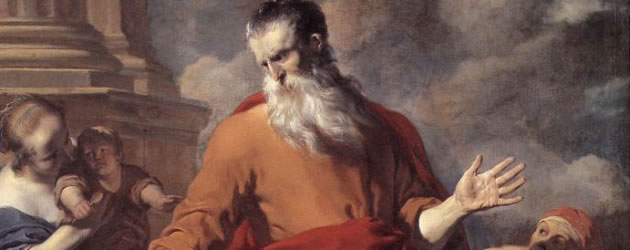
Saint Paul the Pharisee, the Christian, the Catholic, and the Martyr
We look at the person, history, and theology of one of the greatest saints in the 2,000 year history of the Catholic Church: St. Paul the Apostle. In this episode, we read from the writing of a presbyter, a Catholic priest, who wrote around 160 A.D. In it, we discover a description of what St. Paul looked like. We read from Eusebius of Caesarea's "Church History," wherein he describes the means by which St. Paul was martyred under the persecution of the Roman emperor Nero.
Before his monumental conversion to Christianity, Paul was a zealous persecutor of the Catholic Church. Why? What did he care if other Jews embraced the Christian Faith.. of what concern was that to him? Only by looking at the nature of first century Judaism and the sect of Judaism that Paul embraced - Pharisaism - we can understand why Paul was concerned about whether or not and how other Jews kept the Mosaic Law. On his way to persecute the Church in Damascus, Paul met the risen Jesus face to face, and that experience changed his life forever. Paul came to discover that his view of the Mosaic Law, his interpretation, was askew. This supernatural event turned one of the most formidable foes of the early Christians into their most powerful advocate.
Finally, in this episode, we look closely at St. Paul's Epistle to the Romans and discover a look at a new way of reading this famous text. This advance in Biblical studies is known in scholarly circles as The New Perspective. Join us as we take upon ourselves the mind of first century Judaism and read Paul's words afresh.
This transcript was produced by speech-recognition software and has not been proofread. Names, Hebrew and Greek terms, and Scripture references may be misspelled. Tap a timestamp to play the audio from that point.
Okay, before we begin with prayer, who was the greatest financier in the Bible? Noah. He was floating his stock while everyone else was in liquidation. Who was the greatest female financier in the Bible? Pharaoh's daughter. She went down to the bank of the Nile and drew out a little prophet. What kind of motor vehicles are in the Bible? Well, Yahweh drove Adam and Eve out of the garden in a fury. David's triumph was heard throughout the land.
Also probably a Honda because the apostles were all in one accord. Who was the greatest comedian in the Bible? Samson. He brought the house down. What excuse did Adam give to his children as to why they no longer lived in Eden? Your mother ate us out of house and home. Which servant of God was the most flagrant lawbreaker in the Bible? Moses. He broke all ten commandments at once. Which area of Palestine was especially wealthy? The area around Jordan.
The banks were always overflowing. Not so funny. Who is the greatest babysitter mentioned in the Bible? David. He rocked Goliath to a very deep sleep. Oh, har, har. I'm sorry, I didn't preview these. I would have X'd those two out. Which Bible character had no parents? Joshua, son of none. See, sister's laughing back there. Why didn't they play cards on the ark? Because Noah was standing on the deck. All right. And then you guys may have heard this one before. Didn't you know it's a sin for a woman to make coffee? Is it not written?
Hebrews? Yeah? Okay. Okay, good. Let us begin in prayer. In the name of the Father, and of the Son, and of the Holy Spirit. Amen. Oh, God, you have instructed many nations through the preaching of the blessed Apostle Paul. Let the power of his intercession before the throne of the Lamb help us in our own task of evangelization. We who venerate his memory this day. Lord, thank you for the gift of St. Paul, for such an amazing man, such an amazing one who has been sent, an apostle. We ask just for a tiny share of his evangelical spirit, so that we may live with our sights put on you. Put you first, and your mission first.
Lord Jesus Christ, be present now, and let your Holy Spirit bow, all hearts and love and truth today, to hear your word and keep your way. Give us the grace to grasp your word, that we may do what we have heard. Instruct us through the scriptures, Lord, as we draw near, O God adored. To God the Father, and the Son, and Holy Spirit, three in one. To you, O blessed Trinity, be praised throughout eternity, amen. In the name of the Father, and of the Son, and of the Holy Spirit, amen. I'll fix this thing on my pseudo-lapel, which I don't really have. Okay, let's turn to Philippians. Flip to Philippians, no pun intended, chapter 3, verse 5.
So we're going to go to Philippians 3, 5 through 6. Philippians 3, 5 through 6. And this is a mini-autobiography of Paul. Circumcised on the eighth day of the race of Israel, of the tribe of Benjamin, a Hebrew of Hebrew parentage, in observance of the law, a Pharisee. In zeal, I persecuted the church. In righteousness, based on the law, I was blameless. Okay, so remember, Judaism in the time of Paul, it wasn't like everybody thought the same. There were different sects, S-E-C-T-S, within Judaism.
There were the Sadducees, the Pharisees, the Zealot, different types of Jews. The Essenes was another group. And within the Pharisees, there were two substratum. There were those who followed the Rabbi Shammai and his teachings, S-H-A-N-M-A-I. And Shammai was a, he was the really conservative. And that's kind of a political term. Let me get a term that's more accurate. He was more of taking the law at face value. You know, under, you know, the law says something, that's what it says. We're going to follow it. Hillel was more loose. Hillel would interpret scripture much more loosely.
And so there was, for instance, the question of divorce. Shammai would say, well, yeah, you know, if a woman commits adultery, then her husband can submit a bill of divorce. Hillel would say, well, no, a lot more of a loose interpretation. No, if she, you know, maybe just kind of flirts, you know, with another guy, then the husband can issue a bill of divorce. And this isn't exactly how it was. I'm just kind of giving a polarized analogy just to give you an example here. And so Paul, we know, was of the strain of Shammaiite Phariseeism because he was zealous for the law. And so the question is, is, Paul, why were you persecuting Christians?
Why? Why were you doing this? What's the reason to persecute Christians? And remember, the Pharisees got their name from what? What did Pharisee mean? Do you guys remember what the name Pharisee means? I'm sorry? No, not believer. No. Not devout. No. That would be the Hasidim. Pharisee comes from the word perushim. It means to be separate. To separate yourself. So they wanted to separate themselves from the Hellenization occurring due to Alexander the Great's empire. And then later on, you know, the Romans.
And so the Pharisees were like, we want to separate ourselves from the Gentiles. And what was it that separated a Jew from a Gentile? Circumcision. Not just circumcision, but also purification rituals. Kosher food laws. Sabbath observance. These things that you did that Gentiles did not do. And if you did these things, you were keeping these ethnic codes that made you Jewish and not Gentiles. So you were separating yourself from the Gentiles. And remember, back then, politics and religion were intermixed. Israel was both a religion and it was a state. A nation.
You know, the Torah was not just some ethical code that you followed, that anybody could follow. It was a constitution and had positive law of the state. You know, it determined, you know, if you kill someone's ox, you know, if you go out and you shoot someone's cow. You know, it's not just, you know, well, you need to say three Hail Marys and two Our Fathers and then everything will be okay. No, it was make restitution to your neighbor. Give him another cow. You know, it determined how you live with one another. It was like the positive law. So there was an inseparability happening here between religion and state. And the Pharisees thought that God's promises for Israel would come about if Israel would keep the law, if she would stay pure. If she would stay pure, then exile would come to an end.
And so the Pharisees were not just concerned about their own purity. They were concerned about the purity of all of Israel. You know, it's kind of like people in, let's say, let's say that maybe Mexico was having a border fight maybe with Texans. And so a lot of Texans are like, okay, stop aggravating the Mexicans. Okay, come on, let's just be peaceful. And so everybody tries to be peaceful, but a couple of Texans, you know, go down and get drunk and start throwing bottles over the border. You know, they're going to incite a war. Well, it's like, no, stop it. You know, you're not just worried about yourself being peaceful. You're worried about other people being peaceful because it affects everybody. Okay, does that analogy work at all? Yeah, yeah. Okay, works for maybe a Texan.
I don't know. Okay, well, what I'm going to do is I'm going to read from a book called Witnesses of the Messiah. Witnesses of the Messiah. And it's a book written by Stephen. And I don't know if I'm saying his last name correctly. Pimentel. And Witnesses of the Messiah is a Bible study on Acts 1-15. And I read it a long time ago and I just got finished rereading it. It's a wonderful little Bible study. And I'm going to read from page 89. Page 89.
And this is subtitled, The Zeal of Saul. And remember, Saul is Paul. Saul is his Hebrew name. Paul is his Roman or his Greek name. Meanwhile, as the disciples fan out from Jerusalem, Saul decides to pursue them. The Romans had given the high priest a certain degree of legal authority over Jews living outside Judea. Remember, the Jews don't have any authority on their own. They're subjugated to the Romans. So the Romans gave the high priest some authority. And Saul is able to obtain from him, the high priest and the Sanhedrin, warrants for the arrest of any Jewish disciples in Damascus. And this is Acts 9.
The chapter 9 of Acts is what we're referring to here. Damascus was the first city on the road from Jerusalem to Babylon. Where the largest population of Jews in the diaspora lived. Since Damascus itself had a sizable population of Jews, it was a logical place for Saul to begin his work of threats and murder. Acts 9.1 As a Pharisee, Saul believed that the Deuteronomic Covenant had been violated by Israel. And this was pretty obvious to anybody who read the Torah. Reading Deuteronomy, it's just like a history of what had happened. Bringing upon her, the Deuteronomic curses, including oppression by Gentiles. He feared that deviation from the Deuteronomic Law would bring further divine punishment.
And sought strict observance of the law in order to repair the covenant. Only when Israel had become holy, that is set apart, through observance of the law, the Mosaic Law is what we're talking about here. The Torah, Genesis, Exodus, Leviticus, Numbers, and Deuteronomy. Only when Israel had become holy through observance of the law, would God send the Messiah to restore the Davidic Kingdom and conquer Rome, you know. And bring about the liberation of Israel. The most righteous Pharisees held that even violence should be employed to prevent deviation from the law. And look to biblical examples like Phineas, whose zeal for the law led him to kill a Hebrew man and his Midianite wife.
And that's in Numbers 25. Numbers 25, verses 6-13. That's the apostasy on the plains of Moab at Beth Peor. The readiness to employ violence for such a purpose was considered a mark of zeal. And it was to such zeal that Paul would later attribute his efforts to destroy the church. From Saul's perspective, the followers of Jesus were disloyal to the Deuteronomic Covenant. And thereby impeded the coming of the Messiah. Zeal, therefore, demanded that the disciples be eliminated. Of course, Saul's perspective rested on the assumption that Jesus was not truly the Messiah. Once that assumption was reversed, Saul's world was turned upside down.
Yeah, it sounds kind of Islamic in a certain sense. Yeah. And so, then the narrative says this. And this is so cool. I never knew this before until I read this book. Because you know I know everything, right? Yeah. On the road to Damascus, Saul sees a great light from heaven. Remember, Paul or Saul riding, we assume he was riding on a horse. He's probably not walking all this way or on his camel or whatever he used. That he is, he's going along and he sees, he and his companions all see a great light. But only Paul hears the voice. But only Paul hears the voice. Now, get this.
Isaiah had spoken of the great light that would accompany the redemption of the lands of the northernmost tribes. The first to have been conquered by the Assyrians. Remember that? The land of Zebulun and Naphtali, which started to be conquered by the Assyrians in 733. And then the conquering was complete in 722, when the city of Samaria was overtaken. Well, this, and then the author here, Stephen Pimentel, quotes Isaiah 9, 1 through 2. Which Matthew quotes in the beginning of his gospel. And that is, I'm going to quote Matthew here, or quote Isaiah 9, 1 through 2. In the former time, he brought into contempt the land of Zebulun and the land of Naphtali. But in the latter time, he will make glorious the way of the sea, the land beyond the Jordan, Galilee of the nations.
The people who walked in darkness have seen a great light. Those who dwelt in a land of deep darkness, on them has light shined. So Isaiah, in Isaiah 9, 1 through 2, he talks about how those people who experienced the invasion of Assyria in 733 B.C. Who are now in darkness, you know, in exile. A great light will come upon them when the redemption comes. And here's Saul, you know, going on the way to Damascus. Well, get this. The road to Damascus on which Saul was traveling passed through the tribal land of Zebulun. Saul hears a voice say to him, Saul, Saul, why do you persecute me? Paul will later derive his understanding of the church as the body of Christ from these words.
Saul had been persecuting the disciples of Christ. But Christ asked him, why do you persecute me? To persecute the church is to persecute Christ. For the church is the mystical body of Christ. And then I'm just going to read one more paragraph. In a state of confusion, Saul asks, who are you, Lord? And the speaker reveals himself to be the resurrected and ascended Jesus. This is Acts 9, 5. Saul now knows that the apostles' proclamation of Jesus as risen from the dead is true. Because of his crucifixion, Jesus has appeared to be a false messiah. But his resurrection and ascension prove that he is the true messiah. Saul had believed that the general resurrection of the dead would occur before the restoration of Israel.
Instead, the resurrection of Jesus alone had occurred before the restoration of Israel. Inaugurating the kingdom for those who would enter it. Saul had misinterpreted the law and the prophets. Just as Stephen had charged in Acts chapter 7. Though Saul had helped put Stephen to death, he now realizes that Stephen was right. Stephen's understanding of the law would become a core element. of Paul's teaching. And remember how it said that at Stephen's death, those who were stoning him laid their cloaks at the feet of Saul, the young man? Well, to lay something at the feet of somebody means that that person has leadership.
It was kind of over whatever. And it kind of shows that Saul was over or was in charge of probably Stephen's stoning. Whenever I read that passage before, you know, earlier in my life, when I read Acts 7, I would think, oh, well, you know, Saul was just a young man and he was just observing this. And then later on, you know, he got more zealous. But no, he was actually the leader of the people who were stoning Stephen as a young man. And so Paul was an amazing student of the Bible. And the more that you study the Bible and the more that you read biblical scholarship on Paul, the more you begin to realize that, wow, he really knew his Old Testament. The arguments that he uses, especially in Romans. It's so intricate and so delicate the way that he quotes the Old Testament.
He knows it so well. It's really amazing. And so Jesus handpicked Saul as his disciple. Because when you see, I can use an example here of Cardinal John Henry Newman. Cardinal Newman was part of the Oxford movement where they were studying early church history, the early church fathers. And Cardinal Newman was one of the greatest Oxford scholars of his day. And when he converted, 600 Oxford scholars and priests converted with him. It was like, you know, a towering intellectual converts. And in the same way, this is what Saul is. He's like their best student. You know, one of the biggest and the brightest converts to Christianity.
And this is huge. This is, no, that couldn't have happened. What are you talking about? You know? And so this is, this is a, Saul would be a great instrument for Christ. And Christ was, handpicked him as an apostle. Now, Paul, of course, was not one of the original 12 apostles. Paul was, was an apostle because he was sent by Christ. So we do call him that. We do call him an apostle, but he's not one of the original 12. Let's look at Acts chapter 22. Verse 1. Acts chapter 22, verse 1.
Barbara, would you please read from verse 1 through 16. My brothers and fathers, listen to what I am about to say to you in my defense. When they heard him addressing them in Hebrew, they became all the more quiet. And he continued, I am a Jew born in Tarsus, in Sicily, but brought up in this city, at the feet of Gamaliel. I was educated strictly in our ancestral law and was zealous for God, just as all of you are today. I persecuted this way to death, binding both men and women and delivering them to prison. Even the high priest and the whole council of elders can testify on my behalf. For from them, I even received letters to the brothers and set out for Damascus to bring back to Jerusalem in chains for punishment, those there as well.
On that journey, as I drew near to Damascus, about noon, a great light from the sky suddenly shone around me. I fell to the ground and heard a voice saying to me, Saul, Saul, why are you persecuting me? I replied, Who are you, sir? And he said to me, I am Jesus, the Nazarene, whom you are persecuting. My companions saw the light, but did not hear the voice of the one who spoke to me. I asked, What shall I do, sir? The Lord answered me, Get up and go into Damascus, and there you will be told about everything appointed for you to do. Since I could see nothing because of the brightness of that light, I was led by hands by my companions and entered Damascus. A certain Ananias, a devout observer of the law and highly spoken of by all the Jews who lived there, came to me and stood there and said, Saul, my brother, regain your sight.
And at that very moment I regained my sight and saw him. Then he said, The God of our ancestor designated you to know his will, to see the righteous one, and to hear the sound of his voice. For you will be his witness before all what you have seen and heard. Oh, I'm sorry, to what you have seen and heard. Now, why delay? Get up and have yourself baptized, and your sins washed away, calling upon his name. Awesome. And the narrative says that, elsewhere says that, he could see, it was like scales falling from his eyes. So Paul was, sorry, I'm trying to get this, little guy on my fake lapel I'm creating on my cotton t-shirt. There we go.
How does that look? Does that look good? Do I look weird? No? Okay, how about that? Okay, thanks, thanks. So Paul was blinded. He was blind for how long? Three days. Paul was blind for three days, and then he saw the light. Kind of almost like Christ being in the ground for three days, and then you have the light of the resurrection. There's a little bit of a typology there, in a certain sense. Next time I'm going to wear a button up, because this little guy, there we go, ha-ha, got it back to where it was. Okay, so, the, why did I have you read this? What was important about it? Oh, man.
Oh, that's right, that's right. He was the persecution. So Saul, or Paul, thought that he could, by persecuting the Christians, get them to stop what they were doing and to start following the law. Because these Christians, apparently, were not following the law. They weren't doing it correctly. They weren't following the law with all of its dictates. Instead, they were doing other things. They were doing other things. And so, when Paul had this conversion experience, he began to re-read the prophets and the law in a new way. In fact, he takes a personal retreat in order to see this. And so, let's go to Galatians. Let's go to Galatians chapter 1, verse 11. Galatians chapter 1, verse 11.
And we'll read about this retreat. Galatians chapter 1, chapter 11. Are you guys all there? Wow, you guys are getting better. You know, at the beginning of this Bible study, I would have to sit here for about five minutes waiting for all of you guys. Now you're there, just like that. It must be those Bible tabs. Okay, now I want you to know, brothers, that the gospel preached by me is not of human origin. For I did not receive it from a human being, nor was I taught it, but it came through a revelation of Jesus Christ. For you heard of my former way of life in Judaism, how I persecuted the church of God beyond measure and tried to destroy it, and progressed in Judaism beyond many of my contemporaries among my race, since I was even more a zealot for my ancestral traditions.
But when God, who from my mother's womb, had set me apart and called me through his grace, was pleased to reveal his son to me, so that I might proclaim him to the ethnos, the Gentiles, the nations, I did not immediately consult flesh and blood, nor did I go up to Jerusalem, to those who were apostles before me. Rather, I went into Arabia, and then returned to Damascus. And so, most scholars think that this area where he went to was just south of Damascus in the wilderness. So, just as Jesus, at the beginning of his ministry, went out to the wilderness for 40 days and 40 nights, right after his baptism, so Paul goes out to Arabia, most likely probably with scrolls of Isaiah and the Torah, you know, to kind of go, whoa, whoa, hold the phone, shut the front door.
You know, I'm going to reread the scriptures and see how I was misreading them. And what Paul came to really find out, when he was reading the scriptures in this new way, was that the law, yes, separated Israel from the Gentiles. But that was not its ultimate purpose. God's ultimate purpose was not for Israel to be separate, but was for Israel to be a light to the nations, and that the law had a temporary purpose. Okay, let's hold off right there. Let's go ahead and pause on Paul's theology of the law. And let's step back a little bit. And I'm going to read to you guys from... By the way, what did Paul do as an occupation? How did he make money?
He made tints. And this also meant that he would make the mohair to make the tints. So it wasn't like he just took the stuff and made tints. He also helped make the material. And, but there was a presbyter, a priest, who in the year, about the year 160 A.D., wrote the Acts of Paul. You know how Luke wrote the Acts of the Apostles? Well, this guy wrote the Acts of Paul, in honor of Paul. And it wasn't, he wasn't a Gnostic, or he wasn't, you know, some odd, weird, loony Christian. He was just a normal guy, and he was writing this in honor of Paul. And so the Acts of Paul, we don't have the entire thing. We have about two-thirds of it today.
But the Acts of Paul is really cool. It has some neat information about Paul. It's not part of the New Testament, of course, because it's, I mean, Ignatius' letters in the 100s aren't going to make it. And, of course, the Acts of Paul in 160 isn't going to make it. But the Acts of Paul is cool, because he kind of talks about what Paul looked like, how oral tradition, handed down, described Paul. You guys want to know what Paul looked like? Okay. Another writer says he had red hair. But I don't believe he says this in the Acts of Paul. But he says, Paul was a man little of stature. So he's probably short. He's thin-haired upon the head.
So you guys who are balding, you know, you can look to St. Paul as a role model. He was crooked in the legs. So he probably was a little bow-legged. You know? He had a good state of body. He had to, to undergo everything that he underwent. He had a unibrow. He had eyebrows joining. So those of you guys who have unibrowes, you can look to St. Paul. And he had a somewhat hooked nose. So he was short, bow-legged, hooked nose, thin-haired. Very Jewish, yes. A Jew of Jews. A Hebrew of Hebrew parentage. Okay. So I thought that was kind of neat. Let's turn to 2 Corinthians chapter 11.
Cool, cool, odd trivia. You won't find that in Bible baffle or Bible outburst or Bible trivia. The Acts of Paul. The Acts of Paul, yeah. Some dude. Yeah, some presbyter in the early church. An Orthodox Christian. You know, someone who... Yes. You can find it at earlychristianwritings.com. We're going to turn to 2 Corinthians chapter 11. 2 Corinthians chapter 11 is another cool little autobiography. Basically, he's talking about these false teachers, his opponents, who have been visiting the Christian churches and have been trying to turn them away to this, to what he calls the false gospel.
And we'll talk about that false gospel in just a moment, these opponents that he had. And Paul says this in 2 Corinthians chapter 11, verse 24. Basically, in verse 24, in this passage, he's saying, okay, these guys say that they're so great and they say that they're apostles. Well, I've suffered more than they have. Basically, this is Paul's credentials. Notice, Paul doesn't say, you know, I have a Masters of Divinity from Gamaliel school. And, you know, and I have my, you know, Doctorate of Sacred Theology from the Greg or from the Angelicum or whatever. No, he says, five times, this is 2 Corinthians 11, 24. Five times at the hands of the Jews, I receive 40 lashes minus one.
Guys, 40 lashes was known to even kill a person back then. Paul received 40 minus one, you know, so it's a little merciful. Five times. I've heard that if they did minus one, because if the guy gave you more than 40, he would get the lashes. Say it again? If the person giving the lashes accidentally miscounted and gave you 41 lashes, then he would get the lashes. Oh, so if you gave the guy 41 lashes, they would, then the guy that you're lashing could lash you. And so it's kind of like, okay, let's give him 39, just to be safe. Okay. Yeah, I would definitely, I would give 37. Okay. Three times I was beaten with rods.
So he had like a caning. Like, what happened to that? Remember that American smart aleck teenager that was caned? You know, where was that? Is that Thailand or whatever? Yeah. Once I was stoned. Okay, big deal. He had stones thrown at you, right? No. What was stoning like? Was it that you stood in a corner and a bunch of people threw stones at you? Was that what stoning was like? What was stoning like? Does anybody know? They would throw you off of a cliff, and they would drop stones on you? Yeah. They would take stone, big, heavy, huge, boulder type stones and would drop them on you.
That's what stoning was. And there's another place, I believe it's in Acts of the Apostles. I don't know exactly where it is. I'm just thinking this off the top of my head. But it talks about how Paul was stoned. And then the brothers gather around him and then he gets up. Almost like they're getting around to pray for him and then he gets up. Guys, Paul himself very likely had died and then had been resuscitated in a, not with a resurrected body, but in a resurrected sense. Some people have seen that in Acts of the Apostles because when you were stoned, guys, you were dead. Nobody walks away from a stoning, yeah. Okay. By the way, I'm going through this slowly because it's so huge what he's saying here.
Three times I was shipwrecked. I passed a night and a day on the deep. Out in sea. A night and a day. Can you guys imagine? On frequent journeys in dangers from rivers, dangers from robbers, dangers from my own race, dangers from Gentiles, dangers in the city, dangers in the wilderness, dangers at sea, dangers among false brothers, in toil and hardship, through many sleepless nights, through hunger and thirst, through frequent fastings, through cold and exposure. And apart from these things, there is the daily pressure upon me of my anxiety for the churches. Wow. And then he talks about how, you know, he boasts in his weakness.
And he says, yeah, I love this, down in chapter 12, verse 1, or verse 2, I know someone in Christ who 14 years ago, whether in the body or out of the body, I do not know, God knows, was caught up to the third heaven. And I know that this person, whether in the body or out of the body, I do not know, I do not know, God knows, was caught up in a paradise and heard ineffable things which no one may utter. About this person, I will boast, but about myself, I will not boast, except about my weaknesses. Caught up into the third heaven. This guy he knows, but he's not going to talk about himself, but he knows this guy, I know this guy once who was caught up to the third heaven.
Let's turn back to Acts chapter 14. Acts chapter 14, verse 19. This is the passage I was trying to think about. Acts chapter 14, verse 19. However, some Jews from Antioch and Iconium arrived and won over the crowds. They stoned Paul and dragged him out of the city, supposing that he was dead. Acts 14, 19.
But when the disciples gathered around him, he got up and entered the city. And there you go, that's where it is. And it's likely that Paul, by the way, is talking about himself in 2 Corinthians chapter 12. And that it was when he was stoned, he had a death experience and was caught up into heaven and saw ineffable things. And then, due to the grace of God and the prayers of the saints, was brought back to life. It's very possible if you put the narrative together. Very interesting stuff you can find out in scripture if you read it, if you read the details. You guys want to get it back to more jokes? No? Okay. St. Paul in the early church fathers.
I didn't have my Jurgens with me. If you guys ever want to find a really cool compilation of the early church fathers where you can see what they have to say on various subjects. Jurgens, is an author who wrote, I believe it's called The Faith of the Fathers or it's called The Early Church Fathers but basically if you look up Jurgens you can find it's three volumes and I didn't have my copy with me. It's at my three copies. It's at the house but I did find a couple of things that the early church fathers said about Paul. I'm just going to hold this. I'm so, it's one of those days where you're just kind of, ugh!
You know, it's like, by the way, I hate wearing ties. I cannot stand wearing ties. You guys ever see me at mass with a tie on? Whenever I go up to do something, you know, from the ambo we're having a scrutiny? No, I never have a tie on. I cannot stand them. It's one of the reasons I know I wasn't called to the priesthood. Okay, this is St. Irenaeus wrote in 180 AD against heresies. I've quoted from this before. Book 3, chapter 3, paragraphs 1 and 2. This is what St. Irenaeus says about Paul. It's very quick, very passing. This is what he says. It is within the power of all who may wish to see the truth. And he's talking about the Gnostics. You know, you have these Gnostic Christians who are gathering, you know, and they're believing these really weird things.
And he's, you know, he's trying to refute them. So he says, it's within the power of all who may wish to see the truth to contemplate clearly the tradition of the apostles manifested throughout the whole world. And we are in a position to reckon those who were by the apostles instituted bishops in the churches and the succession of these men to our own times. It would be very tedious in such a volume as this to reckon up the successions of all the churches. So, I will put to confusion all those who assemble in unauthorized meetings by indicating that tradition derived from the apostles of that very great, the very ancient and universally known church founded and organized at Rome by the two most glorious apostles, Peter and Paul.
And so, you know, Paul did not found the church at Rome. He wrote the letter to the Romans, the epistle to the Romans. And he says in there, I hope, I wish to come visit you guys soon. But he, obviously, if he's writing to the Romans and they're Christians and they're Jews and Gentiles, then you would think that somebody else had founded it. But later on, Paul did go there and Paul was a huge figure in the early church in Rome. And the early church in the records, we know that Paul was beheaded in Rome under the persecution of Nero. And Eusebius of Caesarea was an early historian who wrote about 312 AD. And that's Eusebius of Caesarea. And Eusebius of Caesarea wrote The Church History.
Caesarea. That's an A-R-E-A. And he wrote his History of the Church or Church History. It's a very well-known, reliable early church history document. And in his Church History, he wrote in Book 2, Chapter 25. Book 2, Chapter 25. And by the way, if you want to find this online, you can go to newadvent.org slash fathers. And you'll see Eusebius of Caesarea there. And this is what he says. It is therefore recorded that Paul was beheaded in Rome itself.
And that Peter likewise was crucified under Nero. This account of Peter and Paul is substantiated by the fact that their names are preserved in the cemeteries of that place even to the present day. Now, Eusebius is not saying this for himself. He's quoting a guy named Gaius. is his Roman name. Gaius. There you go. He's quoting this guy and what Gaius had written and had proclaimed. Eusebius does this a lot. He had a lot of writings accessible to him that no longer exist. We still have Eusebius' early church history but we don't have all of his sources.
So he'll say such and such said this such and such said this. So if you go to Juergens and you're looking for what someone had said a lot of times it'll say so and so said this and then it'll say it's in Eusebius' church history because we don't have the primary source we have the secondary source. Okay. Let's go ahead and go along here a little bit later. Now when after he had his retreat in Arabia he went to the region south of Damascus Arabia and then he returned to Damascus and he was there for three years and then the Jews quote unquote remember these are not all Jews these are just the Jews quote unquote those Jews who opposed him got really zealous just like Paul had been and they wanted to kill him so how did Paul escape Damascus does anybody remember I'm sorry in a basket yeah it was in a basket he was let down through a window in the wall surrounding Damascus the disciples let him
down in a basket through a window in the wall and this is how he escaped and then he's like where do I go so he went up to Jerusalem he conferred with Peter for two weeks for 15 days he conferred with Cephas that's in Galatians chapter 1 he talks about that let's turn to page 460 of understanding the scriptures now this is why you brought your book every single night there you go Augie's sitting back there and she has her book and she's excited okay so on page 460 we have a chart and Luke who wrote Acts of the Apostles how many or where did Luke get his information from I mean who was Luke a companion of Luke was a Gentile but who was his companion or rather who had Luke as a companion yeah Paul so Luke is writing with you know his source information comes from Paul so Luke in a lot of Acts of the Apostles says you know we did this we did that and then when he splits off from Paul he's no longer
on a missionary journey with Paul he says Paul and so and so did this Paul and so and so did this because after Paul returned you know he related it to Luke this is reliable history that we're reading here in Acts of the Apostles and so in Acts Luke has to you know Paul has these this opposition that he's opposing and Paul in a lot of his epistles especially Romans Colossians Romans Colossians Galatians these are all dealing with the same the opponents these great opponents that Paul is dealing with and this is the first Christian heresy that existed in the life of the church what is it called it's a Jewish form of the heresy in a certain sense the Judaizers the Judaizing heresy Judaizers is what they were called and they were also called the circumcision party they went around and had parties and it hurt it's like Tupperware parties yeah and this heresy was what Paul used to be involved
in you know you have to adhere to the law you have to become a Jew before you become a Christian of course you know this is impossible because a eunuch can't become a Jew according to Deuteronomy 23 verses 1 through 2 1 through 3 so the Deuteronomic law says a eunuch cannot become a Jew because a eunuch doesn't have a or it's been messed with and we talked about that last week you guys asked and I explained that to you and so how could a eunuch become a Jew then become a Christian it's impossible so what does this mean eunuchs are excluded from the new covenant no and so Paul has so many great arguments in Romans Colossians and Galatians he's battling the Judaizers the circumcision party and in especially in Romans Paul is dealing with an imaginary interlocutor which is like a it's kind of like what Thomas Aquinas does in his Summa Theologica he imagines like he has an opponent and he says
he says well you say this but I say this and so you would naturally ask this and so I say this but then you have the question this and so I say and so it's imaginary opponent that he's dealing with and Thomas Aquinas does this he he gives objections then he gives the answer objection answer this is how the Summa is divided and so in Romans this person is a Judaizing Christian who thinks that you have to keep the law in order to be a in order to be a Christian and so let's turn to Romans chapter 3 verse Romans chapter 3 verse 28 and I'll get back to Luke's Acts of the Apostles in chapter 40 460 of understanding the scriptures in just a moment but Romans chapter 3 verse 28 Paul writes for we consider that a man is justified by faith apart from works of the law okay a man is justified by faith apart from works of the law and I'm going to give you the Greek here Anthropos which means man mankind
dikio to be made right with or it basically means justice okay man is justified by faith pistis without coris let me go ahead and erase these up here get more room aragon nomos aragon nomos works of the law remember nomos like deuteronomie means deuteros nomos second law aragon kind of like ghostbusters remember what was his name you had bill murray and then you had egon yeah it's like egon okay but aragon it's also he's also a dragon that's a dragon okay cool I know avadon means destroyer and mago means magician or sorcerer okay aragon nomos works the law man is made right is justified before god by faith without works of the law and this is what paul had come to understand with his you know encounter with the lord and with uh and with everything that he had he had studied in the arabian desert is that you are in right relationship with god you have a covenant relationship with god not by keeping the works of the law
not by keeping um kosher food laws etc etc not by keeping the torah not by separating yourself from the gentiles and this is why he says verse 29 does god belong to jews alone does he not belong to gentiles too yes also to gentiles for god is one and will justify the circumcised on the basis of faith and the uncircumcised through faith are we then annulling the law by this faith of course not on the contrary we are supporting the law well oh paul what are you talking about you just said we're not justified by works of the law but yet you're supporting the law what do you mean uh well what does he start doing in chapter 4 where it the narrative picks up he talks about what did what was the law according to a jew what was the law when you said the torah the first five books of the bible which includes what's the first one genesis so paul goes to the law to genesis and he shows how in genesis
let's read romans 4 verse 1 what then can we say that abraham found our ancestor according to the flesh indeed if abraham was justified on the basis of his works he has reason to boast but this was not so in the sight of god for what does the scripture say quote abraham believed god and it was credited to him as righteousness righteousness he's quoting genesis 15 6 which is the law it's torah he's supporting this the law supports what paul is saying and paul is supporting the law a worker's wage is credited not as a gift but as something due but when one does not work yet believes in the one who justifies the ungodly his faith is credited as righteousness so david and then he goes into david and talks about how david was agrees he declares the blessedness of the person to whom god credits righteousness apart from works now abraham was declared righteous in genesis 15 which is before genesis 17
which and what happened in genesis 17 what was given the covenant of circumcision yeah abraham was uncircumcised and yet he was declared righteous before god hmm that's what the law says guys we're upholding this is what is this not and so jews look at it and they're like what he what how could how was he uncircumcised but yet he was righteous before god that doesn't mean and so then paul in romans and elsewhere and we've done this before we've gone to galatians and we've talked about how the law was a pedagogue it prepared for and and kept uh israel kind of prepared israel until the faith to come until israel would receive the sonship the divine sonship under and through jesus christ okay so the law was a temporary phenomenon so it's a it's it's really it's really cool to see how paul uses you know the torah to refute the judaizers the circumcision party who believe that you have to keep
all these things okay one final thing no actually it's not going to be the final thing we'll have lots more lots more fun um there's in biblical studies something huge happened in 1977 in 1977 a book was published by e.p. sanders e.p. don't ask me why these scholars go by their initials maybe i should start going by c.b. weber and then people will respect me or something okay e.p.
sanders wrote a book called paul and palestinian judaism paul and palestinian judaism and this and this is the result of the finding of the dead sea scrolls and other discoveries but primarily the dead sea scrolls in the decades just immediately preceding 1977 and what e.p. sanders saw was that in the dead sea scrolls this phrase aragon nomos was used quite frequently and it was explained in more clear terminology as those as those observances that made you a Jew as opposed to a Gentile and that this was the way that you were justified before God was by following these and so this is what the Essenes did the Essenes who were a Jewish sect who lived out in the desert near the dead sea they separated themselves not just from the Gentiles but from all of Jerusalem where the Romans were because the Romans were in Jerusalem and they separated themselves from the temple as they thought the temple
had been a little bit too loose that those people in charge of the temple were a little bit too loose in their interpretation of the law so they stepped back and they wanted to keep the law even more perfect so most of them were celibate they lived these celibate ascetic lifestyles and so Aragon from the Dead Sea Scrolls seeing what works of the law were is that E.P. Sanders started what's now called in biblical studies the new perspective the new perspective and it's a way of reading Paul with more knowledge about the Judaism of Jesus' day and Paul's day now we know more about what Paul meant when he was saying one is justified apart from works of the law and so for so long we can have the tendency of reading Paul as if when he says works he means good works like he's talking to a Pelagian you guys know who Pelagius was Pelagius was a British monk he was a contemporary of St.
Augustine who was from Britain who came down to Rome and started preaching that one could be justified could be made right before God apart from baptism without the Eucharist in fact even you know apart from Christ that Christ came to save those who were really weak and then so but for those who were really strong they could pull themselves up by their own moral bootstraps and could kind of harness God and could say God you owe me heaven because I can do it on my own and this was Pelagius and St. Augustine wrote he basically St. Augustine wrote against the Maniches he wrote against the Donatus and then he wrote against the Pelagians who believe that grace was an optional and that we could kind of pull ourselves up by our own moral bootstraps and so St.
Augustine wrote a lot against Pelagius and finally the Catholic Church had several local councils such as the Council of Orange it was held near Los Angeles Orange County get it yeah and they all rode Harleys yeah and so the Council of Orange and there was the first and the second Council of Orange which basically declared that no we you are not saved by being a good person but you're saved purely and wholly through the grace of God God's good grace and that justification initial justification cannot be earned and so ever since then people have been reading Augustine have been reading Paul through Augustine and have been saying oh well you know what Paul was primarily was probably dealing with you know Pelagian Jews that somehow it was by keeping the Torah that they got to heaven but now we're beginning to see that no that was not the case it's not how the Jews saw the Torah it was not a timeless
moral system by which you got to heaven but rather it was the means by which you were Israelite or Jewish as opposed to Gentile and therefore Israel would get liberated the Messiah would come if you kept this and the Deuteronomic curses would stop well Paul saw that guess what Jesus had taken the Deuteronomic curses upon himself upon the tree and had delivered Israel from the Deuteronomic covenant had renewed the Davidic covenant and now you could join the kingdom of God through baptism without having to get circumcised or anything like that it's a new way of reading Paul and it's really exciting stuff and today two more contemporary scholars who follow the new perspective are James Dunn I don't know maybe he's Australian I don't know it sounds a little and N.T. Wright and I've spoken about N.T. Wright before and so it's really fascinating to read their writings and to get to read Paul in this
new light and get to see how to interpret him okay and let's turn to Romans chapter 3 verse 19 Romans chapter 3 I'm sorry Romans chapter 3 verse 9 not 19 Romans 3 9 so we just looked earlier at Romans 3 28 we're going to go back to verse 9 okay he's talking basically he's just condemned the Jew he just said Jews guess what you guys are you guys are sinners and the Jews are saying well it doesn't matter because we keep the Torah and Paul's like no actually you don't keep the Torah and so I'm sorry I'm going to do this little thing again we're going to go backwards to Romans chapter 2 verse 17 Romans chapter 2 verse 17 now if you call yourself a Jew and rely on the law and boast of God and know his will and are able to discern what is important since you are instructed from the law and if you are confident that you are a guide for the blind and a light for those in darkness that you are a trainer
of the foolish and a teacher of the simple because in the law you self and then he gets away from the ceremonial prescriptions that everybody thinks that they're in right covenant with God and he gets to another part of the law and he says well do you who forbid adultery do you commit adultery you who detest idols do you rob temples you who boast of the law do you dishonor God by breaking the law for as it is written because of you circumcision to be sure has value if you observe the law but if you break the law your circumcision has become uncircumcision again if an uncircumcised man keeps the precepts of the law will he not be considered circumcised indeed those who are physically uncircumcised but carry out the law will pass judgment on you with your written law and circumcision who break the law one is not a Jew outwardly okay one is not a covenant member of the family of God outwardly
just because you keep the ceremony precepts of the law one is the true circumcision is not outward in the flesh rather one is a Jew one is in covenant with God inwardly and circumcision is of the heart remember we saw this in Deuteronomy 30 verse 6 we saw this in Ezekiel 36 chapter 36 verses 22 through 28 where Ezekiel promises the circumcision of the heart in the new covenant circumcision is of the heart in the spirit not the letter his praise is not from human beings but from God so what advantage is there then in being a Jew or what is the value of circumcision much in every respect for in the first place they were entrusted with the utterances of God what if some were unfaithful would their infidelity nullify the fidelity of God of course not God must be true though every human being is a liar let's skip down to verse nine where I was going to have you guys start well then are we better
off so are the Jews are we better off because we have the utterances of God well not entirely for we have already brought the charge against Jews and Greeks alike that both are under the domination of sin and that's the theme that he's been doing in Romans 1 through 3 9 Paul has been showing that everybody is a sinner yes you Jews you need to be delivered from your sinfulness you need you cannot justify yourselves by keeping these aragon nomos so then he does something very interesting Paul does a string of quotations and this is another proof of how he's so good at quoting the Bible his Bible the Old Testament and Paul quotes six Old Testament passages that talk about Jews or Israelites because remember we want to get back to the term Israel which is all 12 tribes not just the tribe of Judah and and how these and and these these different passages talk about how yes Israelites are sinners
talks about people who have sinned who are members of the covenant family of God and how that's not good and these and five of these six quotations include body parts look at verse 13 what three body parts do you see in verse 13 throats tongues lips what about verse 14 the mouth verse 15 feet verse 18 eyes isn't that cool how he does that and most of these quotes are from the Psalms in fact all of them are from the Psalms except for Isaiah 59 verse 7 through 8 and so he's kind of showing how yes you too are sinners you you Israelites he's condemning the Israelite because yes wow you've been given the law whoa well what does the law do it shows that you're sinful haha so you can be oh yes I have the law but then you also need to say oh but I've broken the law and according to Paul he was persecuting the Christians because the Christians weren't keeping the law because you know and he wanted
for everybody to be keeping the law and now he's saying well guess what guys none of us can keep the law in fact he realizes that when he was a Pharisee and he was blameless without reproach above the law Philippians 3 5 through 6 he was breaking the law in fact all of his companions were breaking the law they were all sinning yes go ahead what does that verse mean their throat is an open grave their throat is an open grave probably that you take the name of the Lord in vain is what I'm guessing I'd have to look at that psalm in context and you know do a deeper study but just when I think about your throat is an open grave it's kind of like hmm and remember what was an open grave to a Jew it made you unclean yeah so but if your throat is an open grave then it must be maybe you're saying something you're speaking where your vocal cords are you're saying something you're speaking blasphemies
Ephesians 4 29 whenever somebody cusses you say Ephesians 4 29 what is it let's turn there Ephesians 4 29 this is this is what I learned this from my friend Marcella when I went to Texas A&M she looked at me once I swore I said something like shit and she said Ephesians 4 29 and so I was like what like I know what that is and so I went home and I looked it up because I was curious Ephesians 4 29 no foul language should come out of your mouths but only such as is good for needed edification that it may impart grace to those who hear Ephesians 4 29 so Romans is really a beautiful epistle let's say Romans 8 is one of my favorite is one of my favorite chapters in all of the Bible and he talks about how the those people who have been baptized in Romans 6 have no condemnation now there's remember the the law the covenant the Deuteronomic covenant was a covenant of condemnation is what Paul calls it
elsewhere and he says in Romans chapter 8 verse 1 now there is no condemnation for those who are in Christ Jesus for the law of the spirit of life in Christ Jesus has freed you from the law of sin and death for what the law weakened by the flesh was powerless to do this God has done by sending his own son in the likeness of sinful flesh and for the sake of sin he condemned sin in the flesh so the law could not make you holy the law could not overcome your sinfulness what did the law do it disclosed your sinfulness the law would say do not covet and then you covet the law would say do not commit adultery and you'd have lustful thoughts this is what Paul says elsewhere the law God bless you whoever sneezed back there way back there okay but now God has condemned he's taken out sin at the root verse 4 so that the righteous decree of the law might be fulfilled in us who live not according to the flesh
but according to the spirit the new life of Christ for those who live according to the flesh are concerned with the things of the flesh but those who live according to the spirit with the things of the spirit the concern of the flesh is death but the concern of the spirit is life and peace for the concern of the flesh is hostility towards God it does not submit to the law of God nor can it okay so when you're in your pre-baptized state you can't overcome sin it's impossible for you to overcome your sin yeah you might get over your alcoholism but what about everything else you know AA can help you out to a certain degree but what about your entire life every aspect and those verse 8 and those who are in the flesh cannot please God but you you Roman Christians who have become who have been baptized in Christ he talks about in Romans 6 how you get into Christ but you who are not in the flesh
on the contrary you are in the spirit if only the spirit of God dwells in you whoever does not have the spirit of Christ does not belong to him but if Christ is in you although the body is dead because of sin the spirit is alive because of righteousness if the spirit of the one who raised Jesus from the dead dwells in you the one who raised Christ from the dead will give life to your mortal bodies also through his spirit that dwells in you consequently brothers we are not debtors to the flesh to live according to the flesh but if you live according to the flesh you will die but if by the spirit you put to death the deeds of the body you will live so Paul's not saying you have it made in the shade he's not saying oh well you know yeah we're in Christ there's no condemnation no now he says now that you have the spirit of God who's giving life to your mortal bodies that are dead because of sin
now you can put to death the deeds of the flesh what are the deeds of the flesh well he lists them quite a bit especially in Galatians chapter 5 he lists all the deeds of the flesh the works of the flesh which are grievous sins verse 13 if you live according to the flesh you will die but if by the spirit you put to death the deeds of the body you will live so you have to persevere in this grace you have to allow for it to continue to change your life and root out your sin and if you don't if you submit again to it you will die We'll see you next time.
The podcast has always been free, and it stays free because listeners support it. If it has been a blessing to you, would you please consider supporting it?