Chapter 12 · Old Testament · 1 hr. 17 min.
The Divided Kingdom
The Division of Israel into 2 Kingdoms: North and South
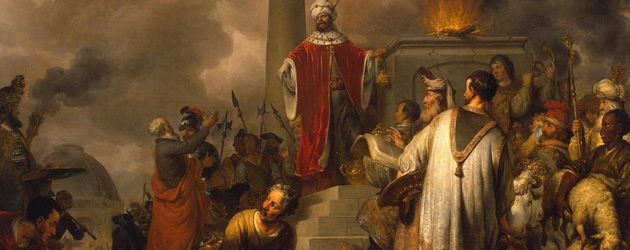
The Division of Israel into 2 Kingdoms: North and South
We cover First and Second Kings, showing how the united Davidic Kingdom under Solomon split in 930 B.C. when Solomon died. This split in the Kingdom was ultimately God’s punishment due to Solomon’s threefold sin of (1) amassing wealth for himself, (2) acquiring a great number of wives who turned his heart to idolatrous worship, and (3) acquiring many horses for a standing army. These very three transgressions were forbidden in Deuteronomy 17. Solomon’s son, Rehoboam, decided to harshen his father’s rule by making the yoke on his subjects heavier. This poor decision resulted in the northern 10 tribes seceding under the reign of Jeroboam. This Northern Kingdom, bereft of the Davidic throne, is thereafter called by three popular names: Israel, Jacob, and Ephraem in the historical and prophetic books. The Southern Kingdom, now led by Rehoboam, consisted of only two of the original 12 tribes: Judah and Benjamin. It is now called the Kingdom of Judah. Since the Levites did not acquire tribal land and resided in the Levitical cities, both kingdoms contained descendants from the tribe of Levi as well. We also take a look at the ministry of Elijah and Elisha and see how this history foreshadows the ministry of both John the Baptist and Jesus.
This transcript was produced by speech-recognition software and has not been proofread. Names, Hebrew and Greek terms, and Scripture references may be misspelled. Tap a timestamp to play the audio from that point.
In the name of the Father, and of the Son, and of the Holy Spirit. Amen. Thank you so much for your inspired word, for showing us all the types in the Old Testament and how you confirm our faith by showing how you so wonderfully fulfill these Old Testament four types and prefigurements with all the New Testament realities that you have predestined to come about by your eternal providence and will. And so, we worship you and we give you our lives.
We offer you the sacrifice of our hearts this evening. We thank you, again, for this great gift of being able to study your word. I ask that this evening, this study, this meditation of your word, would transform our lives. That we would become more obedient and faithful and loving children, filled with your divine life, the Spirit. Amen. Lord Jesus Christ, be present now, and let your Holy Spirit bow, all hearts and love and truth today, to hear your word and keep your way. Give us the grace to grasp your word, that we may do what we have heard. Instruct us through the scriptures, Lord, as we draw near, O God adored, to God the Father and the Son and Holy Spirit, three in one. To you, O blessed Trinity, be praised throughout eternity.
Amen. In the name of the Father, and of the Son, and of the Holy Spirit. Amen. And today, I believe, are we celebrating the memorial of, is it St. Elizabeth of the Trinity? She was a mystic, and she wrote a lot on the Trinity. I think, did anybody go to Mass today? I'm sorry? Did not have Mass. All right. Just ordinary. All right. I believe it is the optional memorial of Blessed Elizabeth of the, either Blessed or St. Elizabeth of the Trinity. I can never remember which one she is. Okay. Last week, we talked about the Davidic covenant, primarily under Solomon, and how Solomon was the Messiah. We saw in Psalm 2 that Psalm 2 is a prayer for the king, the Davidic king.
And it talks about the king being the Mashiach, the Messiah, the anointed one. And so, most English translations of Psalm 2 says, you know, it says the anointed one in Psalm 2. But in the Hebrew, it says Messiah. It's talking about the current king as the Messiah. It also talks about how the Messiah, the son of David, Solomon, and his sons, are children of God metaphorically. God kind of adopts the Davidic king as his son, kind of in a legal sense. So, this is a metaphorical way. So, it's kind of like God calls him his son, and he calls God his father. But, and so this is a metaphorical reality. In the new covenant, this metaphorical type of relationship of father-son will become metaphysical.
Because, we will actually get God's very own DNA, which is the life of the Holy Spirit. We will be indwelt by the Holy Spirit, and the Holy Spirit will animate our bodies and our souls. And so, this is a, so God is preparing us for the new covenant with this kind of analogous father-son relationship between God and the Davidic king. And so, let's, again, let's go back to Genesis, and let's look at Genesis. We have three chapters in Genesis where we have the three-fold Abrahamic covenant. What are those three chapters where God makes a covenant with Abraham three times? Okay, chapters 15, 17, and 22. Remember, these covenants elevate the three promises given in Genesis 12, 1 through 3.
These three promises given to Abraham in Genesis 12 are elevated to covenants. In Genesis 15, we have the first promise is elevated, the land and nationhood. God makes a covenant with Abraham saying, I will give, basically, you land and then a nation, you know, to fill this land. And what covenant fulfills this covenant? In Genesis 15? What does the covenant in Genesis 15 point forward to and finds fulfillment in? Moses. Yes, Moses and the Mosaic covenant. The Mosaic covenant under Moses. And in Genesis 17, there's another covenant made with Abraham where God promises kings to come through the line of Sarai. And Sarai has her name changed from Sarai to Sarah.
And Sarai and Sarai are both forms of princess or queen. And so, what covenant does Genesis 17 find fulfillment in? David. Yeah. In David and the Davidic covenant. And we've been covering this Davidic covenant under King David. And today, we're going to continue talking about the Davidic covenant. And then in Genesis 22, we have the almost sacrifice of Isaac, where Isaac willingly carries the wood that he's going to be sacrificed upon up Mount Moriah. And then God, I'm sorry, Abraham almost sacrifices him. The angel stays Abraham's hand.
And God says, do not kill your son. And then Abraham calls the place the Lord will provide. What covenant does this prefigure and find fulfillment in? Yeah, the new covenant. Yes, the new covenant. We don't call it the Jezidic covenant, you know, like the Davidic covenant or the Mosaic. We call it the new covenant. And this will be in Jesus. And so, again, we look to, back to Genesis, we have the blueprint for the rest of the Old Testament. The rest of the Old Testament and then the New Testament. And so, here, we're looking at this Davidic covenant. We saw that the Davidic covenant is international and involves the Gentiles. It's everlasting.
It's going to continue, you know, the throne of David is going to continue no matter what. You know, Saul sinned. And so, Saul lost his dynasty. And then, he lost his kingship. But, we're told in the Davidic covenant that when David's sons sin, God will chastise him. And this is in 2 Samuel 7. God says, I will chastise him. But, I will not take his throne away. His throne will stand forever. So, the dynasty will continue no matter how sinful the kings are. No matter how sinful the Davidic kings are. This throne will always endure with the son or the heir of David. In a direct line. This royal blood line. You know, as opposed to Saul.
But, Saul did not have the Saulic covenant. There was no covenant made between God and Saul that promised a sure throne. So, Saul lost his dynasty. So, again, the hope that Israel has in this Davidic covenant comes from God's promise. God promises and he will deliver on his promises. In fact, Scott Hahn wrote a book called A Father Who Keeps His Promises. It talks about how when God makes a promise, God who cannot deceive nor be deceived will always fulfill his promises. Let's turn to Deuteronomy chapter 17. Deuteronomy chapter 17. And when you get to Deuteronomy 17, I want you to turn to verse 14.
And here in Deuteronomy 17, verses 14 and on, Deuteronomy talks about how Israel will have a king. And when they have this king, he needs to have a copy of Deuteronomy, the second law, in his possession. And he needs to read it, you know, constantly. He needs to abide by what Deuteronomy says. Okay. Barbara, are you up for reading? Would you like to read verses 14 through 20? When you have come into the land which the Lord your God is giving you, and have occupied it and settled in it, should you then decide to have a king over you like all the surrounding nations, you shall set that man over you as your king whom the Lord your God chooses.
He whom you set over you as king must be your kinsman, a foreigner who is no king of yours, you may not set over you. But he shall not have a great number of horses, nor shall he make his people go back again to Egypt to acquire them, against the Lord's warning that you must never go back that way again. Oh, hold on. Barbara, did you say that he's not supposed to have a bunch of horses? That's what he said. Like from Egypt? Okay. He shall not have a great number of horses. Neither shall he have a great number of wives, lest his heart be estranged. Whoa, whoa, you said not have a great number of wives because his heart might be estranged. Okay, good, just making sure. Nor shall he accumulate a vast amount of silver and gold. He's not supposed to have a bunch of silver or gold.
When he is enthroned in his kingdom, he shall have a copy of this law made from the scroll that is in the custody of the Levitical priests. He shall keep it with him and read it all the days of his life, that he may learn to fear the Lord, his God, and to heed and fulfill all the words of this law and these statutes. Let him not become estranged from his countrymen through pride, nor turn aside to the right or to the left from these commandments. Then he and his descendants will enjoy a long reign in Israel. Sounds pretty simple. Not a bunch of horses from Egypt. You know, not a bunch of wives, not a bunch of silver or gold. You know, don't I?
Well, let's turn to 1 Kings chapter 10. Remember, 1 Samuel talks about Saul's reign. 2 Samuel talks about David's reign. 1 Kings talks about whose reign? Solomon, as well as his descendants. And then that continues into 2 Kings. And so when we get into 1 Kings chapter 10, we're still talking about Solomon. And the Queen of Sheba comes and visits him. And we see, let's see here, do, do, do.
Let's look at, hmm, verse, do, do, do. Let's turn to verse 10. Verse 10. Okay. In verse 10 we read that the Queen of Sheba gave the king 120 gold talents. A very large quantity of spices and precious stones. Okay. That's good to know. Let's see here. Let's go a little bit further down. And we'll see that in verse 14, that the gold that Solomon received every year weighed 666 gold talents.
That's a lot of gold. Wow. That's a more dynamic translation. Yeah. Yeah, 25 tons of gold. Wow. Yeah, 666 gold talents. And in Revelation chapter 13, we're told that this particular character that is named by having this mark, the mark of the beast, is associated with the number 666 in Revelation 13, 18. And we're told by John in Revelation that the person who's reading it is to have wisdom to discern what it means. And who was known for his wisdom in the Old Testament? Solomon.
How much gold did Solomon receive every year? 666. So, we could possibly see in an Old Testament background, an interpretive backdrop for understanding Revelation 13, 18. Really interesting. Now, let's see here. Let's go ahead and turn to verse, let's look at verse 21 of chapter 10. In addition, all King Solomon's drinking vessels were of gold, and all of the utensils in the hall of the forest of Lebanon were of pure gold. There was no silver, for in Solomon's time it was considered worthless. Who cares if there's no silver or not? I mean, why did the author bring up silver? Hmm. Well, let's just keep reading here. We have, let's see here, verse 25.
Each one brought his yearly tribute, silver or gold articles, garments, weapons, spices, horses, and mules. Okay, bringing gold and spices. Do we know of anywhere in the New Testament where we have foreign people bringing spices and gold to somebody? Yeah, yeah. And they're actually not the three kings, they're the three magi. And magi could be kings, that's possible. They could also be magicians, practitioners of the black arts. And what did they bring? They brought gold, frankincense, and myrrh. And some scholars have seen that gold, frankincense, and myrrh were used in the incantations of the sorcerers in the east for their black magic.
And so this could be seen as these foreign people laying down their idolatry at the feet of the son of David, the new Solomon. Just as Solomon received spices and gold, so Jesus will. And also, you don't have to turn here, but in Isaiah chapter 60, Isaiah is talking about the coming Messiah. And he uses this Solomonic imagery of the king who receives these gifts. And he says in Isaiah 60, verse 6, we have this theme going on here, 60s, 66. Caravans of camels shall fill you, dromedaries from Midian and Ephah. All from Sheba shall come, bearing gold and frankincense, and proclaiming the praises of the Lord.
So we're told that people will come with gold and frankincense when we have the Messiah and the restoration of Jerusalem and all the stuff that's to come. So in Isaiah 60, verse 6. And so I just want to kind of throw that in there, just as kind of a little aside. So we have gold. They mentioned silver, but silver wasn't worth anything in that time, we're told. And then, let's see here, verse 26 of chapter 10 of 1 Kings. Solomon collected chariots and drivers. He had 1,400 chariots. 12,000 drivers. These he allocated among the chariot cities and to the king's service in Jerusalem. The king made silver as common in Jerusalem as stones and cedars as numerous as the sycamores of the foothills. Solomon's horses were imported from Cilicia, where the king's agents purchased them.
A chariot imported from where? Egypt. Cost 600 shekels. A horse, 150 shekels. They were exported at these rates to all the Hittite and Aramean kings. So we're told about gold. A mention of silver. We have lots of horses that come from Egypt. And then we have chapter 11. King Solomon loved many foreign women besides the daughter of Pharaoh, Moabites, Ammonites, Edomites, Sidonians, and Hittites. From nations with which the Lord had forbidden the Israelites to intermarry, because he said, They will turn your hearts to their gods. But Solomon fell in love with them. He had 700 wives of princely rank and 300 concubines, and his wives turned his heart. When Solomon was old, his wives had turned his heart to strange gods, and his heart was not entirely with the Lord his God, as the heart of his father David had been.
By adoring Astarte, the goddess of the Sidonians, and Milcom, the idol of the Ammonites, Solomon did evil in the sight of the Lord. He did not follow him unreservedly as his father David had done. Solomon then built a high place to Chemosh, the idol of Moab, and to Molech, the idol of the Ammonites, on the hill opposite Jerusalem. He did the same for all his foreign wives who burned incense and sacrificed to their gods. The Lord became very angry with Solomon, because his heart was turned away from the Lord, the God of Israel, who had appeared to him twice. For though the Lord had forbidden him this very act of following a strange god, Solomon had obeyed him. So the Lord said to Solomon, Since this is what you want, and you have not kept my covenant and my statues, which I enjoined on you, I will deprive you of the kingdom and give it to your servant.
I will not do this during your lifetime. However, for the sake of your father David, it is your son whom I will deprive. Nor will I take away the whole kingdom. I will leave your son one tribe for the sake of my servant David and of Jerusalem, which I have chosen. So we have the very three things that Deuteronomy 17 prohibits being fulfilled in a bad way in Solomon. We have lots of gold, and we have mentioned of silver, because the author has Deuteronomy 17 as a backdrop that says no gold or silver. And he's like, we have lots of gold, but not silver, because silver wasn't worth anything. And then he talks about he had lots of horses, he had this huge army. Basically, the prohibition in Deuteronomy is not to have this huge standing army. Because God wants for Israel to have its power in priestly service and in holiness, not in political might.
And we'll see this in the exile. God will show Israel how to reign through priestly service and not through political or military might. And he'll do this ultimately in Jesus Christ, whose kingship is not carnal, it's not of this world, it's not of having political might or wealth or military might. But it's in the principle of love, in priestly, selfless sacrifice. This is how Christ rules. And so we have these three things that are prohibited. We also have the 1,000 wives and concubines combined. I mean, that's a lot, you know, of wives, right?
And Deuteronomy says, don't have many wives. Why? Because, yeah, you'll become estranged. And so we're told specifically that these many wives caused for Solomon's heart to be turned away from the Lord his God and to the idols. This has been Israel's downfall ever since Egypt. It's been happening. Actually, it goes all the way back to the, remember, the Sethite men and the Canaanite women, the sons of God that are married with the daughters of men. It even goes back to then. I mean, this has been an ongoing problem with God's people, has been this turning of their hearts from the God, the true God, Yahweh, to idols and idol worship. And so, because this happens, is the throne of David obliterated?
No, why not? Yeah, we have the sure-fold promise. But there is punishment. There is punishment that's going to occur. And this punishment is going to be that this kingdom of 12 tribes is going to be divided into two kingdoms. And so Solomon, just like David, is king over how many tribes of Israel? 12, right, 12 tribes. And what's going to happen is, let's see here, we have Solomon. And who is Solomon's son who is going to reign after him?
Rehoboam. Rehoboam is going to reign after Solomon. And one of Solomon's servants is going to get 10 of the 12 tribes of Israel. What is this servant of Solomon, what is his name? Jeroboam. Right. So we're going to have Jeroboam, Solomon's servant. And then, let's go ahead and look at the narrative here. Immediately after this, we find out that Solomon all of a sudden starts having enemies, political enemies. But if we look at verse 26 of chapter 11, Jeroboam comes into the picture.
Solomon's servant, Jeroboam, son of Nebat, an Ephraimite. Is Ephraim one of the 12 tribes? Yes. Yeah. He's not one of the, Ephraim himself, the person Ephraim, was not one of Israel's sons. He was Israel's grandson. Remember, Israel had Joseph, and then Joseph had two sons, Ephraim and Manasseh. And both Ephraim and Manasseh got their own tribes. So Ephraim. Jeroboam is from Ephraim. From, we look in verse 26, from Zerudah, with the widowed mutter, Zeruiah, also rebelled against the king. This is why he rebelled.
King Solomon was building Melo, closing up the breach of his father's city of David. Jeroboam was a man of means. And when Solomon saw that he was also an industrious young man, he put him in charge of the entire labor force of the house of Joseph. At that time, Jeroboam left Jerusalem, and the prophet Ahijah, the Shilohite from Shiloh, met him on the road. The two were alone in the area, and the prophet was wearing a new cloak. Okay, this is a prophetic action. Prophets would do symbolic things to say their message. They were, they were, they had, they liked to use props. They were like, uh, uh, actors, you know, in a theater. Andy Hart would be proud. Ahijah took off his new cloak, tore it into 12 pieces, and said to Jeroboam, take 10 pieces for yourself.
The Lord, the God of Israel says, I will tear away the kingdom from Solomon's grasp, and will give you 10 of the tribes. One tribe shall remain to him, you know, to Solomon's descendants, for the sake of David, my servant, and of Jerusalem, the city I have chosen out of all the tribes of Israel. So, Jeroboam is going to get 10 tribes. Rehoboam is going to get how many tribes? One or two? But the narrative said one. He gets Benjamin. But because his tribe is Judah, he gets another tribe. He gets Benjamin, that one tribe. Okay? I mean, Rehoboam is already, you know, he already has his own tribe, Judah. But now he's given one tribe, Benjamin. And then the other 10 tribes, Issachar, Dan, Manasseh, Ephraim, all these other tribes, are going to be what we call the 10 northern tribes.
And so, basically, we have a civil war that ensues. A civil war between Rehoboam and Jeroboam. And Jeroboam is going to become king over the northern kingdom. The northern kingdom. And Rehoboam is going to become king over the southern kingdom. And so, does anybody know in what year this occurs? This civil war, this split? It's kind of like if we go back in American history, we have when states seceded from the Union, right? And then we had a split between the north and the south.
Well, this kind of same thing happened back in Israel's history. This occurred in, I'm sorry, you said it, John? 930 B.C., just to kind of round it off. 930 B.C. is when this occurred. This is a huge event. Now, I want you guys to remember this date. Okay, remember 930 B.C. Is when this civil war ensued. Or, not so much a war. There was going to be a war. But then, God stopped the war from happening through his divine revelation. So, we have Jeroboam's kingdom. The northern kingdom is called by various names. Synonyms. It's called Israel. It's also called, sometimes, Jacob.
And it's also called Ephraim. Does anybody know why these northern ten tribes, this northern kingdom, would be called Ephraim? Sometimes? That was his tribe. Yes. That was his tribe. Ephraim was actually one of the most populous tribes of the north. Like, the majority of the northern subjects of the northern kingdom were Ephraimites. So, they would call it Ephraim. Like, for instance, later on, we'll find out that the majority of those who will return to the land after exile will be Jews. They'll be from Judah.
So, they'll all be called Jews. Because the majority of them are from Judah. But some, like St. Paul, are not really Jews. They're Benjaminites. Okay? From the tribe of Benjamin. Or some are Levites, such as John the Baptist. Okay. So, these are names that will go by. The southern kingdom is known pretty much by one name, and that's Judah. And so, after this divide, you'll have the prophets. You'll have people like, for instance, Hosea, or Amos, or, you know, Ezekiel, or Isaiah, talking about Israel and Judah. Well, before this point, Israel and Jacob were names that meant all 12 tribes.
This was one united kingdom, you know, or the 12 tribes of Israel. But now, after this point in time, the prophets begin to talk about Jacob and Israel, or, I'm sorry, Judah and Israel, or Judah and Jacob, or Judah and Ephraim. And if you don't know this history, you can be sitting there in the liturgy listening to the lector, and the lector's like, and I say to you, Judah, one day I will reunite you with Israel. And Israel, you will be my son once again, when you'll be my people. And you're reading, you're just sitting there in mass, and you're going, man, this person seems confused. What is going on? I'll wait for the homily, you know. So what?
Well, to understand the prophets, because pretty much all the prophets prophesied after this point in time. So when you're reading Jeremiah, Ezekiel, you know, all these prophets, Obadiah, you know, Nahum, Habakkuk, all these people, you need to know these terms so that you'll know what is being talked about. And certain prophets will prophesy to the north, and certain prophets will prophesy to the south. And let's look at these prophets real quick. In the north, this northern kingdom, you'll have Jonah is from the northern kingdom. And who does he prophesy to, mostly? Who is he called to prophesy to?
Yeah, Nineveh. And what is Nineveh, the capital of? Assyria. Yeah. So Jonah is from the north, but he doesn't prophesy to the northern kingdom. He's from the north, but he prophesies to Assyria. And then we also have Amos. Amos, who was a common layman, who was called by God to prophesy to the idolatry of the north. We also have Hosea. Hosea is an incredibly famous prophet because he's one of the oldest prophetic writings that we have. And then we also have Micah. And these are called literary prophets because we have works in the Bible named after them. We have books called Jonah, Amos, Hosea, Micah.
We also have non-literary prophets from the north, such as Elijah and Elisha. Elijah and Elisha. And by the way, if any of you are electors in Mass, would you please, whenever you're reading from, you know, 1 Kings, would you please not read it like this? And then Elijah said to Elisha, go up now, because I want for you, Elisha, to take me, Elisha, my... Sometimes I'm sitting there in Mass, and I'm just like, oh... I mean, it's like, who's on first, you know? You're just kind of like, oh... This is so confusing. It's like, okay... No, it's Elijah and Elisha. Elijah and Elisha. Okay?
So that we won't get all confused here. Okay? And don't worry, it's none of you I heard. It was somebody else. I know John's elector back there. John's probably thinking, man, did I do that? No, no, no. It's not you, John. Don't feel bad. Okay, and then from the southern kingdom, we have prophets such as Obadiah. Obadiah. Joel. Isaiah. Very famous prophet. Jeremiah. Zephaniah. Habakkuk. You had to have somebody who could make food.
Habakkuk. Nahum. Ezekiel. Daniel. Haggai. I think he was a guy. Zechariah. A lot of prophets in the south. And Malachi. Malachi. And if you discount Elijah and Elisha because they don't have their own books, how many prophets do we have total? No, 16.
There are 16 prophets. Out of these 16 prophets, we classify these prophets as major prophets and minor prophets. Okay? It was kind of like baseball. They had that. No, I'm just kidding. They didn't have their own leagues. The reason that we call the major prophets major is because their books, their works, are large. And we call the minor prophets minor because they're smaller works, smaller books in the Old Testament. Not because the minor prophets are less important than the major prophets. It's very important to understand. Does anybody know who the four major prophets are? Isaiah. Oh, I need to get a new pen.
Somebody violated my markers and pushed them in. Okay, we have Isaiah. Who else? Jeremiah. And I heard you say, Margie. Ezekiel and Daniel. That's right. Those are the four major prophets. The other 12 prophets are the 12 minor prophets. Does this make sense to you guys? Well, just because we're just going to classify them, we're just classifying them by literary prophets. This is just what they're known as. Though, yeah, I mean, I would definitely say Elijah and Elisha were huge. Yeah, big time, big time figures.
Does anybody know what the name Elisha means? Let's look at the name. We have Elijah. What does El come from? Elohim, which means God. And then Jah or Yah comes from Yahweh. And then that was known as Lord because they would use Adonai in place of Yahweh. So Yahweh became associated with the word for Lord. And it means the Lord is my God. So if you want to name your kid, the Lord is my God, name him Elijah. Isn't that cool? What I did is I've gone through Bible dictionaries and at the front of each book of the Bible, I've said what their name means. Like, for instance, Isaiah means the salvation of the Lord.
Isaiah, Lord. So I guess Isaiah means the salvation. For instance, let's look here. Let's look at another person. Daniel. El from Elohim. God is my judge. Kind of cool, huh? Yeah. Okay. I don't know what Elisha means. That's your homework. You have to go find that out. Good. You're welcome. Absolutely. And so we have these two, we have this divided kingdom that's going to occur. And this is incredibly significant. Because when you're reading the prophets in the Bible, you need to know that there's a southern kingdom and there's a northern kingdom. And as we continue in the scripture study, especially next week, we're going to learn about how this division between this kingdom and knowing this and knowing which tribes are in which one is going to make a big, is going to be of great importance when we're studying the New Testament and the prophets.
It's going to be of great importance. And so please recognize this and kind of, you know, memorize Israel, Jacob, and Ephraim as the northern kingdom and Judah as the southern kingdom. And this is also just really good to know which prophets are prophesying from where. Now, this does not mean that these northern prophets only talk about the northern kingdom or that these southern prophets only talk about the southern kingdom. But most of the prophets talk about both kingdoms. These are primarily who they're speaking about or where they're from. Remember, Jonah doesn't even really talk about the northern kingdom. He's prophesying to Assyria, but he's from the north. This is just a better way of classifying them. But, like, for instance, Jeremiah talks about both kingdoms quite a bit all throughout Jeremiah.
And it's a very significant aspect of Jeremiah. Does this make sense to you guys? Are there any questions about this? Are there any questions about this from the south? Yes, there are. Because of the Davidic covenant. Yes, because the southern kingdom has Judah and Benjamin. And Judah is the... Which tribe was David from? King David? Judah. So all the Davidic kings are going to be Jews. Judahites. And so the Davidic covenant is what's going to keep the southern kingdom from being extinguished. The northern kingdom, we'll see, will be obliterated. They'll be kind of lost. It's called the Lost Ten Tribes. We'll see that Assyria will decimate the northern ten tribes and will scatter them. And they'll lose their identity.
And some people, you know, say that now they're the Native Americans. Other people will say they're the Eskimos. You know, there are all these different, you know, theories. The one that I ascribe to is that they're nowhere because they were assimilated among the Gentiles. And that's what most reputable people believe. And it's not so much a belief. It's more just kind of a recognizing that that was the case. Okay, so we have... And that's another good question. Another good reason is that the southern kingdom lasted longer. The northern kingdom, we'll see, will be defeated and exiled and scattered among the Gentiles in 722 B.C. The southern kingdom will go all the way until 586. 722, 586.
And then the southern kingdom, even after that, we have prophets in exile who are from the southern kingdom. Because those prophets were in exile. And then, like, for instance, Daniel is a prophet in exile. And we'll talk more about captivity, defeat, and exile in next week. And next week is, again, each of these sessions are going to be so important because they're going to build off of one another. And so if you missed one of the past sessions or two, make sure that you grab a CD and listen to it to get caught up. Okay, would you guys please turn to... Let's turn back to, oh, 1 Kings. And let's look at 1 Kings chapter 17.
1 Kings chapter 17. I guess the number 17 just happens to keep popping up. Matthew 17 is the transfiguration. Deuteronomy 17 talks about the king. Let's see here. 1 Kings chapter 17 is going to talk about an incredibly important Old Testament character. 1 Kings chapter 17. Verse 1. Elijah the Tishbite from Tishbi in Gilead said to Ahab. Okay, so we have Elijah is introduced onto the scene.
So Elijah is going to be incredibly important. So I'm just going to go ahead and note Elijah's name. And I want to back up just a little bit in the narrative. Okay, let's remember that Elijah is going to come onto the scene. Let's back up a little bit. And Rehoboam was Solomon's son, right? And the kingdom is still united, but God has it in his mind that he's going to punish Solomon's sins. This threefold sin of gold, basically wealth, horses from Egypt, military might, and wives, pagan idolatry. Okay, that because Solomon did these three things, his kingdom is now going to be divided and there's going to be strife. Well, Rehoboam, his son, basically becomes the king.
And let's turn back a little bit to 1 Kings chapter 12. 1 Kings chapter 12. And verse 1, we have Rehoboam goes up to Shechem. Now remember, I want to show you, here's the Holy Land. We have the Sea of Galilee up here. We have the Jordan River. We have the Dead Sea. And Shechem is right here, across the Jordan River, on the west side of the Jordan River. And then we have Mount Ebal and Gerizim on each side of Shechem. And Shechem is like inside this, is in this valley. And there's going to be another city over here, Samaria. Samaria is going to be northwest of Shechem.
But they're in Shechem right now. Rehoboam goes up to Shechem, where all Israel had come to proclaim him king. And basically they say, your father put a burden upon us, a heavy yoke. And so, would you please lighten it? Would you lighten the taxation? Would you lighten the burden that you've given to us? Solomon has passed away. Rehoboam asks his father's counselors, what do you think I should do? The wise men. They say, you know, lighten the taxes. Rehoboam goes to those who grew up with him, the youthful people. He says, what should I do? And they said, stick it to them. What does Rehoboam do? Sticks it to them.
Here, let's look at verse 14. He said to them, as the young men had advised, my father put on you a heavy yoke, but I will make it heavier. My father beat you with whips, but I will beat you with scorpions. Ouch. And if you look back at verse 4, they say to Rehoboam, your father, who's Solomon, put on us a heavy yoke. If you now lighten the harsh service and the heavy yoke your father imposed on us, we will serve you. Okay, would you all please close your eyes? Would you please close your eyes? Is that cool? Can you guys do that? All right. Let's see here.
Keep them closed. I don't want to see anybody looking. I'm not going to do anything. I'm not going to throw anything at you. One time I did this in camp and they threw silly string all over us, but I'm not going to do that to you. I promise. Okay. Let's see here. I have to find something in my Bible, and it's just going to take one moment. I just need, let's see here. Do, do, do. Where is it? Where is it, Carson? I had it written down here. I don't want to lose you. Oh, found it. Found it. Shh. Don't look. Okay, here we go. Ready? Yeah. Come to me, all you who labor and are burdened, and I will give you rest. Take my yoke upon you and learn from me, for I am meek and humble of heart, and you will find rest for yourselves, for my yoke is easy and my burden light.
Okay, you may open your eyes now. Okay, you may open your eyes now. That was in Matthew 11, 28. You think maybe Jesus, the new Solomon, the son of David, had something in mind when he's talking about burdens and yokes being easy and not heavy? Yeah, the cause of division in Israel, the cause of the split between north and south was specifically a heavy yoke and being burdened and not being able to rest. Jesus comes and he says, no, no, guys, take my yoke upon you, it's easy, my burden is light, and I will give you rest. I'm going to undo what was done by Rehoboam. I'm going to reunite the 12 tribes. I'm going to reunite north and south through my ministry. Pretty cool, huh?
Okay, keep that in mind. And let's, let's see here, let's go back to the narrative. And we have in chapter 12, we have Jeroboam sets up golden calves in Bethel and Dan. The southernmost point of the northern kingdom is Bethel. Dan is the northernmost point in the northern kingdom. Okay, so the northern kingdom, let's see here. I'm going to go ahead and draw it up here. We have, we have the northern kingdom up here and the southern kingdom down here. And Bethel and Dan are the south and the northernmost points of the northern kingdom. And Jeroboam puts golden calves up there. And Jeroboam uses these specific words when he does this.
He says in verse 28 of 1 Kings 12, verse 28, After taking counsel, the king made two calves of gold and said to the people, You have been going up to Jerusalem long enough. Here is your God, O Israel, who brought you up from the land of Egypt. Who said that? Yeah, Aaron. Yeah, it's a specific quotation practically from Exodus. We're told that Jeroboam does the same thing Aaron did. Great apostasy for the northern kingdom. Big time sin. I mean, huge. Northern kingdom, uh-uh, bad, don't do it. Right? Okay, let's, yeah, there you go. Let's keep that in mind. Okay, so the northern kingdom is now headed by Jeroboam. There's idolatry now in that kingdom.
And let's look at, uh, let's turn to chapter 15 of 1 Kings. And we'll find out that, uh, Jeroboam, who was king over what kingdom? The northern. And Rehoboam was king over the southern. By the way, the way how I remember this is J comes before R. So Jeroboam is in the north, Rehoboam is in the south, because they sound so much alike. So if you guys are ever, who is who? When you're playing Bible trivia, you know, who was the son of Solomon? Well, southern kingdom, Rehoboam. J, J's up north. Well, Jeroboam, uh, was, uh, he was succeeded by, uh, let's see here.
I have it written down here. He was succeeded by Nadab, the, the king of the north. Then Basha, then Elah. And Rehoboam was succeeded by Abijah. You don't have to write these down, by the way. I'm just, I'm just doing this to, to give you guys an idea of what's going on. These names really aren't that important. Jehoshaphat. He was fat with a P-H. Okay. And so Rehoboam continues to have successors. He continues to have sons. And this is in Jesus' genealogy. Where as Jesus descends directly up to Solomon through all these Davidic kings.
So these are all descendants of Jesus. These, this northern kingdom, these are not descendants of Jesus. This is a, and kind of like a renegade, uh, dynasty. A renegade, uh, dynasty. A renegade kingdom. Let's look at chapter 15, verse 9. We're, we're in the reign of Asa. The second successor of Rehoboam in the southern kingdom. In the 20th year of Jeroboam, king of Israel. Asa, king of Judah. Now you guys see the difference here? We have Jeroboam, king of Israel. And Asa, king of Judah. The two kingdoms, Israel and Judah. Now they're separated. Began to reign. He reigned 41 years in Jerusalem. Okay, so Jerusalem is going to be the capital of the southern kingdom. The capital of the northern kingdom is going to be Shechem at first.
And then it's going to be moved eventually to Samaria. Samaria is a town at this time. Later on, it'll become a region in Jesus' time. But at first, the kingdom, uh, capital in the northern kingdom is Shechem. Then later on, it's moved to Samaria. But we're talking about Asa down here in Jerusalem. It says that Asa pleased the Lord like his forefather David. Banishing the temple prostitutes from the land. And removing all the idols his father had made. He also deposed his grandmother, Maka, from her position as... Queen mother. You know what it says in the Hebrew? Gebirah. Remember last week we talked about how the queen mothers was known as the Gebirah, the great lady.
And so in Hebrew it says Gebirah. In most translations we'll say queen mother because that's who the Gebirah was. Because she had made an outrageous object for Asherah. Asa cut down this object and burned it in the Kindron Valley. Okay, so the queen mother is deposed from her office as Gebirah in verse 13. Just kind of cool. You'll see there a queen mother reigning alongside the king. Okay, the queen mother is, you know, taking over the position of what Bathsheba was given. Eventually Mary will take upon this office herself when she's the mother of the king. But this queen mother was evil, so she was deposed. Correct. It's his grandmother. His grandmother was still on the throne. And then I'm sure after she was deposed, his mother took upon the throne if she was still alive.
You never know. It may be that his mother ended up dying, you know, younger when she was younger. But the grandmother was still alive, so she became queen. We don't know what the exact circumstances were of that particular reign. Okay. Now let's get along to Elijah again. Now remember, we had come back to Elijah. We're now in chapter 17. We're back to Elijah. And Elijah comes into the picture. And by the way, this chapter, chapter 17, will be this upcoming Sunday's first reading. Okay? So if you want to get a preview of what we're going to be reading from this Sunday in the liturgy, it's going to be this story between Elijah and the widow, where he asks the widow to bring him water and bread.
And the widow has almost nothing to give. She and her son are starving. But we find out that she and her son are able to eat for a year, even when they give the last of what they have to Elijah. And then the gospel that we're given this Sunday is about Jesus and talking about the widow's might. Not her mightiness, but her might, M-I-T-E. It was one sixty-fourth of a daily's wage that she put in the temple treasury. And we're told that she gave more than the many rich people. So this Sunday is about giving from your surplus and giving your whole livelihood from the heart, not being forced, but out of a free and generous spirit. That's what we're going to be focusing on in the liturgy this Sunday. And also we find out here that Elijah raises the widow's son from the dead.
Jesus will raise a widow's son from the dead at Nain, N-A-I-N. We have Elijah and the prophets of Baal. We have lots of different things. But let's turn to chapter 19, verse 19. Chapter 19, verse 19. Elijah has been working big time. I mean, lots of famous stories have just happened. So if you guys, really, a lot of what has just happened in these couple of chapters I'm skipping over will end up in Bible trivia games. So if you really want to get an edge in Bible Baffle or the Bible Challenge or Bible Scattergories or whatever, read these chapters because you have, I mean, Elijah and the prophets of Baal is just extremely popular. And, you know, in the Elijah and the, yeah, okay.
Okay, 1919. It was a cool story. It still is. Okay, 1919. Elijah set out and came upon Elisha, son of Shaphat. Okay, so now Elisha comes into the picture. Son of Shaphat, as he was plowing with 12 yoke of oxen. Okay, so he was plowing. And he was following the 12th. Elijah went over to him and threw his cloak over him. Another prophetic action. Basically saying, you're going to succeed me. You're going to be my, you're going to go after me. Elisha left the oxen, ran after Elijah, and said, please, let me kiss my father and mother goodbye, and I will follow you. Go, go, go back, Elijah answered. Have I done anything to you?
Elisha left him and taking the yoke of oxen, slaughtered them. He used the plowing equipment for fuel to boil their flesh and gave it to his people to eat. Then he left and followed Elijah as his attendant. Please close your eyes. I'm looking. Keep those eyes closed. And don't worry, this time it won't take me as long because I know I have the right place here in my New Testament. I just have to flip to it. All right. Oh, did I say I was going to look in the New Testament? I sure did. Okay. As they were proceeding on their journey, someone said to Jesus, I will follow you wherever you go. Jesus answered him, foxes have dins and birds of the sky have nests, but the Son of Man has nowhere to rest his head. Another said to another, he said, follow me.
But he replied, Lord, let me go first and bury my father. But Jesus answered him, let the dead bury their dead. But you go and proclaim the kingdom of God. And another said, I will follow you, Lord. But first, let me say farewell to my family at home. Jesus said to him, no one who sets a hand to the plow and looks to what was left behind is fit for the kingdom of God. Okay, you can open your eyes now. Hmm. I think maybe Jesus had read this story of Elijah calling Elisha his successor. This is Luke, Luke chapter 9, Luke chapter 9, verses 57 through 62. Okay.
Jesus is alluding to the call of Elijah and Elisha that, oh, you know, back in Elijah's time, to be a follower of Elijah, yeah, it was a big deal. But yeah, you know, Elisha still had time to say farewell to his family and, you know, to look back from the plow and to boil the meat and to give it to his family and to take care of them. But the kingdom of God is so much greater than the Old Testament kingdom. I mean, it's like, this is so urgent that you can't even do that. So Jesus is, again, he's pointing back to the Old Testament as his reference point. And so now, whenever you guys are listening to this in the liturgy, you'll be like, oh, yeah, that's, that Elisha did that. So, yes? No, no, Elijah, Elijah, basically, Elijah was like, okay, yeah, you can say farewell and you can take care of these matters and you can follow me.
He said, go back in the sense of, you know, go ahead and go back, take care of what you need to do and you can follow me. That's permissible. And Jesus is basically talking about the urgency of the message of the gospel that, you know, even Elisha could turn back. But no, not you, don't turn back. Okay, and also, back in this, in this, when we have the calling of Elisha, we have, oh, let's see here. I want to, I want to show you guys another cool little thing. Let's turn to 2 Kings, verse, chapter 1. 2 Kings, chapter 1, verse, 2 Kings, chapter 1. We have Ahaziah, basically, injured himself.
Ahaziah was a king, he injured himself. And Ahaziah wants to know if he's going to recover. So he tells his men, he says, go down to Baalzebub. And ask Baalzebub, remember what does Baalzebub mean? Lord of the flies, yeah, very good. Yeah, score. I wish I had a Snickers to give you. Oh, it wasn't you, it was you. Okay, sorry, I'm giving you too much credit. Giving you too many degrees. So he says, go down to Baalzebub and, you know, inquire of me. Well, the Lord says, hey, hey, Elijah, go intercept those men and tell them this is wrong and to go back to the king. And so we have in verse 9, then the king, actually, let's say in verse 6. The men came back to the king and they're like, and they're telling the king what happened, how they confronted Elijah.
And they say, a man came up to us who said to us, go back to the king who sent you and tell him, The Lord says, is it because there is no God in Israel that you are sending to inquire of Baalzebub, the god of Ekron? For this you shall not leave the bed upon which you lie. Instead, you will die. The king asked them, what was the man like who came up to you and said these things to you? Wearing a hairy garment, they replied, with a leather girdle about his loins. It is Elijah the Tishbite, he exclaimed. So the king is like, wait a minute, somebody told you, who was this guy like? And they're like, he had a hairy garment and a leather girdle about his loins. And that's how he knew it was Elijah.
Did Elijah die in the Old Testament? No, he was taken up. No, he was taken up by chariots. And there was a Jewish tradition that Elijah would come back before the Messiah, before the Davidic king ascended the throne in Jesus' day. That Elijah would come back. And so, what I'm going to do is, you don't have to turn there with me, but I'm going to turn to Matthew 3, verse 4. And we're told, John the Baptist wore clothing made of camel's hair and had a leather belt around his waist. This is kind of like Halloween.
He's dressed up as Elijah. I'm the new Elijah. I have come. And if you look at Matthew 11, 11. That's kind of easy to remember. Matthew 11, 11. Jesus says this. Amen, I say to you. Among those born of women, there has been none greater than John the Baptist. Yet the least in the kingdom of heaven is greater than he. From the days of John the Baptist until now, the kingdom of heaven suffers violence, and the violent are taking it by force. All the prophets and the law prophesied up to the time of John. And if you are willing to accept it, he is Elijah, the one who is to come.
Whoever has ears ought to hear. Jesus says that John the Baptist is Elijah come back. Now, he's saying that he's the new Elijah. Not that he is Elijah. Like, literally. No, it's not a... Well, actually, it wouldn't even be a reincarnation because Elijah never died. It could be that Elijah's just coming down, like, you know, with the same stuff. Camel's hair and leather girl. But no, John the Baptist is not Elijah. Let's not confuse him. But it's that John the Baptist fulfills that role of the new Elijah, Elijah come back. And Elijah was going to come back right before the Messiah. So who comes onto the scene in the Gospels right before Jesus? John the Baptist. The new Elijah wearing camel's hair, a hairy garment, and a leather belt, right? And then just in case if we have any doubts, Jesus tells us himself that he is the Elijah to come.
Okay, let's turn back again to 2 Kings, chapter 1. And let's turn to chapter 2, verse 9. Chapter 2, verse 9. What I'm going to do up here is I'm going to draw another little picture of the Sea of Galilee, the Jordan River going south, then the Dead Sea. And in 2 Kings, chapter 2, verse 9, we read, When they had crossed over, when they had crossed over the Jordan River, so they crossed over the Jordan River, Elisha and Elijah did, from the west to the east. So they crossed over the Jordan River from the west to the east.
Elijah said to Elisha, Elisha, ask for whatever I may do for you before I am taken from you. Elisha answered, may I receive a double portion of your spirit. So Elisha is going to get the spirit. I have asked something that is not easy, he replied. Still, if you see me taken up from you, your wish will be granted, otherwise not. As they walked on conversing, a flaming chariot and flaming horses came down between them, and Elisha went up to heaven in a whirlwind. When Elisha saw it happen, he cried out, My father, my father, Israel's chariots and drivers. But when he could no longer see him, Elisha gripped his own garment and tore it in two. You know, he's mourning.
Because Elisha has been taken up, and he's no longer with him. Verse 13. Then he picked up Elisha's mantle, which had fallen from him, and went back and stood at the bank of the Jordan. Wielding the mantle, which had fallen from Elisha, he struck the water in his turn and said, Where is the Lord, the God of Elisha? Okay, so Elisha calls on the Lord. When Elisha struck the water, it divided. And he crossed over, presumably on dry land. The guild prophets in Jericho, who were on the other side, saw him and said, The spirit of Elisha rests on Elisha. They went to meet him, bowing to the ground before him. Okay, so we're told that Elisha and Elisha go to the east of the Jordan. Elisha is taken up to heaven.
Elisha succeeds him. As his successor. And he crosses over the Jordan River to the west. And starts his ministry. And when he does that, the waters of the Jordan River part. Was there anywhere in the Old Testament, where someone great, had his successor go across the Jordan River to the west. The waters parted and they went over on dry land. And the original person who was being succeeded from did not come back. He went to heaven or wherever. You already said it. Moses. Moses and who is his successor? Joshua.
Yeah. Joshua was a successor of Moses. And Elisha is a successor of Elijah. Do we know of a place in the New Testament where a new Elijah goes to the Jordan River and someone else comes up to the Jordan River. And there's something happens between the two. And the person who is going to continue the ministry in a certain sense gets the spirit comes upon him. And then he starts his ministry at age 30. And his ministry begins at that point in time. Jesus. And then John the Baptist fades out of the picture. Guess where John the Baptist was beheaded and died?
In a fortress east of the Jordan River. Hmm. Pretty cool, huh? So we have Elijah prefiguring both Jesus because Elijah, you know, raised the widow's son from the dead. And Elijah also said to the widow and her son who were about to starve, he said, do not be afraid. Jesus says, do not be afraid all over the Gospels. So he's kind of like a new Elijah. But Elijah mostly prefigures, not Jesus, but John the Baptist. And Elisha prefigures Jesus. Did you know that Jesus was not the first person in the Bible to multiply loaves of bread? It was Elisha.
Yeah. Yeah, it was Elisha who did that. And Elisha picks up on the narrative. And if you want to see where it is, it's in chapter 4, verse 42. 2 Kings chapter 4, verse 42. We read, A man came from Baal, Shalisha, bringing the man of God, 20 barley loaves, made from the first fruits and fresh grain in the ear. Give it to the people to eat, Elisha said. But his servant objected. How can I set this before a hundred men? Give it to the people to eat, Elisha insisted. For thus says the Lord, they shall eat, and there shall be some left over. And when they had eaten, there was some left over, as the Lord had said.
Jesus and his disciples fed 5,000, and there were 12 baskets left over. Right. You think maybe this 2 Kings narrative has anything to do with the Gospels or what Jesus is going to do? Yeah, again, this is where the Gospel authors knew, or they assumed that you had read the Old Testament. That you knew these stories. So that when you're reading about Jesus and you're sitting here, you go, Oh, that's what Elisha did. Oh, yeah. Hairy garment. Yeah. That's right.
Girded loins. Leather belt. Wow. You know, you're supposed to see the prefigurements here. Because what did Jesus say to the disciples on the road to Emmaus? He showed them how the Scriptures spoke of him. He went all throughout the Scriptures, and all he had was the Old Testament. There was no New Testament at that time. And so the more that we know the Old Testament, is the better that we can understand the New Testament. Right? Say amen. Amen. And, oh, by the way, you guys know some Hebrew. I know you do. You just said amen, right? Say hallelujah. That means praise the Lord. Praise the Lord. Say hosanna. Alright, good. You guys are already speaking Hebrew here. That's very good. I like this. Okay. So, next week, what we're going to talk about is how this kingdom that's divided, eventually we'll find out because of the great idolatry of the north.
And the north didn't get off to a good start. I mean, golden calves in the northernmost point, and Dan in the southernmost point, Bethel. That's not good. And so, in Dan and Bethel, the northern kingdom will continue in this great idolatry. So, in 722 BC, the northern kingdom will be conquered by, oh, what's his name? Sennacherib. I think that's how you say it. The king or the emperor of Assyria. And then later on, the southern kingdom, because of its idolatry, the southern kingdom has idolatry, reform. Idolatry, reform. Complacent kings. Idolatry, reform. But eventually, the southern kingdom will be conquered in 586. Another number you'll see is 587.
I guess people just can't agree on a number, so you'll always see 586 or 587. Is when Nebuchadnezzar, the emperor, the king of Babylon, is going to conquer the southern kingdom. And this is going to have great significance. So, we're going to talk all about this next week. We're going to talk about those prophets that prophesy, such as Jeremiah prophesied right before this and after it. Jeremiah said, you guys, you know, don't fight the Babylonians. This is of God's will to punish you. It's, you know, resistance is futile. I saw someone with a bumper sticker the other day that said, resistance is not futile. I don't know what that was for. I just saw it, and I was like, okay. What is he resisting?
The incumbents? I didn't get it. But, and so this is, next week we're going to continue the narrative in the Old Testament. And it's going to get better and better. So, let's go ahead and close in prayer. In the name of the Father, and of the Son, and of the Holy Spirit, amen. Answer when I call my saving God. In my troubles, you cleared away. Show me favor, hear my prayer. How long will you people mock my honor, love what is worthless, chase after lies? Know that the Lord works wonders for the faithful. The Lord hears when I call out.
Tremble and do not sin. Upon your beds, ponder in silence. Offer fitting sacrifice and trust in the Lord. Many say, may we see better times. Lord, show us the light of your face. But you have given my heart more joy than they have when grain and wine abound. In peace, I shall both lie down and sleep. For you alone, Lord, make me secure. In the name of the Father, and of the Son, and of the Holy Spirit, amen.
The podcast has always been free, and it stays free because listeners support it. If it has been a blessing to you, would you please consider supporting it?