Chapter 23 · New Testament · 1 hr. 14 min.
Jesus Fulfills the Old Testament
The Many Ways in Which Jesus Fulfills the Old Testament
The Many Ways in Which Jesus Fulfills the Old Testament
We discuss how Jesus perfectly fulfills the Old Testament in two main ways: (1) Jesus fulfills various Old Testament foretypes that point to him, and (2) Jesus is the answer to the building climactic story of the Old Testament. In this particular chapter, focus is placed on the first of these two means of fulfillment. Numerous Old Testament characters served as types or figures of Jesus. We get the English word "type" from the Greek term tupos {too-pos}: "impression, figure, or stamp." These types find their ultimate fulfillment in Jesus who is the antitype. The Greek term anti {an-tee} means "opposite to" or "in place of." So, the antitype is that which the type finds fulfillment in. This has been discussed previously in Chapters 2 and 3, and this lesson sums up our study of various major Old Testament types.
You will learn how Jesus is the New Adam, the New Noah, the New Moses, the New Israel, the New Isaac, the New David, and the New Solomon. The major characteristics of these prominent figures are mirrored in our Savior, as the authors of the Gospels are careful to point out. Throughout the course of Salvation History, God has prepared humanity for the climactic revelation of his Son. We are granted the blessing of 20/20 vision as we look back in hindsight and discover this gradual and beautiful divine work of preparation.
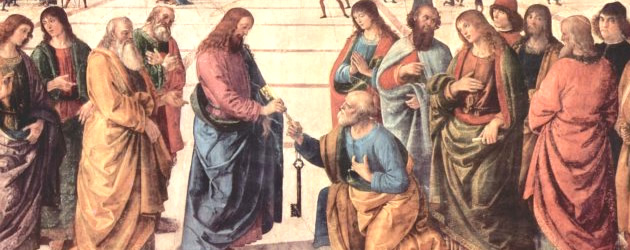
Jesus summed up the Sermon on the Mount with these words: "Every one then who hears these words of mine and does them will be like a wise man who built his house upon the rock; and the rain fell, and the floods came, and the winds blew and beat upon that house, but it did not fall, because it had been founded on the rock" (Mt 7:24-25). Jesus' audience knew well of a famous wise man (Solomon) who built the most famous house of all (the Temple) upon the stone of foundation, which today is housed under the golden capped Dome of the Rock in Jerusalem. Like Solomon of old, Jesus builds his Church - the New Temple - upon Peter, the Rock. Almost two-thousand years later, that kingdom continues to thrive as it is united around the successor of St. Peter: the pope.
This transcript was produced by speech-recognition software and has not been proofread. Names, Hebrew and Greek terms, and Scripture references may be misspelled. Tap a timestamp to play the audio from that point.
I'm going to begin with a reading from St. John Chrysostom from the early church. St. John Chrysostom, it's not his last name. Chrysostom is not his last name. It was his nickname, Golden Tongued, because he was considered to be such a great preacher in the early church. St. John Chrysostom wrote this, and it's subtitled, or titled, The Two Become One Flesh. So I'm going to read this for you guys. And let's go ahead and read it in prayer. Let's do this in prayer. In the name of the Father, and of the Son, and of the Holy Spirit. Amen. What then? Is marriage a theater? No. It is a mystery, and a symbol of something mighty. Even if you don't show it honor, then honor what it symbolizes.
This mystery, says St. Paul, is a profound one. And I am saying that it refers to Christ and the church. Ephesians 5, 32. Of course, there were no chapters and verses back then. That was put in by the author, or the editor. It is a symbol of the church, and of Christ. The two come together, and they make one. When two come together, they do not make a lifeless image, or the image of anything on earth, but of God himself. Two come to marriage, about to be made one body. See again a mystery of love. If the two do not become one, if they remain two, they do not make many. But when they unite, then they make many. What do we learn from this? That the power of union is mighty? The wisdom of God in the beginning divided the one and two.
But he wanted to show that it remained one, even after division. So he made it impossible for either alone to be enough for procreation. For neither can be one until united with the other. Each is only half. Each alone can produce no children. Do you see the mystery of marriage? He who made one from one, and after he made these two into one, he made one, so that now also children are produced from one. For husband and wife are not two, but one. They may be confirmed, for this may be confirmed for many sources. For instance, from the words, male and female he created them. Genesis 1.27 If he is the head, and she the body, how are they two? From the very fashioning of the body, one may see that they are one, for she was made from his side, and they are two halves.
And how do they become one flesh? As if she were pure gold, receiving pure gold. So the woman receives the man's seed. She nourishes it, and cherishes it, and adds her own share. The two fused by pleasure. And so she gives it back as a child. The child is a sort of bridge. So that the three become one flesh. The child connecting on either side, each to the other. Two cities, though divided by a river, become one if a bridge connects them. How much more, then, if the very bridge is formed of the substance of each? Why are you blushing? Leave that to the heretics and pagans, with their impure and immodest customs. For this reason, I want marriage to be thoroughly purified, to bring it back again to its proper nobility.
You should not be ashamed of these things. If you are ashamed, then you condemn God, who made marriage. So I shall tell you how marriage is a mystery of the church. The church was made from Christ's side, and he united with her in a spiritual union. For one man said, quote, I betrothed you to Christ, to present you as a pure bride to her one husband. He's quoting St. Paul in 2 Corinthians 11, too. And he goes on to say that, quote, We are members of his body. Ephesians 5, 30. Think about all these things, then, and let's not cast shame upon so great a mystery. Marriage is a symbol of the presence of Christ.
Tell me, if you saw an image of the king, would you dishonor it? By no means. Lord, you have made marriage a mystery and symbol of something mighty. It is a symbol of the church and of Christ. We thank you for our divine spouse, Jesus, your son incarnate. We thank you for the gift of his life. May we bear great fruit by obeying him, by loving you through him, by the power of his spirit. Lord, may we live out our marriages with great fidelity and fruitfulness and faithfulness. May we imitate you in our marriages.
May our marriages be made holy and sanctified by your spirit as we strive to follow you. Through Christ Jesus, our Lord. Amen. Lord Jesus Christ, be present now and let your Holy Spirit bow all hearts and love and truth today to hear your word and keep your way. Give us the grace to grasp your word that we may do what we have heard. Instruct us through the scriptures, Lord, as we draw near, O God adored. To God the Father and the Son and Holy Spirit, three in one. To you, O blessed Trinity, be praised throughout eternity. Amen. In the name of the Father and of the Son and of the Holy Spirit.
Amen. Jesus fulfills the Old Testament. Well, he fulfills the Old Testament in a lot of different ways. He fulfills the Old Testament through typology. He also fulfills the Old Testament by the story culminating with him. You know, we've been seeing this idea of the Davidic kingdom waiting for fulfillment with her Messiah, waiting for an end to exile. So, Jesus fulfills the Old Testament in that way.
But what I'd like to focus upon right now is typology. Remember, typology is a study of types. And this comes from the Greek word toupos, which means an image or an impression. Okay, so like, if I took plaster and made a mold of my face, that would be a toupos. That would be an impression. An anti, if we put anti before the word, then it's actually pronounced anti-toupon, but it's like, it comes from anti and toupos. Anti means in opposition to or in place of or instead of. So if I'm anti something, I want something else. You know, I'm opposed to it. So if something's perfectly opposed or perfectly in place of the mold that I had made out of plaster on my face, that would be my face.
The reality that fulfills the impression. And so, anti means in place of or in opposition to. So, we have these types in the Old Testament. And like, for instance, we have Adam. We see in St. John Chrysostom, and he's getting his teaching from St. Paul, that Adam is the type, he's the toupos, and Christ is the anti-toupos or the anti-toupon. Okay? And so, Christ is the new Adam. He fulfills what Adam was. Adam was, let's see here, Adam was sinless. He was in a garden.
We're told that he was to Abodah and Shamar the garden. He was to till and to keep, but we, in the very beginning of the scripture study, I believe it was chapter 3, the creation of the world, we saw that these verbs for Adam to till and to keep the garden were the same words used for Levitical priests in the sanctuary. So this garden is like a sanctuary, and Adam is supposed to be like a priest, like one of the Levitical priests. And priests offer sacrifice. And we're also told that he was given dominion over everything. So he's kind of a, he's kind of a priestly king. And we're told that Adam is given a helpmate, and we can call her the cum peccator, or the cum peccatrix.
And that's, that means that she's with the sinner. She assists Adam in the fall of humanity. We don't, we're not fallen in Eve, we're fallen in Adam, but yet she assisted him. Adam, what else about Adam? What are some other types? What other ways does he, does Christ fulfill what Adam was? I'm sorry? Yes, he was the son of God. He had this gift of divinizing grace. He also, his bride Eve, came from his side. And he experienced, or had with Eve, the first, like, kind of primordial marriage.
Okay, so he shared in this, this marital covenant. What else? What else about Adam? Anybody think of anything? He sinned at a tree. He ate the tree of the knowledge of good and evil. So he sinned from the fruit of a tree. And of course, by sinning, he lost sanctifying grace. He lost this divinizing grace. And Christ comes to fulfill the type of Adam. We have Christ, of course, is sinless because he, too, is the son of God. But he's not the son of God in a created sense, like he's created and then God breathes the breath of life into Christ and Christ becomes a living being.
No, it's not like that. It's rather, Christ is eternally the son of God in a sense. So he, and also, here's another, I think I've mentioned this before, the, the things that fulfill the types are always greater than the types. Okay, so the types are the lesser and the things that fulfill them are always the greater. Okay, so there's a, we go from lesser to greater. So, yes, Adam was sinless, but Christ wasn't just sinless, he was God. And he wasn't just the son of God metaphorically, he's eternally the son of God. And Adam, we're told, sinned in a garden while Christ began his passion where? What's the first sorrowful mystery?
The agony in the garden. Yeah, the agony in the garden. So we have Gethsemane. Adam was told to Abedan Shemar the garden, just like the Levitical priest, to guard the garden. And if Adam's supposed to guard the garden, then what does this mean? I mean, if he's supposed to guard the garden, what do we suppose is supposed to be on the scene? Something to guard against. And so, so enters the Nahash, the serpent. And from our study in the Old Testament, we saw that the Nahash is not a pretty little green snake, it's like a 16-foot boa constrictor that has fangs and also is venomous all at the same time. This is the, a Nahash in the Hebrew mind was like saying, you know, the dragon from Shrek or something, you know, but just not as pretty.
And so we have this Nahash who appears and Adam, we assume, is there the whole time because he's speaking to Eve and then all of a sudden Eve just gives the fruit to Adam, who's just kind of there. And so while the Nahash comes and he says to Eve, he says, surely if you eat the fruit of the tree of knowledge of good and evil, you will not die. You will not die. But God said that the moment you eat of it, you will mote to moot, you will die the death. And the serpent says, no, you won't die. In other words, you won't die if you eat of that fruit. I mean, reading this, as a Hebrew, you would think, hmm, if you had a Nahash looking at you and saying, you won't die if you eat that, I promise you.
In other words, I'm going to kill you. Because why was there a tree of life in the garden? I mean, we're never told anything about the tree of life other than the fact that it was just there. And if Adam, remember, there's no death, there's no suffering yet in the human race. The narrative is clear that sin and death came because of Adam's sin. There's no death, there's no weakness of humanity, so why would we need a tree of life? Hmm, maybe to have recourse to if you're doing mortal combat with a Nahash. Okay, so Adam is put to a test by God. He's put to a test where God says, I want for you to defend your bride, I want for you to defend this sanctuary, but Adam cowers in fear and he does not defend his bride.
And instead, he cowers and he partakes of the fruit of the tree of knowledge of good and evil, and then God comes in, and God's like, so Adam, where are you? What'd you do? You know, and he's hiding and so goes the narrative. And so, Christ, instead of fearing suffering and going away from it, he does pray with his human will, Father, if it is your will, let this cup pass from me, but then he says, but not my will, but your will. Let your will be done. The fourth cup, the cup of consummation. And so, Christ accepts suffering for the sake of his bride and redeems his bride by selfless sacrifice. Adam was called to give of himself, to mirror God. Who is God? Do we know from divine revelation in the New Testament? What is God in his substance?
Who is he? Before creation, who is God? What's his nature? He's a spirit, but what else? What else? Is he just an impersonal spirit or is he a personal spirit? He's personal. And is it just he or is it he, he, Right? We have the trinity. I mean, this is God. I mean, the Genesis narrative is talking about God. God is inspiring this Hebrew author. God is the one who created Adam and put him to this test. And this God we know is a trinity, which means that the father is selflessly pouring himself out into the son and the son is completely receiving and mirroring that gift of life and giving it all right back to the father.
This gift of life is a person co-equal to the father and the son, the trinity. And so Adam's called to mirror God, to do, basically to be God, to attain divinity in a certain sense by self-sacrifice. You know, why did Adam sin? Adam did not have a darkened intellect. He didn't have weakened passions. He didn't have, I mean, disordered passions. He didn't have a weakened will. I mean, God says, don't eat of the fruit. I mean, it's kind of common sense. Okay. I mean, why would you eat of the fruit? You know? I mean, he's not, he isn't dumb. We have weakened wills. We have disordered passions. We have darkened intellects. So let's not think about Adam in our state. Let's think of him in an unfallen state.
Because you didn't have suffering and death at that point in time. So Adam is, I mean, there must be something more to the scene than just Adam going, okay, I think I'll eat of the tree of knowledge of good and evil because, hon, you like it. No. There's a nahash. Okay? So, does Jesus Christ cower from fear or does he do what Adam failed to do? He defends his bride. He takes on Satan head on and he takes the nails of the crucifixion in great love for us. And then, what comes forth from Christ's side upon the cross? Blood and water. Which from the earliest times, the interpretation of this that we see all throughout the early church, St. John Chrysostom gives it in another one of his homilies, is that the blood and water John talks about specifically, because all throughout John's gospel he's given us a Bible study on baptism and the Eucharist.
And now we have blood and water coming forth from Christ's side, because it's going to be blood and water, baptism in the Eucharist, it's going to form the church, Christ's bride. So, from his side come the sacraments, and his bride, the marriage that he has is with the church, he redeems us upon a tree, in Acts of the Apostles, the cross is called many different times the tree. Now, if I were to see a cross, I wouldn't go, that's a tree, but they kept calling it a tree. Okay? So, he won our salvation upon the tree of the cross, and he's a priest king, he's king and he's priest, he reigns through his suffering, Christ's reign is not one of power and dominion in an earthly sense, but in a supernatural sense.
It's like the Davidic kingdom is turned on its head. The greatest shall be the least. The highest among you shall be the greatest servant. And this is why Christ gets down and washes the feet of his twelve apostles when he's teaching them about their apostolic ministry. He's saying, I'm giving you authority, and guess what that means? You're going to be servants. And so, what do we call the Pope? The servant of the servants of God. And this is why over and over and over again, yes, you know, the Pope wears a tiara. Yeah, but why is the Pope wearing a tiara? Why a tiara? Because he's almighty and regal and we want to wear... Why a tiara? Because that's what the priests wore in the Old Testament, the high priest.
It's a symbol of the office of what he has. It's a symbol of his priestly office. And so the Pope, in his letters, he constantly talks about how he's a servant. He wants to serve. He's here. I mean, guys, I would not want to be the Pope in a million years. I mean, it is a life of suffering. I mean, can you imagine having your entire life just sucked up out of you and you're just constantly meeting and greeting people and writing and exhorting and traveling? It's just, it would wear the heck out of me. And so Christ is the perfect priest king. He reigns through suffering. And guess what? He has alongside him, the cum, which in Latin means with, redemptrix. Eve is with the redeemer.
She accompanies him all the way to the cross as the woman, the new Eve. And we're told that Eve is called Eve by Adam in Genesis. Why? Because she was the mother of all the living. And so if Eve was called Eve, by the way, Eve rhymes with the Hebrew word for living. So this is what the Hebrew author is doing. He says, Adam named her Eve because she's the mother of all the living. And if Eve is the mother of all the living, and if we have the new Eve at the cross, and Christ is bringing about a new creation through his redemption, what is Mary going to become? Why do you think Jesus says to Mary, behold your son? Woman, behold your son. Not Mary, behold your son. Woman. The woman from Genesis 3.15. Woman, behold your son. behold your mother. And from that time on, John took her into his own.
Not into his house, into his own. Now, a lot of English translations you'll see into his own house, because that's just what's kind of assumed. But it says into his own, and there's a deeper meaning there. John took her into his own. His mother, the mother of all the living. So if Eve is the mother of all of humanity, Mary is the mother of all of the redeemed, the new humanity, the new created, the church in Christ. And so Mary is the cum redemptrix. She's with the redeemer. But we aren't saved in Mary, we're saved in Christ. But yet, God put our redemption in the hands of an eighth grader. Remember, we talked about the annunciation when the angel Gabriel came to Mary? This is not divine rape.
God does not use Mary. He does not impregnate her without her will. Think about this. Yes, Gabriel announces that she will be the mother, but she has to accept that vocation. And when she says, let it be done unto me according to your word, we have the fiat, the yes. And she becomes the greatest Christian disciple because she does, at the moment of the annunciation all the way up to the cross, what we are to do. Yes, Lord. Yes. And so there we go. We have Adam. the first Adam, and the last Adam, Christ, the new Adam. And this is, I mean, we just began with Adam. We haven't even, and this is why I began with St. John Chrysostom's reading about marriage, because the primordial marriage was, points to Christ and the church.
Eve points forward to Mary and forward to the church. Adam points forward to Christ. Sometimes he points forward in a very straightforward way, sinless, but sometimes it's complete opposite. Adam loses sanctifying grace, Christ regains it. St. Irenaeus, who wrote in 180 AD, I've talked about this before, St. Irenaeus wrote that the knot which Eve had tied by her disobedience was untied by Mary through her obedience. This is St. Irenaeus in 180 AD. This is reading scripture according to typology. We're told in scripture that Noah is a new Adam. Now, scripture doesn't say that explicitly. Paul will say explicitly that Christ is a new Adam, but in scripture it's not said explicitly, it's said implicitly that Noah is a new Adam, because Noah, right after the flood, he's told by God to be fruitful and to multiply.
That should resonate within our heads, that Adam was told to be fruitful and multiply. The entire human race is destroyed. So anybody who's going to live from now on has to descend from Noah. So Noah is the new progenitor of the human race. Just as at the beginning there was water, you know, and then God separated the water up above and the water below by a dome in the sky. So now you have the clouds and the rain above and now you have the sea below. And then after he did that with the water, he parted the waters and up came land. But it began with water. How did the new creation through Noah begin? There's just water. That's all there is. Okay, so Noah is shown just in the Old Testament as a new Adam. And we see that humanity is going to be saved in Noah's ark.
And so it's no coincidence that the early church saw the church as the new ark upon which we are saved. And Peter, remember we looked in 1 Peter 3, 18 through 22, we saw that Peter said that eight persons, Noah, Shem, Ham, Japheth, their four wives, were saved through water. Well, if I were to look at the narrative, I would say, no, they weren't saved through water, they were saved upon the ark. But Peter wants to say they were saved by water because he wants to use it as a two post to the anti tupon who is which is baptism. He says baptism anti tupon now saves you. Okay, so the water at the same time destroyed sinful humanity and was the cause of salvation for those who were upon the ark.
And in the same way we have baptism in the New Testament. Christ fulfills what happened with Noah. So sinful humanity died in the deluge the deluge is another word for the great flood and so our sins die in baptism. Noah sent out a dove and the dove came back quickly and so Noah goes okay there's no land yet and he waits seven days seven remember there's a repetition of seven over and over and over again with Noah to hearken back to the six days of creation God resting on the seventh day in Noah sends out the dove again he comes back with a twig and Noah is like there's some land and then he waits another seven days he sends out the dove again and the dove doesn't return so Noah goes all right you know the waters have been receding we have land now so we have a dove water we're also told that God's spirit you know is active in this event okay well with Christ he's getting baptized and what
does the holy spirit appear in the form of a dove of course God knows exactly what he's doing we have a dove in both instances what was Noah's major sin what was his major faux pas what did Noah do that is the one thing that he wished wouldn't have done because it screwed up his political career got drunk no that was his son right yeah Noah got drunk what did he get drunk on wine is the fruit of the huh fine fruit of the vine okay and was there somebody in the New Testament that used wine for a salvific purpose maybe yeah Christ is a new Noah he takes wine and transforms it into himself to convey to us grace and Noah used it to his demise and there's so much more I mean I'm just going over the basics okay let's go real quick we have Noah and we're told in the narrative in Genesis 1 through 11 that Noah became the progenitor of a genealogy that ends up in a guy named Terah why is Terah famous
who is Terah associated with Terah what a weird name for a guy don't name your boy that that's weird what who is Terah by the way this is your quiz I'm seeing whether or not you guys passed from last semester those of you who weren't here last semester you you're exempt who is Terah the father of Abram very good okay so from Noah we have descending through the firstborn and sometimes the firstborn forsake their blessing we eventually have Terah and Terah becomes the father of Abram and Abram God forms three covenants with what what three chapters of Genesis are these covenants formed in for those of you who remember your chapter and verse from last semester which ones 15 17 22 very good you guys need to know these you need to know these okay Genesis 15 Genesis 17 and Genesis 22 were three huge covenants that God made with Abram well actually Genesis 17 he makes it with Abra Ham because he
renames Abram the first covenant God you know promises laying in the nation hood to Abram and and where is this promise fulfilled this covenant the promise of land and nation hood when did Abram's descendants become a nation and got land the 12 tribes of Israel yeah they became a nation but when did they become a nation I'm sorry yes with Moses they became a nation at Mount Sinai at Mount Sinai they became a nation so Genesis 15 we have under Moses and the Mosaic covenant this promise this covenant promise is fulfilled in Genesis 17 when is now in Genesis 17 Abram is renamed Abraham because Abram means exalted father but Abraham means father of a great multitude or father of a host of nations and so when will Abraham's descendants be over other nations a great multitude and at the same point Abraham is told that kings will come forth from his loins from his line and Sarai's name is changed to
Sarai and these are royal names Sarai means like princess so when do we have kingship and the idea of Israel or Abraham's descendants reigning over other people David the Davidic covenant and where in scripture is the Davidic covenant made 2nd Samuel 7 very good alright very key these four chapters you guys should know very well Genesis 15 17 22 and 2nd Samuel 7 Genesis 22 Abraham is told to take his only beloved son who's to carry his own wood of the sacrifice up a hill or up a mountain where Abraham is to offer him in sacrifice but the angel stays his hand and says do not do such a thing God was just testing you Isaac goes but father where's the sacrifice and Abraham says Yahweh Jireh the Lord will provide there's a ram caught in the thicket and Abraham offers that instead we have a pre-enactment of something and God makes another covenant promise and this time he's not promising land or
nationhood or kingship he's promising worldwide blessing all the nations will be blessed so where does this happen what covenant where is this fulfilled this covenant promise of God made to Abraham in Genesis 22 the new covenant under Jesus and Jesus you know there was a ram caught in the thicket you know of thorns well Jesus has a crown of thorns Isaac carried the wood of his own sacrifice that he was going to be sacrificed upon Jesus carries the wood of his cross Isaac is Abraham's only beloved son now remember Abraham had another son Ishmael but God's trying to continually pound it into Abraham's head no your only beloved son the son of promise Isaac not the son that you conceive through your wife's concubine Hagar Ishmael no not that one your only beloved son Isaac so we have God's only beloved son who's pronounced God's only beloved son at I believe it was his baptism and elsewhere at
the transfiguration and so we have a prefiguration going on here where we have the only beloved son of Abraham who's an exalted father now we have the father in heaven who's offering his only beloved son upon the wood of his cross and remember Isaac was a willing victim he had to let himself be bound and so Jesus let himself be bound by the Roman legions the Roman soldiers so Jesus we can say is a new Adam we can say he's a new Noah we can even say he's a new Abel if we go back a little bit more remember the innocent blood that cries eloquently from the ground we're told in Hebrews that prefigures Christ and then now we see that Christ is a new Isaac and we have a blueprint for salvation history in Genesis 15 17 and 22 we have the Mosaic covenant the Davidic covenant and the new covenant kind of planned out by these covenant promises and God could have just said I promise and that what does
God do he puts himself under a curse by appearing to Abram in a dream as a smoking pot and a flaming torch passing through passing between the carcasses that were sacrificed for this covenant made in Genesis 15 why does God pass between these carcasses in Genesis 15 in the form of a smoking pot and a fiery flaming torch why does he do that what's this what is going on we just saw this a couple of weekends ago it was the it was the first reading at mass why did God do this weird thing it's a covenant but why would he do this why would God go in between the carcasses of the sacrifice why would he travel in between them in the why would he yes he's basically enacting the curse he's saying if I go against this covenant may I be cut in two like these I'm God and I'm uncreated spirits so you can't cut me in two I can't die but you know we get the symbol I mean God can't first of all he can't go
against a promise but God swears an oath by doing this God puts himself under a curse to really try and show his trustworthiness and in Hebrews 6 the author of Hebrews tells us about this he says when God made the promise Hebrews 6 13 when God made the promise to Abraham since he had no one greater by whom to swear he swore by himself and said I will indeed bless you and multiply you and so after patient waiting he obtained the promise human beings swear by someone greater than themselves for them an oath serves as a guarantee and puts an end to all argument he intervened with an oath so that by the two immutable things in which it was impossible for God to lie we who have taken refuge might be strongly encouraged to hold fast to the hope that lies before us thus we have an anchor of the soul and so this is why people wear anchors as an necklace because it symbolizes faith and this is where
it comes from Hebrews 6 13 and following anchor okay so we have this blueprint for salvation history what's going to happen now God appeared as a smoking pot and a blazing torch because this is what's associated with the mosaic covenant remember through Moses remember there's smoke around enveloping mount sinai there's the pillar of cloud of smoke there's the pillar of fire by night God appears as lightning you know around mount sinai this is associated with the mosaic covenant smoke and fire okay now we have eventually Abraham's descendants through Isaac and then through Isaac's son Jacob who becomes Israel they go down to Egypt and they're enslaved there for how many years how many years times ten four hundred years four hundred years they are down in Egypt because a Pharaoh arises who did not know Joseph and so the Israelites are in captivity under Moses for four hundred years and then
finally Moses is called by God and Moses' name means drawn out of the water we're told in the scriptures and Moses is the supreme law giver he gives the law upon Mount Sinai but before he does that let's go back to Egypt we have the Passover lamb the Passover lamb which is the sacrifice that's going to redeem the firstborn and before that we have the changing of the Nile river into blood which symbolizes the god of the Nile river was worshipped as a god because it gave life to all of Egypt the Nile river is like being slain it turns into blood so changing water into blood let's see here Moses leads Israel out of Egypt and he does so through the Red Sea there is a feeding of the manna in the desert eventually when Moses forms the covenant with God for the people as the covenant mediator Moses takes the blood from the covenant sacrifices and he says this is the blood of the covenant the blood
of the covenant and Moses puts Israel under the mosaic covenant and then keeps adding laws upon laws upon laws and puts Israel eventually under the deuteronomic curse of the deuteronomic covenant so we have the curses that Israel puts themselves under because remember when you put yourself under a covenant if you keep the covenant you get blessings if you don't keep the covenant you get curses you get cursed just like we saw with God with going between the carcasses Moses also fasted for 40 days and 40 nights fasting and Moses let's go back even further when he was born there was a slaughter of the innocents by Pharaoh and Moses survived that how did he survive it yeah water he was put into a little basket a little reed basket and what was the basket called do you guys remember this an ark that's right Moses was put in an ark by his mother and was put down through the sea and so Moses is
in an ark going over water to get saved from the slaughter of the innocents who does this remind us of before Noah right so Moses is a new Noah was a new Adam we you know we have repetition going on here and so of course we see Jesus is the Passover lamb whom we eat in the Eucharist whose blood redeems us from sin Moses Jesus at the beginning of his ministry changes water into wine and later on he changes wine into blood we have the Moses took Israel out of Egypt Jesus takes us out of our Egypt spiritual sin and as there was Pharaoh can be likened to the devil as they pass through the Red sea so we pass through baptism as they ate manna so we eat the true manna that comes down from heaven as you had the blood of the covenant so Jesus at the last supper says that what he has in front of him is the blood of the covenant the new and everlasting covenant Jesus delivers Israel from the curses
okay this is this is big in St. Paul's theology because St. Paul is dealing with Christians who are thinking about getting circumcised and following all of the mosaic laws again and Paul's like no Christ has delivered us from the Deuteronomic covenant and the mosaic covenant and all this he's delivered us he's our sacrifice that delivers us from these curses and if you go back to this you will be a curse for you know in many quotes I think this you have the slaughter of the innocents Jesus escapes the slaughter of the innocents under King Herod and he does so by having his family takes him down to Egypt and then Matthew in Matthew's gospel we're told that when the holy family comes back up out of Egypt with Jesus Matthew says that scripture is being fulfilled and he points to Hosea where Hosea is talking about Israel being brought out of Egypt and Hosea says out of Egypt I have called my
son my firstborn son Israel and so Matthew says out of Egypt God is calling his son the new Israel Jesus I know this is a lot all at once you have Hosea is talking about the first exodus Hosea is talking about how God said out of Egypt I have called my son Israel so now you he comes back up out of Egypt with the holy family who is taking care of him because Jesus can't walk he's really little at this time and so Hosea says out of Egypt I have called my son I shouldn't have worn this artificially manufactured shirt if I wants to buy me some cotton shirts let me know I could really use some well we missed Christmas Easter is coming up I need go okay so Jesus we find out is the new the new Moses the new Moses and Matthew is very good in his gospel to show this is a big theme in his gospel Matthew is constantly showing how Jesus fulfills both Moses and David oh did I just say did I just get ahead
of myself okay so we talked about Israel I just I just got into the theme about how Jesus is the new Israel because as Israel was in Egypt for 400 years and came out of Egypt and crossed over the Red Sea and then the Jordan River so Jesus comes out of Egypt and then before he begins his ministry he crosses through the Jordan River in the waters of baptism Israel we're told was disobedient and grumbled in the Sinai wilderness Jesus we're told overcomes the devil by quoting scripture three times in the wilderness so while Israel was disobedient Jesus is obedient so Jesus is the new Israel he is he's going to recapitulate Israel and he's going to do where and succeed where Israel failed and then we come okay so we have the first we had the mosaic covenant and we had all the things that were involved with that now we have the davidic covenant deuteronomy says that when you have rest from all
your enemies you will build me a central sanctuary and so we're told in 2 samuel 7 that David had rest from all of his enemies so what does David want to do build a house for God and God says to the prophet Nathan to David what don't build me a house I'll build you a house now does God saying I'm going to build you a temple where people can worship you David like you want to build me a temple is that what he saying what does he mean build him a house David wants to build him the house of God the temple God wants to build David a temple a kingdom right house is like a metaphor it can be used to denote an actual structure or it can denote a kingdom a kingdom a dynasty in particular where you have someone reigning after you the house of Habsburg the house of Bourbon the house of you know all of you who study your medieval history I'm okay so we have we have the Davidic covenant that's formed
and then the Davidic covenant we see that God is forming this with David but not so much with David in particular but with David's seed and who is David's seed Solomon right so the Davidic covenant is made actually kind of with Solomon it's made with David but it's really made kind of with David's seed Solomon so we're going to find out that Jesus is not only a new David he's a new Solomon now Solomon is David's heir which makes him David's son the son and what does Solomon's name mean see if I remember where his name comes from what the root word is Solomon in Hebrew Shalom peace right so his name kind of means peace and we'll see later on I believe it's in is it Isaiah who says that the savior to come will be the prince of peace right and Solomon is known for his wisdom he's so wise you know he God said you know ask of anything and I will give it to you and Solomon says I want wisdom and God
says you have asked rightly and because you have I will give you all the rest besides so in the new covenant God tells us to seek first Jesus tells us to seek first the righteousness of the kingdom seek first the kingdom and all the rest will be added unto you act like Solomon seek true wisdom but don't do what Solomon ended up doing okay so we have wisdom he's wise Solomon let's turn to Psalm 2 again we've done this before let's do it again this repetition is the mother of all learning Psalm 2 you all have Bible tabs so you're already there like me and what's the first this is talking about the Davidic king the son of David and in verse at the end of verse 2 what does it call the Davidic king in Hebrew please what is he in Hebrew that's English what does it say in Hebrew what does he call him in Hebrew no that's Greek Messiah yes very good okay so we're told in Psalm 2 that the Davidic king
is the Messiah so is Jesus the only Messiah no he's the last the greatest the best never been a greater one before but there was a Messiah long before in fact David you know was attacked by Saul and David had several chances to kill Saul but David said I will not harm the Lord's Messiah the Lord's anointed is Messiah means the anointed one I will not harm the Lord's anointed because of the office that he holds even though he's a scoundrel and so Solomon becomes the Messiah and all the David kings are the Messiah let's look further down in Psalm 2 verse 7 this is you know this is the David king speaking in Psalm 2 verse 7 I will proclaim the decree of the Lord who said to me you are my son today I am your father so we have the idea of that this person is the son of God the son of God somehow went to the Davidic king and breathed the breath of life in him and became a living being and he was
animated with sanctifying grace not like that but a metaphorical sense there's a special relationship going on here where God is going to chastise his son if he does wrong you know the king is going to kind of be and scholars have seen this that the king of Israel was kind of like embodied Israel he was kind of like Israel par excellence because what is Israel in Exodus 4 22 God says to Moses go tell Pharaoh that Israel is my first born son and let him go or else I will slay your first born son he ends up doing that because Pharaoh won't let him go so Israel is God's son in a certain kind of metaphorical sense and so the king is going to kind of sum up this as being having some sort of filial metaphorical kind of adoption type relationship with God great and so Solomon is famous for the greatest building ever created what is that the temple the Jerusalem temple so he becomes a temple builder
with the wisdom that God gave him he uses the wisdom to build a temple and God says to David he says you know Saul sinned and so you know he lost his well he doesn't say this explicitly it's in the narrative he says let's go to what God actually says he says to David you know I will establish with your son an everlasting dominion an everlasting kingship an everlasting throne okay an everlasting throne and if he does wrong I will chastise him with a rod of correction but I will not take away the throne like I did your predecessor Saul I mean Saul screwed up a couple of times you know I mean he did he went to the witch of indor you know asked for a little bit of revelation he didn't carry out the ban on one of Israel's enemies remember he kept the bloating the sheep and the king he let them live he messed up a couple of times and the first time God goes zip okay I'm taking away your dynasty
your son Jonathan will not reign after you the second time that's it your kingdom is gone and soon enough Saul dies Solomon oh Solomon has a thousand women he hoards wealth he builds idol statues for idol worship oh my gosh I mean a much worse sinner than Saul was if you ask me I mean this is pretty bad polygamy at its best and yet the kingdom is not taken away from Solomon but Solomon is punished and how is he punished I'm sorry thousand women that's how he's published all those masters right that's right I didn't say that Joe said that by the way that's right that's right Francie's going to get you Francie's going to get you now his kingdom would divide because remember Solomon wasn't the only one worshipping false idols it was his kingdom it was his kingdom and so if everybody if you know not everybody but if a lot of people in the kingdom are doing this is sin and sin is going to bring
on the division of the kingdom in 930 BC and so we're going to see that eventually there will be a messiah and who's that going to be Jesus Christ why Jesus Christ is that his last name is that where he's from I'm sorry Christos means messiah it's Christos is the Greek translation of the Hebrew messiah so Christos means the anointed one messiah means the anointed one so Jesus is going to be the anointed one so I have a question for you Jesus is 12 years old he's in the temple and he's teaching everybody you know his parents find him after three days of waiting did they find the messiah in the temple their son is jesus the messiah oh very good not then he hadn't been baptized why wasn't he the messiah until he was baptized because he's anointed at his baptism that's right so jesus becomes messiah at his baptism when jesus passes through the waters of the jordan river and the holy spirit comes
forth in the form of a dove and we have all of salvation history just repeating itself i mean there's so much old testament history that's going on and jesus man you know people just have these riddles they put before him and jesus just you know just turns them around somehow and throws them right back to him and they're like whoa how'd you do that so jesus is wise he has this wisdom that's amazing and so we can say that jesus is wisdom incarnate we're told in the wisdom literature that wisdom will make its dwelling with man that wisdom is personified in the wisdom literature almost as if wisdom is a person with god and he emanates from god and is kind of equal to god and then this wisdom becomes incarnate in jesus christ so solomon was wise but now we have god's wisdom his logos made incarnate in jesus christ and jesus is the prince of peace what does he say to the eleven apostles peace
be with you right when he rises from the dead peace be with you peace comes from solomon the prince of peace he we're told over and over and over again it's a title applied to him he's the son of david the son of david bartimaeus is a famous guy who's remembered for his confession of david's of jesus' um descending from david okay let's turn again once again to matthew 16 let's look at some old testament history here matthew 16 matthew 16 verse 16 Jesus is asking them well let's actually let's go back to verse 13 Jesus went into the region of Caesarea Philippi and I've already talked before about the significance of that region he asked his disciples who do people say that the son of man is where do we get the son of man from where in the Old Testament is son of man used besides Ezekiel being called son of man you know for the upteenth time Daniel, Daniel 7 the one who comes before the Ancient of Days
and receives dominion and kingship and glory and power and then shares it with the saints and so when Jesus is saying who do people say that the son of man is that's like saying who do people say that this heavenly amazing warrior great king is that's kind of the Old Testament background they replied some say John the Baptist like he rose from the dead again others Elijah because there was this idea that Elijah would return and still is among the Jews still others Jeremiah or one of the prophets because you're such a great preacher he said to them but who do you say that I am Simon Peter said in reply you are the Messiah the son of the living God where did we see Messiah and son of God used together just a moment ago Psalm 2 one of the most famous Davidic Psalms of all time in fact it's easy to find it's right there next to one okay so you know I'm sure a lot of Jews were like I'm going to read the Psalms
or I'm going to get to know them and they got through you know the first five Psalms so a lot of people had read Psalm 2 and Psalm 2 is pretty popular so when Peter says you are the Messiah the son of the living God Peter is not saying primarily you are God he's saying you are the Messiah the son of the living God and what does that mean you are? the son of man the king David's son who's going to receive the throne of David who's going to have kingship essentially Peter is saying you are king now I'm not denying the eternal you know sonship of Christ or that he's not God I mean scripture is very clear on that especially in John's gospel but we have to look at the historical context of what the son of God meant we had other people who were the sons of God and they weren't God Adam was not God he was the son of God the messiahs were the sons of God they had a father-son relationship with God
but they weren't God so essentially we have Peter saying you are the son of man you are the one to receive kingship and dominion and glory you are the Davidic king that we've been waiting for and so you know and then we've covered this before Jesus says okay well you say I'm king well blessed are you Simon son of Jonah for flesh and blood has not revealed this to you but my heavenly father just like what happened to Joseph under Pharaoh and what happened to Daniel under Nebuchadnezzar and when the king had a request of them and they gave the answer and it came from God and the king acknowledged the revelation from God in Genesis and in Daniel both Joseph and Daniel got supreme authority they got the office of vizier the prime minister so likewise Jesus says blessed are you Simon son of Jonah for flesh and blood has not revealed this to you just like you know Joseph and Daniel but my heavenly father
and so I say to you you are Kepha and upon this Kepha remember Kepha is the Aramaic word for rock I will build my church and the gates of the netherworld the gates of hell shall not prevail against it I give to you the keys to the kingdom of heaven and the only time we see keys to the kingdom being used anywhere in the Old Testament is in Isaiah 22 when Eliakim is given the keys of the kingdom which Shebna has so Eliakim is going to take over Shebna's office as the chief steward I will give you the keys to the kingdom of heaven whatever you bind on earth shall be bound in heaven whatever you loose on earth shall be loosed in heaven a rabbinic idea of authority let's turn back in Matthew to Matthew chapter 7 same gospel following the same theme Matthew 7 at the end of the sermon on the mount this incredibly hard sermon that's been given and we've already been told that you know you guys you Christian disciples
you're going to be like like a city set on a hill like Jerusalem set on a hill and you are you know if you seek the kingdom first seek the kingdom all the rest shall be added unto you he says that blessed are they who are persecuted for the sake of righteousness for theirs is the kingdom of heaven we've been we've studied when we talked about what Jesus taught we saw the kingdom themes in the sermon on the mount but let's look at Matthew 7 verse 24 everyone who listens to these words of mine and acts on them will be like a wise man who builds his house on the rock hmm was there a really famous wise guy who built a house upon the Eben Shetia the stone of foundation which is now housed under the dome of the rock in Jerusalem which is now a Muslim shrine who was that Solomon yeah Matthew is using kingdom theme the Davidic kingdom theme throughout his gospel in fact it's Matthew who tells us about
Jesus being the son of David over and over and over again so if we have Solomon who's a wise man he's really you know he thinks he's wise kind of like me and he builds a house upon a rock the rain fell and the floods came and the winds blew and buffeted the house but it did not collapse because it had set solidly on rock and everyone who listens to these words of mine but does not act on them will be like a fool who builds his house on sand the rain fell and the floods came and the winds blew and buffeted the house and it collapsed and was completely ruined Jesus follows his own words he you know he practices what he preaches he's the wise man who builds his house the temple and what does Saint Paul say in 1 Corinthians what does he tell Christians what they are over and over and over again he says do you not know that you are temples of God temples of the Holy Spirit because you have been
united to Christ the true temple in baptism so what is the temple in the New Testament ultimately yes Christ but those who are united to Christ in his mystical body become the temple no not the church what are you talking yes the church the temple same thing so Jesus in Matthew 16 is you you know he's the Messiah he's Solomon he's the wise man he's building the church upon the Eben Shetia the Stona foundation Kepha Peter blessed are you Simon Bar-Jonah for flesh and blood is not revealed this to you but my father in heaven for I say to you you are Kepha and upon this Kepha I will build my church and the gates of hell shall not prevail for I give to you the keys of the kingdom of heaven whatever you bound on earth shall be bound on earth whatever you loose on earth shall be loosed in heaven I could do the micromachine commercial okay so we have Jesus being the a new Solomon here a new Solomon
the everlasting throne we saw this before we saw this I think last time we looked at the cup of consummation no wait I'm sorry that was the resurrection last time in the resurrection we saw that in the resurrection Peter tells us in Acts 2 what did Jesus do at the resurrection he's tying it up with the ascension Jesus went and he and he did something he sat on the right hand side of God we saw that in we saw that in Mark 16 I believe verse 19 he says that he took his hand took his seat at the right hand of God Matthew's gospel we're told that Jesus takes up the throne of David the everlasting throne there were you know I will I will correct the king with the rod of chastisements but I will not take away his dynasty like I did to your predecessor Saul there will be someone to reign after when does Jesus take up his throne is he going to take it up you know at the end of time and we're going to have
a millennial reign on earth because Jesus has yet to take up his throne or are we told in Acts of the Apostles Acts 2 that Jesus has already taken up his throne and his throne is not here in Jerusalem it's in the heavenly Jerusalem is this what we're told yes Christ has fulfilled and then we're told by Saint Paul that in in 1st Corinthians 15 we saw last time when we talked about the resurrection that Jesus you know is subjecting sin and death to himself and he's constantly doing this as he builds up his kingdom the church the everlasting so Jesus sits upon this everlasting throne that is going on and will go on for all of eternity because Jesus has experienced the resurrection he's not going to die so there's no more successors to come there are many other Old Testament figures that Jesus fulfills Jesus fulfills the person of Job the innocent who suffers and then in the end
is vindicated by God before all who think that he sinned because he's experiencing this turmoil so Jesus is a new Job Jesus prophesies against Jerusalem over and over and over again saying you know horrible things are going to happen to you this is in Matthew 24 it's called the mini apocalypse of Matthew Jesus is telling Jerusalem you know it's it you know you guys are going to be conquered but you know you have troops surrounding you besieging the city he says this in Luke's gospel the same the parallel reading Jesus is prophesying against Jerusalem who prophesied against Jerusalem in the Old Testament and was killed for it no before Daniel what famous prophet I'll tell you what his name means in Hebrew and that way you'll know it's oh I don't have his name written down in what it means in Hebrew okay never mind Jeremiah Jesus is a new Jeremiah the spirit of the Lord you know came to Isaiah
so Isaiah could preach well in a certain sense that's what Jesus did Jesus fulfills all the prophets he is the I mean yes John the Baptist was the greatest prophet from the Old Testament Jesus is perfectly priest king and prophet Jesus is fulfilling the Old Testament why haven't you guys left all of the prayers you guys want to pray is that a good thing all right let's do it then in the name of the father and of the son and of the holy spirit amen father thank you tremendously for the gift of your son and tremendously for the gift of the scriptures which help us understand what he has done thank you for teaching us in ways that are not explicit but are implicit instead of just showing us what happened by teaching by illusion thank you lord for allowing for us to get the added bonus of additional learning by deeper study and so we give you thanksgiving for giving us the ability to read and to study
we give you thanksgiving for the ability to get these things to understand them and so to draw others into a knowledge of your son by using the scriptures we ask that you would continue to enlighten our minds this Lent with the illumination of the spirit that you would continue to purify our hearts of sin as we undergo the purification of penance as we prepare for the Easter mysteries we love you lord tremendously all glory be to the father and to the son and to the holy spirit as it was in the beginning is now and ever shall be world without end amen in the name of the father and of the son and of the holy spirit amen and of the Thank you.
The podcast has always been free, and it stays free because listeners support it. If it has been a blessing to you, would you please consider supporting it?