Chapter 24 · New Testament · 1 hr. 19 min.
The Birth of the Church
The Catholic Church Is the Restoration of the Davidic Kingdom by Jesus Christ
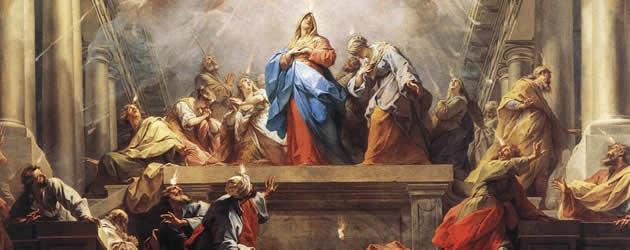
The Catholic Church Is the Restoration of the Davidic Kingdom by Jesus Christ
We come to understand how the birth of the Church is none other than the restoration of the Davidic Kingdom under the Son of David: Jesus the Christ. We spend our time analyzing the Christology (thinking and studying over who Jesus is) and the Ecclesiology (thinking and studying over what the Church is) that Luke presents to us in both his Gospel and the Acts of the Apostles, which is the sequel to Luke's Gospel.
When we look carefully at the details, we discover that Luke presents Jesus in royal Davidic terms to show that he is none other than the promised descendant of King David who will take up David's throne! Then, we discover that he subsequently presents the Church as the restored Davidic kingdom, united under her enthroned king: Jesus the Christ! This Church is governed by Jesus' vice-regents: the apostles who "sit on thrones judging the 12 tribes of Israel" (Luke 22:30) and their successors, the bishops. She renews her covenant with God by celebrating the royal sacrificial meal that Jesus instituted at the Last Supper, a meal Luke aptly describes as "the breaking of the bread" (Acts 2:42).
This transcript was produced by speech-recognition software and has not been proofread. Names, Hebrew and Greek terms, and Scripture references may be misspelled. Tap a timestamp to play the audio from that point.
In the name of the Father, and of the Son, and of the Holy Spirit. Amen. Lord, thank you tremendously for the Davidic Covenant, for this most amazing oath that you swore to David through his son Solomon. We thank you for this amazing promise that you gave, for this foundation from which the New Testament springs and sprouts and grows. I ask this evening for a gift of your Holy Spirit, that his gifts of wisdom, knowledge, and understanding may enlighten our minds, may soften our hearts, and may lead us to the truth that you wish to teach us.
We love you tremendously. Lord Jesus Christ, be present now, and let your Holy Spirit bow, all hearts and love and truth today, to hear your word and keep your way. Give us the grace to grasp your word, that we may do what we have heard. Instruct us through the scriptures, Lord, as we draw near, O God adored, to God the Father, and the Son, and Holy Spirit, three in one, to you, O blessed Trinity, be praised throughout eternity. Amen. Saints perpetua and felicity, pray for us. In the name of the Father, and of the Son, and of the Holy Spirit. Amen. Okay. So, the topic for chapter 24 is the birth of the church.
The birth of the church. And, what I kind of want to start with is a little bit of a preface. In the period from about 150 B.C. to 100 A.D., we have Jewish writings that are not Christian. You know, they're Jewish. And, they're writings that are not part of scripture. And, they're called the pseudepigraphy. Okay. So, I'm going to go ahead and write this up here. It comes from the two words, pseudo, and epigrapha, epigraphy, pseudepigraphy. And, what these two words mean is, pseudo means fake.
You know, kind of, you have something that's, you know, I'm a pseudo, know-it-all. You know, I don't really know-it-all. I'm just a pseudo-know-it-all. I'm fake. Epigraphy, something that's written. Something that's written down. So, it's, they're like false writings. Meaning, in the sense that they're attributed to people who didn't actually write them. And, the people who read these, and wrote these, didn't really think that the authors were who they said they were. It's kind of like people writing under a pen name. So, for instance, you have, some of this is the, are the Psalms of Solomon. I'm going to give you two examples here. We have the Psalms of Solomon. This is not in our scriptures. And, another example, would be, uh, fourth Ezra.
And, these writings, so like, fourth Ezra, you know, is ascribed to Ezra. And, the Psalms of Solomon are, are ascribed to Solomon. But, it's not really written by them. And, the, the pseudo, pseudepigraphy helps us understand what Jewish thought was like in the time of the New Testament. You know, right before, during, and after the New Testament was written. This is kind of like what Jews were thinking. And, it's really interesting stuff. And, one of the, uh, and we, there's evidence in this writing that there was a widespread Jewish expectation of the imminent restoration of the Davidic kingdom. Okay, so I'm going to go ahead and write this up here. The imminent restoration of, of the Davidic kingdom.
And, of course, we've been talking about what this kingdom was. And, we've been talking about the idea of redemption and restoration and all that good stuff. And, so there was this widespread idea that somehow David's kingdom was going to be restored immediately. Like, it's, it's just about to happen. We're, this excitement, this anticipation is building up. And, the way that they would, and by the way, another source, uh, where we, where we learn about this is in the Dead Sea Scrolls. Okay, so the Dead Sea Scrolls, which were found in the middle of this past century, in the, the middle of the 20th century, the Dead Sea Scrolls also give evidence to this. And, when, these writers would write about the, the restoration of the Davidic covenant that, or the Davidic kingdom that's about to happen, it was written about as kind of a transformation of the kingdom.
Not just a re-implementation. So, it's kind of like saying, you know, we're going to have this Bible study next year. We're going to, we're going to stop for the summer, but we're going to start it back up again next year. Well, that would be re-implementation. But, what if I said, we're going to start up next year, it's going to be, it's going to be so amazing, you guys are going to freak out. I mean, you know, that's like a transformation. You know, it's going to, we're going to have thousands of people, and the teacher is going to be, his hair is going to be on fire, and it's going to be crazy. That's a, that's a transformation, okay? So, the, the type of terminology used was the, the idea of a, a transformation of the restored kingdom. And so, the descriptions of this coming kingdom, would often include supernatural events. So, it would be like, when they would describe the Messiah, the son of David,
the anointed one, the king, who's going to be over this kingdom, when they would describe him, he, he didn't even need military might to repel enemies. Just by the word of his mouth, they would be repelled. And he's immortal. And, you know, so there are these, there are these, there's this kind of, I would, I would call it like hyperbole, that they use when they talk about this, because it's going to be even greater, than the kingdom under Solomon. This is the Jewish expectation. And, we're going to find out today, that St. Luke, in his gospel, and in, the sequel to his gospel, which is what? Acts. Acts what? Acts popcorn, Acts? Acts of the apostles, right.
Okay. And, Acts is not an acronym, it's, it's the Acts, the actions of the apostles. That in these, writings of his, Luke, addresses this. And, one of the most prominent themes, all throughout Luke's gospel, in Acts of the apostles, is that theme, that pervades, St. Paul's writings. Because, who did Luke, was Luke one of the original 12 apostles? No. But, what apostle, that wasn't one of the original 12, did St. Luke know intimately? Paul. Right. So, Luke gets his stuff from Paul, and so Luke and Paul have some similar, have similar thought. And, in Acts of the apostles, you know, Luke is, kind of defending Paul.
And so, we're going to look, first, at Luke's gospel, because this is going to, give us great insight, into the birth of the church. Because Luke, doesn't end, with the end of his gospel, he goes right into Acts of the apostles. It's, it's one work. It's not two separate works, that Luke stopped writing. He's like, you know, I think I'm going to write about the church as well. No, it's one work. And so, Luke's gospel, and then, secondly, we'll look at, Acts of the apostles. And, we'll see, that, in Luke's gospel, we have something, that, that you could call, a royal, Davidic, Christology.
Okay? What's, what does Christology mean? It, it comes from the two words, Christos? Yeah, the study of Christ. Yeah, like theology is the study of God, Theos. Christology is the study of Christ, you know, presenting Christ, thinking about Christ, who is Christ, that's Christology. So, when I took the theology of Christ, as a graduate student, I didn't take theology of Christ 101, I took Christology 101. And so, Luke, in his gospel, gives us a royal, Davidic Christology, meaning that he presents, Jesus in Davidic terms, in royal terms. And then, in Acts of the Apostles, Luke presents the church, in royal, kingdom, Davidic, royal Davidic kingdom, ecclesiology.
So, and ecclesia, is the Greek word for church. It means an assembly, a convocation, a calling together. Ecclesia. And so, ecclesiology is a study of the church, thinking about the church. So, when I took theology of the church in graduate school, I didn't take theology of the church 101, I took ecclesiology 101. And so, he presents the church in royal kingdom terms, because he's showing that the church, is the extension, of the incarnation, but, more specifically, the Davidic covenant, and the restoration of the Davidic covenant. Okay, so I'm just kind of giving you a little bit of a blueprint, before we get started, so you'll kind of know what I'm going to be presenting this evening. Now, St. Luke calls, the kingdom, that Jesus is, is bringing, when Jesus speaks about the kingdom, in Matthew's gospel, what does Matthew call it?
The kingdom of, heaven. Right, Matthew specifically calls it the kingdom of heaven. But in Luke's gospel, Jesus calls it the kingdom of, God. Yeah, the kingdom of God, kingdom of God, over and over and over again. Well, if we take the generic term of God, Elohim, in Hebrew, there is nowhere in the Old Testament, where you can find, the, Basilia, which means kingdom, the kingdom of Elohim. Nowhere in the Old Testament, can you find this idea, or this, you can find the idea, but not the specific term. But you can find, this, the kingdom of Yahweh. In two particular instances.
The first instance, you might be able to find it in other places, but I know that it's in these two. And I think it's only in these two. It's in 1 Chronicles 28, 1 Chronicles 28, verse 5. And then you can find it in 2 Chronicles, verse 8. So 1 Chronicles 28, 5. And 2 Chronicles 13, 8. So let's go ahead and turn back to 1 Chronicles 28. 1 Chronicles. This is right after 1, yeah, 1 and 2 Samuel, then 1 and 2 Kings, then 1 Chronicles. So let's turn to 1 Chronicles 28.
And let's look at this. 1 Chronicles 28. And let's go ahead and skip to verse 5, in that chapter. And in it, it's talking about David. And David's recounting what God had said to him and of his son Solomon in the Davidic covenant. Also recorded at 2 Samuel 7. And this is what he says. Verse 5. And of all my sons, for the Lord has given me many sons, he has chosen my son Solomon to sit on the Lord's royal throne over Israel.
Do you guys see the kingdom of Yahweh there at all? No, not the exact words. Well, that's because it's my New American Bible. In the actual Hebrew, if my New American Bible translated exactly as it says, it says, and of all my sons, for the Lord has given me many sons, he has chosen my son Solomon to sit upon the throne of the kingdom of Yahweh over Israel. Okay, so David says, the Lord has chosen my son Solomon to sit upon the throne of the kingdom of Yahweh over Israel. So this kingdom of Yahweh, and Yahweh is the personal covenant name of God. So when we say Yahweh, we're not speaking of somebody other than God.
We're talking about the covenant name of God, the intimate name that he revealed to Moses at Mount Sinai. If we turn to, let's turn to the second passage, 2 Chronicles 13.8. We have the repetition of it. 2 Chronicles 13.8. But now do you think you are a match for the kingdom of Yahweh commanded by the sons of David? Et cetera, et cetera. So it's the kingdom of Yahweh commanded by the sons of David. So this idea of the kingdom of God is not new in the New Testament. It goes back to the chronicler. It's already used in the Old Testament. And again, I just want to point out that the reign of the house of David, the reign of David's dynasty, was based upon the divine covenant in which the son of David was declared to be a son of God.
Okay, so remember in the Davidic covenant we've seen this? The son of David is the son of God. And we saw this before in Psalm 2, verse 7, specifically. Remember, I will be a father to him and he will be a son to me. Let me see here. Let me turn to it real quick. Psalm 2, 7. I will proclaim the decree of the Lord who said to me, you are my son today. I am your father. We could also look at Psalm 72. So here's Psalm 72.
I'm sorry, Psalm 89. Psalm 72 is a Davidic psalm, but I'm... Psalm 89, verse 28. Actually, Psalm 89, verse 27. This is Yahweh speaking about the son of David. He shall cry to me, you are my father, my God, the rock that brings me victory. I myself make him firstborn, most high over the kings of the earth. Forever I will maintain my love for him. My covenant with him stands firm. I will establish his dynasty forever. His throne is the days of the heavens. So this idea of the son of David being the son of God is intimately tied up with the everlasting throne. Because in the Davidic covenant made in 2 Samuel 7, David is told that his son Solomon will be God's own son and that he'll have an everlasting throne.
And so these two ideas of the son of God and the everlasting throne are consistently tied together over and over and over again. Okay. Let's turn to Luke's gospel, chapter 1. And let's go ahead and look at the backdrop behind Acts. Because Luke begins with his gospel, not with Acts of the Apostles. So if we want to learn about the birth of the church, we need to see what Luke's thought is. We need to look at his terminology. We need to look at what he is, the way that he thinks. Okay. So we'll do Luke 1, verse 27. And again, these are things we've already seen. I'm doing a quick review. Luke 1, 27.
Who does Gabriel appear to? A virgin. A virgin betrothed to a man named Joseph. How does it keep going? Of the house of David. Of the house of David. Now, of course, Luke means something particular when he says the house of David. He mentions that because that's going to be important. that this virgin is betrothed to Joseph of the house of David. Now, let's look at verses 32. Let's look at verse 32. What does he say there? He will be great and will be called the Son of the Most High and the Lord God will give him the throne of David, his father. Wait, did you just say that he's going to get the throne of David, his father?
That's what he said. Okay, he's going to get the throne. And he will rule over the house of Jacob forever. And of his kingdom there will be no end. Okay, so, again, we have the idea of the everlasting kingdom tied with the throne of David. He will be the Son of God. Luke chapter 1, verse 69. He has raised up a horn for our salvation within the house of David, his servant. Okay, Luke chapter 3, verse 22. The Holy Spirit descended upon him in bodily form like a dove and a voice came from heaven.
You are my beloved Son. With you, I am well pleased. This is an adaptation of Psalm 2, which was a royal coronation hymn of the Davidic kings. So, when the Davidic kings were coronated, they were given, you know, the crown, there was a hymn that was sung. And that was Psalm 2. And this Psalm 2 is kind of adapted, and this is kind of an adapted form of Psalm 2 in Luke 3, 22. That's being proclaimed. Because, when Jesus is being, when the Holy Spirit is coming upon him, what is happening to Jesus fundamentally? God bless you. He becomes the Messiah, which is the anointed one. Okay, so he's taking up this role of Messiah.
And remember, who were the Messiahs in the Old Testament? Yeah, the sons of David, the kings, were specifically anointed by the Holy Spirit. So this would make sense that the royal coronation hymn would be used. Now, Luke chapter 3, starting in verse 23, we have the genealogy of Jesus going through Joseph. And in verse 31, it says, the son of Malia, the son of Minna, the son of Mathathah, the son of Nathan, the son of David, the son of Jesse, the son of Obed, the son of Boaz, or Boaz, who married Ruth. And so Ruth, a Moabite, ended up becoming one of the progenitors, in a sense, of Jesus.
And so, we have a specific Davidic genealogy given. In Luke 6, verse 1, by the way, I'm skipping over some more Davidic themes. I'm just kind of giving you some key themes. There's other ones here in the gospel. If we had all day, or all night, I guess we could go through all of them. But in Luke 6, verse 1, while he was going through a field of grain on a Sabbath, his disciples were picking the heads of grain, rubbing them in their hands, and eating them. Some Pharisees said, why are you doing what is unlawful on the Sabbath? Jesus said to them in reply, have you not read what David did when he and those who were with him were hungry? Okay, so Jesus compares himself and his disciples with David and his band of men, specifically.
And sometimes, you know, we hear homilies on this, and the homilies are generally about, you know, Sunday being the fulfillment of the Sabbath, but how the Sabbath was made for man and not man for the Sabbath. And what's focused on is the Sabbath, but not on the fact that Jesus is comparing himself with David. And let's look at verse 6. And I'll show you how this kind of ties into what's going to happen in verse 6 of Luke 6. At the end of that little pericope. On another Sabbath, he went into the synagogue and taught. And there was a man there whose blank was blank. Whose right hand was withered. Now, if you didn't know your Old Testament, you'd be like, okay, cool, his right hand was withered.
All right. But if you know your Old Testament, Psalm 132, one of the famous Davidic Psalms within the Psalms, Psalm 132 that talks about the covenant, the Davidic covenant. Psalm 132 verse 17 says, there I'm sorry, I'm cracking myself up here. That's totally the wrong psalm. You guys are like, what's going on? I'm confused. Psalm 132 verse 17 talks about, there I will make a horn sprout for David, which is the background to Luke 169 in the canonical of Zechariah where it says he's raised up a horn of salvation for us in the house of David.
So Luke 169 in the canonical of Zechariah, the background to that was Psalm 132 17. What I wanted to show you is Psalm 137 you know, five down, 137 verse 5. Psalm 137 verse 5. God says, if I forget you, O Jerusalem, let my right hand wither. If I forget you, O Jerusalem, let my right hand wither. In other words, now that we have a man with the right hand that's withering, it's not God, but we have kind of a resonance of Psalm 137. So we can kind of think, oh, well God is remembering Jerusalem. He's remembering his covenant. He's acting upon it. And did you know if there's only one guy in all the Old Testament who had a withered hand?
As far as I know, I mean, correct me if I'm wrong, if any of you know any other withered hand guys. As far as I know, there's only one other guy. Let's turn to 1 Kings chapter 13. 1 Kings chapter 13. 1 Kings chapter 13 comes right after 1 Kings 12. And 1 Kings 12 is paramount in the Old Testament. Because in 1 Kings 12, in 930 BC, what happens in 1 Kings 12, in 930 BC?
No, It was what? No, it wasn't the Assyrians. No, that happened later on down the line. That started in 733. This is way before that, 930. Yes, Rehoboam became king. And if Rehoboam became king, then what's happening? Because who was Rehoboam king over? The northern ten tribes, which means what's happening? The split of the kingdom, 930 BC, 1 Kings 12 speaks about the split of the Davidic kingdom, between the northern kingdom and the southern kingdom, over the northern kingdom is Rehoboam. Do I have that right or is it Jeroboam? I'm sorry?
Rehoboam, okay, Jeroboam is over the north, and Rehoboam is over the south. So, Jeroboam is kind of like the renegade king. And Rehoboam sets up idolatry. He sets up golden calves in the northernmost point of the northern kingdom, in Dan, and in the southernmost point of the northern kingdom, Bethel. Golden calves are set up on these two high places. And so idolatry is instituted kind of in antithesis or as opposed to the temple. So that the people won't go down to the temple in the southern kingdom, Jeroboam sets up his own sacrificial cult system, but now it's to pagan Canaanite gods. So Jeroboam is kind of like the president of the south, you know, the confederacy who broke away in a certain sense.
And the union, you know, the good guys who are against slavery, I don't know, I'm just giving a comparison here, are under Rehoboam. And some of you, you know, we're in Texas, so I'm about to be flogged here. But let's look at at 1 Kings 13, this is right after the division of the kingdom, when Israel, the northern kingdom, seceded from the southern kingdom, Judah. Okay, verse 4, when King Jeroboam, the renegade king, heard what the man of God was crying out against the altar, he stretched forth his hand from the altar and said, seize him. But the hand he stretched forth against him withered, so he could not draw it back.
A withered hand is associated with the division of Israel, the falling apart of the kingdom of David. And what's also associated with the division of the kingdom of David is in 1 Kings 12, verse 14, Rehoboam says, my father put on you a heavy yoke, but I will make it heavier. So Jesus says, you know, take upon you my yoke, for it is light. My burden is light. My yoke is sweet. So when Jesus is talking about a light yoke, he's saying kind of like I'm going to undo what Rehoboam did. And when he cures the man's withered hand, he's saying I'm going to undo what Jeroboam did.
I'm restoring the north with the south. I'm restoring the kingdom. I'm undoing what happened in 930 BC. This is in 1 Kings in the Gospels. This is in Luke chapter 6 starting in verse 6. Luke chapter 6 verse 6 through 11. 1 Kings chapter 13 verse 4 is the corresponding Old Testament allusion. Okay. Luke 935. We can switch back to the New Testament. Luke 935. Luke is recounting the transfiguration and Luke 935.
Then from the cloud came a voice that said this is my chosen son. Listen to him. Now this is my chosen son. The epithet of chosen is used. in Psalm 89 verse 3 God says I have made a covenant with my chosen one. I have sworn to David my servant. Psalm 89 verse 3 God says I have made a covenant with my chosen one. I have sworn to David my servant. And now at the transfiguration in Luke 935 God says this is my chosen son.
And who is the son of God? The Messiah. And he's chosen. Let's look at Luke 18. Go ahead and flip forward a couple of chapters. Again I'm skipping over some stuff because we only have so much time. Luke 18 verse 35. Luke 18 verse 35. Now as he approached Jericho a blind man was sitting by the roadside begging and hearing a crowd going by he inquired what was happening. They told him Jesus of Nazareth is passing by. He shouted Jesus son of David have pity on me.
The people walking in front rebuked him telling him to be silent but he kept calling out all the more son of David have pity on me. Then Jesus stopped and ordered that he be brought to him. And when he came near Jesus asked him what do you want me to do for you? He replied Lord please let me see. Jesus told him have sight your faith has saved you. He immediately received his sight and followed him giving glory to God. So sometimes you know again you'll hear homilies on this and it'd be like he had faith and so he was healed and then maybe you know Jesus is vindicated by his miracles and you have a homily on that but what's often overlooked is what the blind man calls Jesus son of David son of David twice now Matthew uses this a lot Matthew uses the title son of David all over the place Luke uses it in these two instances right here while Jesus is on his way to Jerusalem also you could look
at Luke chapter 19 in Luke chapter 19 starting in verse 28 you have the entry into Jerusalem and Luke tells this entry into Jerusalem after the prophet Zechariah where Zechariah speaks about the coming Messiah and Zechariah talks about the coming Messiah as a new Solomon as Solomon entered Jerusalem upon the foal of an ass or a donkey if we want to be more PC so the coming Messiah will do the same so we're told that Jesus is like a new Solomon and then in verse 38 Psalm 118 is quoted blessed is the king who comes in the name of the Lord blessed is the king who comes in the name of the Lord and I just want to point something out to you in Psalm 118 it doesn't say the king it says blessed is he who comes in the name of the Lord but Luke inserts the king to show that there's a fulfillment in Zechariah the coming Messiah the new Solomon the king so again we see Luke kind of adding to the Psalms
to pull out the Davidic theme okay now let's go ahead and pull back our take our telescopes and let's go ahead and pull it back a little bit we've been zooming in a little bit too much and I want to focus out a little bit you know sometimes you what's the saying you see the woods instead of the tree or you see the tree instead of the woods sometimes you're focusing on the details so much you miss all the woods or sometimes you're looking at all the woods that you miss the trees you know the saying kind of works both ways we've been looking down at the trees let's look back a little bit and let's analyze what's been happening in Luke's gospel geographically Luke chapters 4 through 9 do you guys remember where Luke 4 was this was Jesus in his hometown of Nazareth and in Luke 4 through 9 Jesus is ministering in Galilee then he does something that he does not do in the other gospels well at least
not in Mark and Matthew the other synoptic gospels Luke has Jesus between in chapters 9 10 11 12 13 14 15 16 and 17 in Samaria the place where Jews didn't want to go where they would when they would travel from the north in Galilee down to Jerusalem in the south they would go across the Jordan river they go over into Paria the trans Jordan then they would walk down they wanted to escape Samaria but Luke has Jesus spending 9 chapters in Samaria and then Luke has Jesus spending chapters 17 through 21 in Judea and then specifically in Jerusalem now if we go back again to the Old Testament where was the kingdom in 733 BC where did Assyria start attacking the kingdom of Israel well first of all which kingdom the northern kingdom or the southern kingdom the northern in the year 733 Assyria started attacking the northern kingdom in where present day Galilee is present day for Jesus so Assyria starts
attacking in 733 BC in the region of Zebulun and Naphtali up in Galilee and then in 722 BC 10 years later the region which is now known as Samaria falls and its capital city which is known as Samaria falls so Samaria falls by Assyria in 722 BC in Assyria they get all the way down to the walls of Jerusalem but the emperor of Assyria can't his army can't penetrate the walls so they end up going back they don't overtake Jerusalem and Jerusalem lives on for another 150 years and in 587 586 BC Babylon takes out Judea and Jerusalem and here's Jesus starting in Galilee going to Samaria and going to Judea and Jerusalem because Luke wants to point out that the people in Samaria remember were from the northern kingdom who had been interbred with those foreigners who had been brought in from the five foreign lands in 2nd Kings 17 I just want to make sure I have the right chapter here so I'm going to
look it up real quick yep 2nd Kings 17 is where you have the Samaritans basically being created as a hybrid people so Luke wants to show that they are now you know that Jesus is restoring the kingdom to himself Luke chapter 15 which is part of his ministry in Samaria in Luke 15 we have the famous parable of the prodigal son and remember the prodigal son there's the older brother and the younger brother and the younger brother is the prodigal son and the younger brother demands his inheritance goes off to a foreign land and what does he do in this foreign land he lives very well verse 30 what does it say in verse 30 of Luke 15 specifically what did he do yeah swallow it up your property with prostitutes in other words harlotry the Greek used is porne where we get the word porn or pornographic okay so back in Jeremiah chapter 3 verse 6 Jeremiah condemns the northern kingdom as having committed
harlotry remember the idolatry because why was it harlotry well because Yahweh was the northern kingdom spouse and when the spouse turned to idolatry they were committing harlotry against Yahweh and so in Hosea remember Hosea married Gomer the whore so that Hosea could show the people the northern kingdom what they were doing with their idolatry so Hosea like Yahweh marries Gomer and is faithful to her even though Gomer is unfaithful to Hosea well in Hosea 4 15 we read about how the northern kingdom sin was likened to harlotry so the prodigal son goes off to a foreign land and commits harlotry and then he's reconciled with the father this is Jesus telling us in a parable what he's doing he's reconciling the fallen away northern kingdom of israel the ten tribes with himself and notice in the parable of the prodigal son the story is told in such a way as to show that both sons are being reconciled
to the father not just the prodigal son but also the older jealous son who's envious there's a reconciliation of both and so Jesus is a manifestation of Yahweh who's reconciling both the northern kingdom and the southern kingdom to himself and his ministry by the forgiveness of sins this has taken a while okay man there's so much more we could get into okay let's also Luke's gospel is also now remember this Galilee Samaria Judea Galilee Samaria Judea is where Jesus does his geographical ministry looking at geographically speaking now there are ten meals in Luke scholars have noted you know Matthew has five discourses John has the seven I am sayings the seven signs well Luke has ten meals there are seven meals there are seven meals and then there is the last supper and then there is two meals after the last supper so it is a total of ten meals seven last supper and then two ten meals let's
look at the last supper which is the eighth of these meals Luke chapter 22 Luke 22 now this is we've already been we've already covered the Passover and the new Passover being the Lord supper we've already covered the Exodus themes you know in the last supper Luke gives us some particular distinctives that the other gospels don't give us that well John doesn't give us an institution narrative John gives us Jesus high priestly prayer where he goes on for three to four chapters praying Matthew Mark and Luke give us the narrative where we have Jesus telling about breaking bread and declaring it to be his body and taking a chalice of wine and declaring it to be the blood of the covenant but Luke includes some particular things and that's important because Luke wants to point out certain features let's look at Luke chapter 22 verse 16 let's start with verse 14 Luke chapter 22 verse 14 I do that a lot
to you guys let's look at this verse night go back a verse or two okay you guys still awake okay good thump yourselves real hard so you okay good okay when the hour came he took his place at table with the apostles he said to them I have eagerly desired to eat this Passover with you before I suffer okay so again he recounts that it's a Passover meal for I tell you I shall not eat it until there is fulfillment in the kingdom of God now in the other you know we saw earlier in Matthew's gospel he says this at the end of the meal not at the beginning and Luke adds it at the beginning for I tell you I shall not eat it or you could say again that's kind of what's implied I shall not eat it again you until there is fulfillment in the kingdom of God comes so he won't eat until there's fulfillment in the kingdom and he won't drink until there's the kingdom comes so he won't eat until it's the kingdom
is fulfilled and he won't drink until the kingdom comes you know again then he took the bread said the blessing broke it and now notice Luke includes that he broke it Luke only and at all these meals these 10 meals in Luke in only three instances does he speak about Jesus breaking bread at the multiplication of the loaves and the fish at the last supper and on the road to Emmaus when he was made known to the disciples in the breaking of the bread he broke it gave it to them saying this is my body which will be given for you do this in remembrance of me and amnesis the Greek translation of zakar in the Hebrew we've already talked about what this means now only Luke makes it an institution narrative in the other gospels Jesus just says this but he doesn't say do this in remembrance of me only in Luke's gospel do we have do this in remembrance of me so it's a command so it's an institution narrative
not just a narrative but it's instituting something and that's important that Luke points this out and likewise the cup after they had eaten saying this cup is the new covenant in my blood which will be shed for you now we saw in Mark's gospel and in Matthew's gospel Luke just uses blood of the covenant not the new covenant he doesn't use the word new in Matthew and Mark we have the blood of the covenant which brings us back to Mount Sinai where Moses took the blood of the sacrificed animals the heifers etc and the bulls and called it the blood of the covenant so just as there was a covenant now Jesus is instituting a covenant just like at Sinai but now he uses the word new where in the Old Testament did we hear this word new covenant as Saint Jerome translates it the novum testamentum the new testament the covenant novum testamentum where in the Old Testament did we have what chapter close
it's Jeremiah 31 God promises to make a new covenant and he says specifically it will be unlike the covenant I made with you at Sinai so if it's going to be unlike the covenant at Sinai what is it like well in Jeremiah chapters 30 through 33 the context of Jeremiah 31 Jeremiah Yahweh speaking to Jeremiah says I will have I will basically I will have a descendant of David under which both houses the north and the south will be reunited and I will appoint shepherds for you and my servant David shall do this etc so we're told it's going to be unlike the covenant at Sinai but it's going to be basically the renewal of the Davidic covenant so this new covenant is not new in the sense that okay the Old Testament that was great you know but I'm going to start all over again with 12 apostles now we're going to do that new covenant no it's the Davidic covenant as Jeremiah says in Jeremiah 30 through
33 we've already covered this by the way this is a little review you guys can go back and review by reading these chapters that this is going to be a renewal of the Davidic covenant we're going to have the son of David over the house of David both kingdoms renewed and restored so he uses this term new covenant evoking Jeremiah 31 so the broader context of Jeremiah 31 foresees a new covenant uniting Israel and Judah under the Davidic monarchy now when we're told that he's we're supposed to do this in remembrance of him remember this is the exodus theme of that what did the Passover do it renewed the Sinai covenant it was a renewal meal and so if this meal if we're supposed to do it in anamnesis in remembrance then it's going to be like the Passover it's going to be a renewal meal but not of the Sinai covenant but of the Davidic covenant this is going to be a meal that's going to renew and
notice this David was known quite well for the meals he hosted David was a meal host he would have meals for his friends you know and so the prophets speak about the salvation to come as a great messianic banquet you know David had meals with his companions with those who had fellowship with so now you know the messiah is going to have a banquet as well the great messianic banquet so Luke has Jesus sharing ten meals with people like David shared meals with people and sharing meals with people was a big deal back then you know it wasn't like oh let's go to McDonald's it was like when you ate with somebody it was very communal okay now here's where here's where it starts climaxing curious he puts in verse 24 he says then an argument broke out among them about which of them should be regarded as the greatest did you know that in the other gospels this happens earlier on in Jesus his ministry
not at the last supper it's like what's going on here well Luke places this at the last supper unlike the other gospels he said to them the kings notice the kings of the gentiles lorded over them and those in authority over them are addressed as benefactors but among you it shall not be so rather let the greatest among you be as the youngest and the leader as the servant for who is greater the one who is seated at table or the one who serves guys who's greater the one who is seated at table or the one who serves the one who is seated at the table obviously this is what he's implying I am among you as the one who serves so he's saying you know you guys think that what's greater is to be served but I'm telling you obviously Jesus greater than his apostles but he's saying no look I'm greater than you but I serve so Jesus is inverting he's transforming the kingdom authority the authorities in the
kingdom are going to be the servants that are going to serve Jesus is the king he's the highest one up and he's serving so this kingly service is going to be priestly one of service one of self sacrifice now here's the great part verse 28 it is you who have stood by me in my trials and I confer a kingdom on you just as my father has conferred one on me that you may eat and drink at my table in my kingdom and you will sit on thrones judging the twelve tribes of Israel now in my English Bible my new American Bible it says I confer a kingdom on you does anybody else have any other translation besides I confer I assign yeah anybody else have anything else I appoint I appoint unto you a kingdom in the Septuagint the Greek Old Testament which our apostles and our Lord knew very well this word for to assign or to confer is used in the Septuagint over 80 times to translate one particular word in
Hebrew and that is to make a covenant or more to more precisely to covenant with so Jesus is really saying I covenant unto you a kingdom I covenant unto you a kingdom now what covenant what kingdom in the Old Testament had to do was based upon a covenant and God covenanting where God is father to David's son because of this covenant so as the father has covenanted a kingdom unto me so I'm covenanting it unto you the Davidic covenant you know again this is the Davidic imagery and he says specifically you may eat and drink at my table in my kingdom you may eat and drink in my kingdom and you will sit on thrones judging the twelve tribes of Israel let's turn back to the Old Testament to Psalm 122 Psalm 122 one of those famous Davidic Psalms verses three through five this Psalm is talking about Jerusalem and you know the kingdom structure under David Jerusalem built as a city walled round about
here the tribes have come the tribes of the Lord as it was decreed for Israel to give thanks to the name of the Lord here the throne for judgment were set the thrones of the house of David thrones judgment and tribes all used together just as Jesus uses together when he's talking the twelve thrones okay now we're going to skip over a little bit we have Jesus goes through his passion his death his resurrection and we're at the end of Luke's gospel we turn into Acts okay we're finally there guys the birth of the church okay the chapter 24 you guys ready to get started okay yes sister okay when Luke is writing about the last supper and he doesn't remember something and all that okay and he said it's different from the other gospel okay the other gospel Matthew and John were apostles they were there Mark was the disciple Peter he was there but neither Luke nor Paul who was his disciple neither
one of them would have been there so where is he getting his information that is different from the others well Paul in first Corinthians I believe it's chapter 10 he gives the same narrative that Luke gives and Paul says that's a tradition he's received and Paul says elsewhere that he went to the apostles and made sure his gospel was correct so Paul knew the twelve apostles they knew each other intimately so we know it was an institution narrative we know that Paul didn't make this supper he got it from somebody else he intimately knew the apostles who knew the Lord at the last supper and you have just different things being stressed in different gospels yeah I would say it came from the same people it's just said in a different way I would say it came from the same because remember we have to continually think that they wrote history not exactly as it happened but they wrote it in a theological
way to show certain themes this is how they wrote history so it's like well who got it right well they all got it right is they didn't write history just as it happened yeah because we always use that at mass always in the consecration we always use do this in memory of me we never leave that out so it's very important to us because we use the Pauline tradition yeah absolutely okay so we're going to start with the Acts chapter 1 verse 1 in the first book Theophilus I dealt with all that Jesus began to do and teach Jesus Arco May I'm sorry Arco Mahi Te Poeio Kai Didisco Jesus Arco means to begin Jesus began to do and to teach so if Jesus began to do and to teach in the gospel then that would infer that he's still doing it if he began it now he's continuing okay until the day he was taken up after giving instructions through the Holy Spirit to the apostles whom he had chosen he presented himself
alive to them by many proofs after he had suffered appearing to them during 40 days and speaking with them about the kingdom of God 40 days speaking about the kingdom of God who spent 40 days on Mount Sinai Moses and what did he receive during those 40 days the Ten Commandments and the book of the covenant yeah the law basically how to live in covenant with God and so Jesus spends 40 days with his apostles giving them teaching them about the kingdom how are we going to be kingdom you know just like with Moses 40 days verse 4 would somebody please read just verse 4 just the first part of it the first half of verse 4 who wants to read Barbara while meeting with them he enjoyed them hold on did you say while meeting with them no Don what does your translation say do you have yours no does anybody else have another translation verse 4 Barbara says while meeting with them what was your saying
while staying with them no come on does anybody translate the greek the way it's supposed to be read does sister do you have a different version on one occasion when he met with them anybody else this is verse 4 being assembled together with them no what am i'm looking for the original translation you know what it says literally you guys want to translate the bible like it's meant to be translated and not to you know obscure it he took what while he the new international version says while he was eating all right the new international version let's give a round of applause for the new international version all right translates while eating with them actually doesn't say while eating with them it says he took salt with them hey don you want to go get a drink after this yeah so this must mean we're going to go get some ice water right yeah or we're going to go get some soda what does it mean
to go have a drink with somebody it's an idiom meaning let's go get alcohol let's go get you know is eating with them for 40 days talking about the kingdom of God so what has happened I will not drink of this until the kingdom is fulfilled I will not eat of this until the kingdom has come what has happened it's fulfilled wow hmm and also earlier at the end of Luke's gospel remember I skipped over something very important the disciples on the road to Emmaus what does Jesus do with the disciples on the road to Emmaus they invite him into their house where he took bread broke it and then he shared this meal with them and then he vanished and then they say he was made known to them in the breaking of eating with his apostles again the breaking of the bread was specifically this last supper meal and so in Acts 2 42 what does the community do they devoted themselves to the apostles teaching to
the prayers to the fellowship and to the breaking of the bread did he need to eat no he doesn't need to eat but he does because this has prophetic significance and so he says so he he's meeting with them eating with them taking salt with them for 40 days speaking about the kingdom of God he says he enjoined them not to depart from Jerusalem verse 4 but to wait for the promise of the father about which you have heard me speak for John baptized with water but in a few days remember back in the beginning of Luke's gospel sort of we have the baptism of Jesus and John says oh you know there's someone coming after me I'm going to baptize you with water but he's going to baptize you with the Holy Spirit well here we go he says you will be baptized with the Holy Spirit and when Jesus was baptized what was that for him that was his anointing for mission to be king so now the church is going to be
anointed at Pentecost which is going to be the start of their mission big time when they had gathered together verse six they asked him Lord are you at this time going to restore the kingdom to Israel are you going to restore the kingdom okay I've been speaking with you for 40 days about the kingdom shouldn't you have this straight notice very carefully Jesus does not say no many people overlook this Jesus does not reply no he does say it is not for you to know the times or seasons that the father has established by his own authority so he says you are not to know the timing but he doesn't say no I'm not going to restore the kingdom he says it's not for you to know the times or the seasons that the father has established by his own authority but you will receive power when the Holy Spirit comes upon you and remember the Spirit coming upon the bones in Ezekiel 37 restoring the coming of the
Spirit comes upon you and you will be my witnesses in Jerusalem the city of David throughout Judea where David's territory in Samaria where the breakaway tribes of the northern kingdom were and to the ends of the earth and this is how Acts of the Apostles is structured in Acts 1 through 5 they are in Jerusalem in Acts 6 through 7 they're in Judea in Acts 8 they're specifically in Samaria and in Acts 9 through 28 we have Paul's mission to the Gentiles and remember that the Gentiles the ends of the earth were David's vassals because David's vassals were part of the kingdom in an extended you know you had the court of the Gentiles as part of the temple so Acts 9 through 28 we have the end of the earth because the end of the known world was the Roman empire for these people and where does Acts of the apostles end where are we where's the narrative at the end of Acts of the apostles we have a prominent
figure in a prominent place who's the prominent figure Paul and where is Paul what city is he in Rome in verse 31 Acts 28 31 the very last verse of Acts what is Paul proclaiming the kingdom of God this is what we call an inclusio an inclusio I may have said this before you put the main theme of what you're trying to say at the beginning and at the end he talks about the kingdom of God at the beginning of Acts he talks about the kingdom of God at the kingdom of God this is a way of writing Luke was a masterful writer and so was Paul and I think Luke probably got some pointers from Paul on how to write scripture okay we have some more so he's eating with them 40 days he says and this when he says you will be my witnesses in Jerusalem Judea Samaria and to the ends of the earth this is a theological geography of the Davidic kingdom it's a Davidic map of the Davidic kingdom being restored and
so what do they immediately focus upon starting in verse 15 what do they have to do during those days Peter stood up in the midst of the brothers he said my brothers the scripture had to be fulfilled with the Holy which the Holy Spirit spoke beforehand through the mouth of David remember David concerning Judas who was the guide for those who arrested Jesus he was numbered among us and was allotted to share in this ministry but you know bad news guys he's dead and so we need to fulfill his office his episcop the root word is episcop the office where you get the word episcopal from where the episcopacy the bishop and I believe it's the King James version does it say bishopric that is bishopric another take no it might be a different English I forgot which English version it is our textbook says this is where we get the term bishop from the episcopos and so why is it so important to have 12
because I mean now we just have 11 but we need 12 for goodness sakes the 12 tribes because they are going to sit on the 12 thrones judging the 12 tribes of Israel and they're going to eat and drink at his table meaning that they're going to have authority in the kingdom but what's this authority is it bring me a Dr. Pepper oh no no you you stay out you're dirty no this type of authority is service so the apostles are serving in acts of the apostles and whenever somebody we notice that the apostles go around touching people and they get the Holy Spirit by touch we notice this a lot we have Paul going around he touches somebody they're laying hands on people so now the Holy Spirit doesn't always come through touch but a lot of times we have it through touch we have the apostles touching people and the Holy Spirit comes through them and it's kind of like they're like channels in a certain sense
of the Holy Spirit so we have so we have to have the twelve apostles to sit on the twelve thrones we have the coming of the spirit so Matthias replaces Judas Peter's speech at Pentecost we've already looked at he immediately in Acts chapter 2 verse 17 quotes Joel in Joel 13 1 through 5 where he talks about the pouring out of the spirit and then he talks about how Jesus and again we've talked about this probably twice this is probably the third time I brought this up in verse 29 he talks about how David has died but since he was a prophet he knew God had sworn an oath to him that he would set one of his descendants upon his throne so he foresaw and spoke of the resurrection so when Jesus rose up from the dead and ascended into heaven this is his what enthronement his enthronement and then he quotes in verse 34 he quotes psalm 110 as referring to Jesus do you know why psalm 110 was a big deal
to the Jews psalm 110 is like when a Davidic king took up the throne psalm 110 was sung it was the enthronement psalm the enthronement psalm so you know when they would have the liturgy and the seating of the new successor of David they would sing psalm 110 so he applies psalm 110 to him so what does this mean Jesus is now enthroned upon David's throne Jesus is reigning as king Jesus is coronated amen no amen it's amazing guys remember the ascension is not pulling a Houdini oh where'd he go hi no it's not the ascension is not a disappearing act where Jesus just goes up into heavens oh I hope he'll come back one day no it's the enthronement Jesus now reigns how does he reign okay that's where he is okay he's sitting at the right hand of God that means he has power but how does he reign H-O-W through his apostles but how does he do that through his apostles what is the catalyst what is the
glue the spirit the holy spirit the holy spirit is key you gotta have the holy spirit and so is his church gonna be just a bunch of guys running around on earth you know by themselves doing their thing no he's reigning through the spirit but does this mean that there's no structure that's just anybody who has charismatic gifts just goes out whoo you have churches everywhere no he established 12 thrones now mormons will be real exact and they'll say you have to have exactly 12 people so they have the council of the 12 now we'll say that no well the church got bigger and bigger so one apostle ordained two bishops and those two bishops went out and ordained three bishops and those three bishops went out and ordained four bishops so we don't just have 12 today but we have we have the these people sitting upon thrones judging let's go to acts 15 real quick let's look that was acts chapter two
verses we can start all the way at verse 14 going through verse 36 and if you want to look at verse 38 Peter said to them repent and be baptized every one of you in the name of Jesus Christ for the forgiveness of your sins and you will receive the gift of the Holy Spirit oh before we go to Acts 15 ha ha pulled it on you again Acts 2 Acts chapter 2 verse 9 he's talking about basically he's giving the ethnicity of each person there Acts chapter 2 verse 9 he was speaking to each one in their own native language we are Parthians Medes and Elamites inhabitants of Mesopotamia Judea and Cappadocia Pontus in Asia what we're having here is we're having these people from all these different nations being brought together 3,000 being baptized brought into unity we're having the exile the diaspora reverse people are coming back we have all these exiled and dispersed Jews coming back being restored from
every nation race tongue language and then verse 42 I want to point out again they devoted themselves to the teaching of the apostles so how were they in unity they devoted themselves to the teaching of the apostles to the communal life to the breaking of the bread and to the prayers so they believe the same things they were in they had fellowship they were in unity they celebrated the liturgy the new passover together and they prayed together the liturgical life of the church so they had the prayers the breaking of the bread the teaching of the apostles and the communal life these were the means of unity what they did how did they express this unity Acts chapter 15 we have James who stands up at the council to talk about the incorporation of Gentiles into the kingdom and who does he quote in Acts 15 who does James quote in Acts 15 what prophet Amos chapter 9 verses 11 through 12 Amos chapter
9 verses 11 through 12 and Amos is talking about he's prophesying the rebuilding of the fallen hut of David when the fallen hut of David is rebuilt the Gentiles will come in because remember the Gentiles are part of the David covenant so he quotes Amos talking about how the fallen hut of David will be reestablished and the Gentiles will come in so Amos is basically saying okay Gentiles can become full members of the church when the Messiah comes and when the fallen hut of David is being restored so is the David kingdom being restored do we have to wait until Jesus comes back and we have the millennial reign on earth or is it happening now it's happening now good all right well we're at a time so we have the birth of the church the coming of the holy spirit your assignment is to read all the acts of the apostles before next time let's close in prayer in the name of the father and of the son
and of the holy spirit amen lord thank you for Luke such a magnificent writer we thank you for his gospel and for showing us all these wonderful themes all throughout this royal davidic christology and we thank you for his acts of the apostles we thank you for this davidic royal kingdom ecclesiology we thank you and we acclaim you Jesus as our davidic king and we thank you for your spirit which you pour out upon your people to reunite us to bring us into unity to forgive us of our sin to raise up the fallen hunt of david to restore us to the father we praise you and we bless you and we thank you lord jesus for your salvation we ask for you to keep us safe over this spring break to bless our families to bless our hearts to bless our homes to give us the grace to carry out this lint more fervently to pray more not just more often but also more intensely we ask that you would rid us of every
hindrance that keeps us from running the race so we may win our crown in you lord jesus lord holy spirit we acclaim you as the lord of our life and as the soul of the mystical body of christ so holy spirit come animate us renew your flame of love within our hearts amen in the name of the father and of the son and of the holy spirit amen We'll see you next time.
The podcast has always been free, and it stays free because listeners support it. If it has been a blessing to you, would you please consider supporting it?